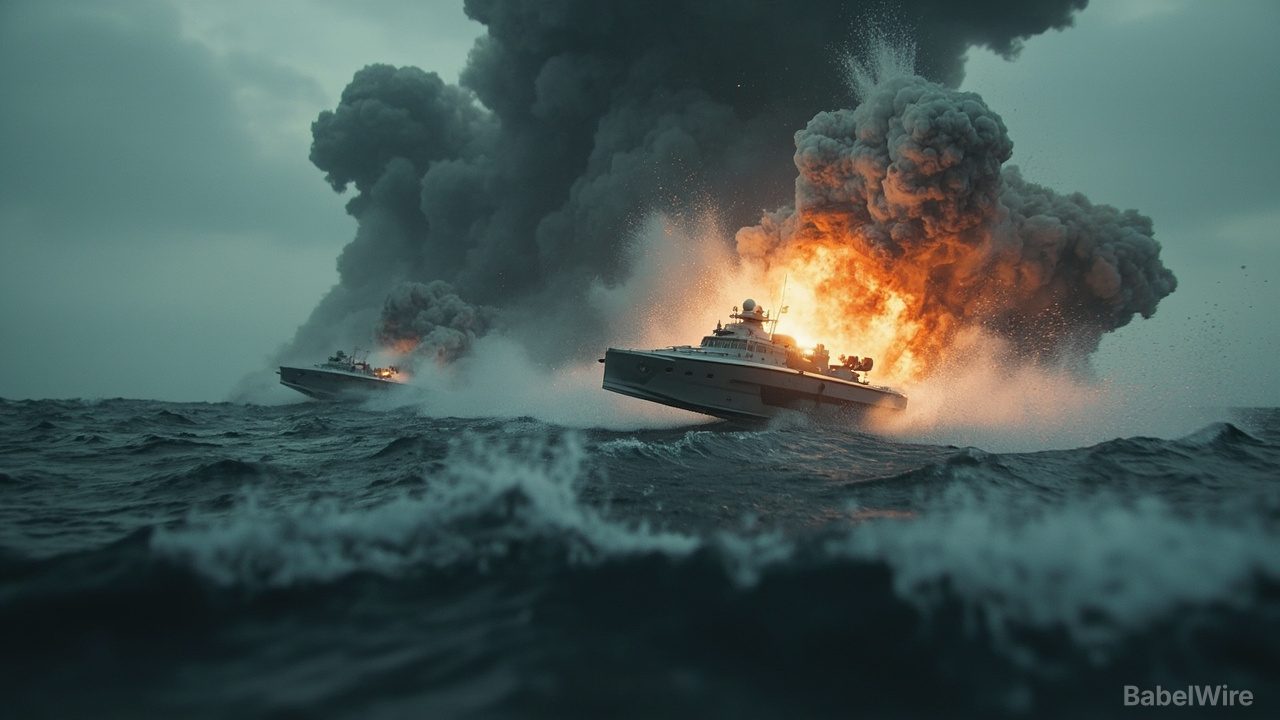
The Black Sea has become the world's most active laboratory for uncrewed naval warfare, and it has produced another precedent. Ars Technica reports that a Ukrainian naval drone — an uncrewed surface vessel, or USV — sank a Russian kamikaze drone boat, an engagement the outlet frames as a military milestone.
The distinction is not academic. Until now the signature success of Ukraine's USV campaign has been attacks on crewed targets: Russian warships and, above all, Black Sea Fleet vessels, driven back from the western Black Sea by relatively cheap, explosive-laden boats. A drone boat killing another drone boat is a different kind of fight — one in which both sides field swarms of small, expendable, remotely or autonomously piloted craft, and the contest turns on detection, targeting and cost-exchange rather than on surviving crews.
That has immediate implications. USVs are cheap relative to the ships and aircraft that traditionally contested a coastline, and they can be risked in ways crews cannot. As both Russia and Ukraine scale up production, engagements between opposing drones invite defences that are themselves uncrewed: interceptor boats, drones that hunt drones, and eventually more autonomy in the kill chain.
Western navies are watching closely. The same attributes that make USVs effective in the Black Sea — low cost, no crew at risk, rapid iteration of software and hardware — are exactly what planners looking at the Indo-Pacific and the Baltic want.
Caveats belong on any single reported engagement: details of drone-versus-drone kills are hard to verify independently and often come from one side's footage. What the milestone signals, though, is structural. Naval war is drifting toward the same logic that drones already imposed on the air domain: many cheap platforms, fast software cycles, and human crews positioned further from the point of contact.