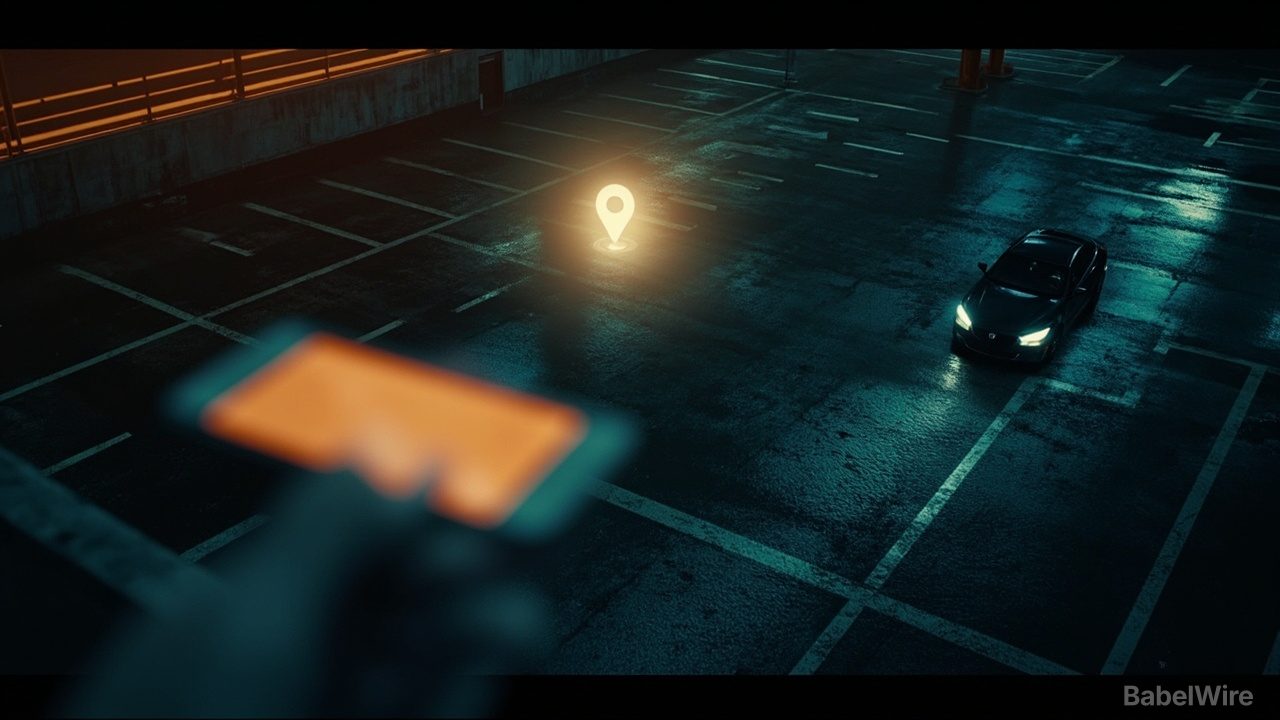
Uber has added parking to its main app in the United States, letting people reserve and pay for a space in advance, heise autos reported on 10 November. The feature launches in 15 US metropolitan areas, with the stated intention of eventually carrying the full catalogue of 400 cities across the US and Canada.
The capability comes from SpotHero, the Chicago parking marketplace founded in 2011 that Uber acquired earlier this year. SpotHero had already absorbed US rival Parking Panda in 2017 and Canada's Rover Parking in 2020, so Uber bought a consolidated position rather than a single startup.
Inside the app, spaces can be filtered by type — garage or open air, self-park or valet, staffed or unstaffed. Payment is automatic at the start of the reserved period, extensions are handled in the same app, and the driver must enter the car model and licence plate. Entry at the lot works either by scanning a QR code on the phone or by plate recognition, depending on the location.
The strategic oddity is hard to miss. Uber president Andrew Macdonald has said he expects nobody to need a driver's licence in 15 to 20 years, as the company positions itself around ride-hail, micromobility and public transport. Until then, motorised private transport remains profitable, and parking is a natural adjacency: it is a transaction tied to a car trip, it is fragmented across thousands of independent operators, and it is exactly the kind of marketplace Uber already knows how to run.
Parking is not the only expansion. Uber bought catering marketplace Ezcater this year, along with Berlin chauffeur service Blacklane and Chinese taxi-hailing operator Fly Taxi. Revenue is rising sharply while headcount has been cut recently — the pattern of a company buying its way into adjacencies while shrinking its own cost base.
For drivers, the practical effect is one app for the whole trip, including the part where the car is standing still. For city parking operators, it is another distribution channel that arrives with Uber's commission terms. For Uber, it is a bet that the road to a car-light future runs through monetising cars as they are.