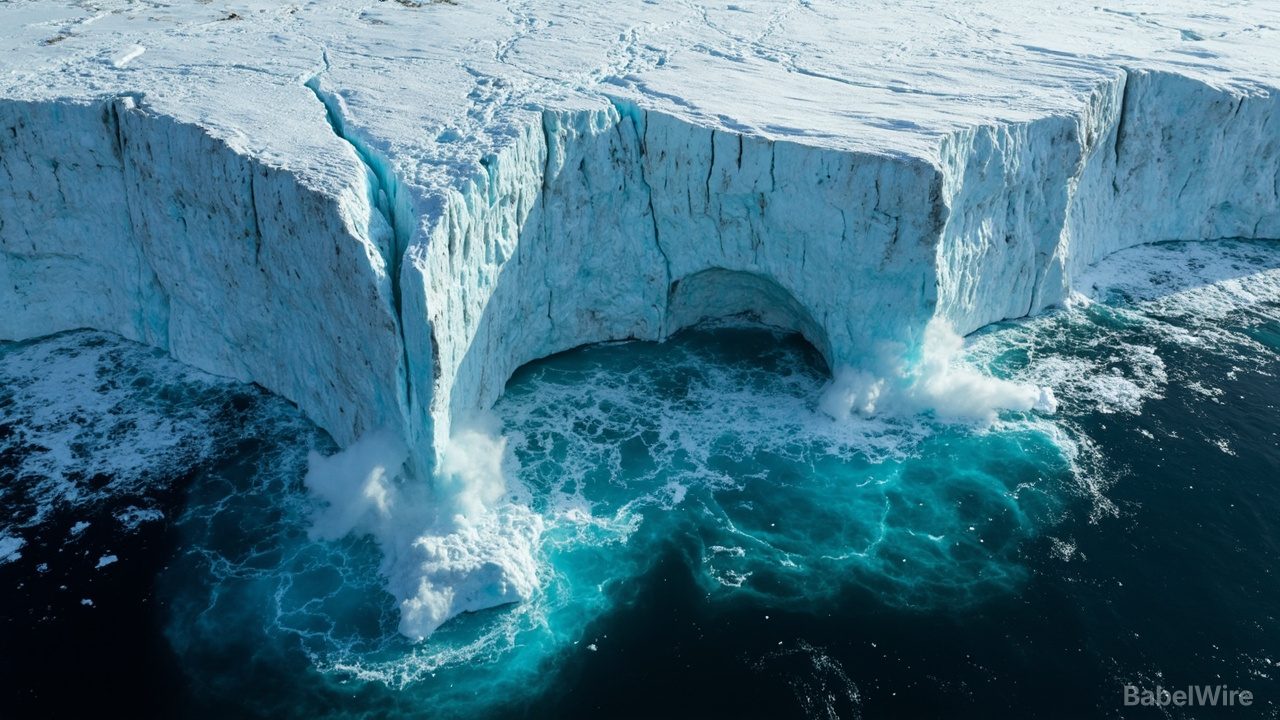
A researcher studying seismic activity beneath Antarctica has uncovered more than 360 previously overlooked events — with two-thirds concentrated near the marine edge of Thwaites Glacier, the so-called "Doomsday Glacier" whose collapse could raise global sea levels by 3 meters.
Published in Geophysical Research Letters, the study detected 362 glacial seismic events between 2010 and 2023, most not yet included in any earthquake catalogue. The detections came from using seismic stations located within Antarctica itself, rather than the worldwide network that had missed them.
What makes these events unique is that they don't generate high-frequency seismic waves — the type used to detect standard earthquakes. Instead, they are glacial earthquakes: vibrations created when massive icebergs fall from glacier ends, capsize, and violently collide with the parent glacier.
The most prolific period of activity at Thwaites — between 2018 and 2020 — coincided with independently confirmed accelerated flow of the glacier's ice tongue toward the sea. Unlike Greenland glacial earthquakes, which follow seasonal warm-air patterns, the Thwaites events appear driven by ocean conditions rather than air temperature.
This finding suggests ocean states have a more direct short-term impact on marine-terminating glacier stability than previously understood. Understanding this interaction is critical for resolving current uncertainties in sea-level rise projections over the coming centuries.
A second cluster of 117 events was detected near Pine Island Glacier, another major source of Antarctic sea-level rise. However, these were consistently located 60–80 kilometers from the waterfront, so they are unlikely to have been caused by capsizing icebergs and remain puzzling.