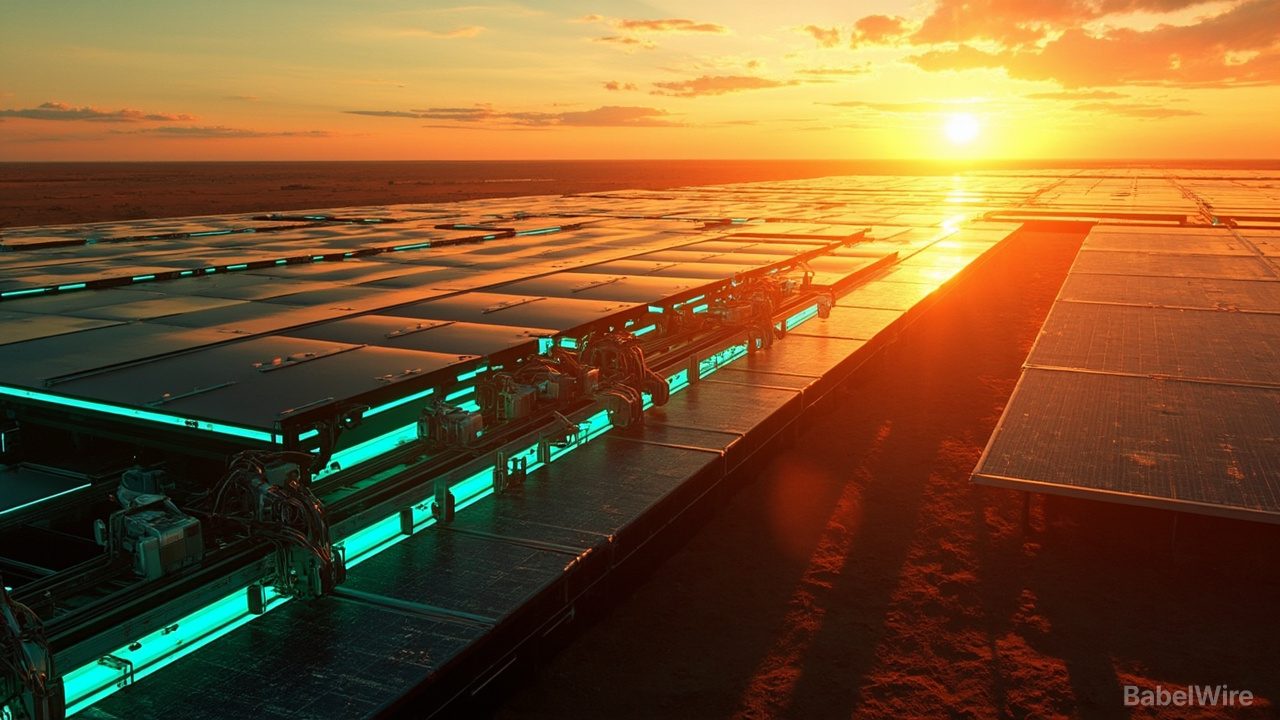
Tesla wants to build one of the largest solar manufacturing plants in the United States — and it has filed the paperwork with the state of Texas to prove it.
Documents filed with Texas describe 'Project Crystal Sun': a solar panel factory located about 45 minutes southwest of Houston in Fort Bend County, with a price tag of up to $10.1 billion. The project would create roughly 9,700 full-time jobs, Tesla says.
The filings reveal a company negotiating hard on incentives. Tesla has applied for property tax abatements to offset part of the cost, warning that it is exploring other sites 'across multiple U.S. states.' Without incentives, Tesla's accountants estimate the property tax liability for the project would run to about $1.1 billion over 37 years. Other details in the application include roughly $194 million for facility upgrades, $31 million for a distribution center and $2 million for enhancements, according to the Dallas Business Journal.
The timeline is ambitious: Tesla aims to break ground this year, complete construction by 2028 and roll the first solar panels off the line in 2029. The company did not publicly disclose the factory's annual output in the filings, but Tesla has previously said it plans to build 100 gigawatts' worth of U.S. solar manufacturing capacity by 2028.
Analysts note the timing fits a broader industrial strategy. Tesla's energy business has become a growing profit center, and the company has been pulling more of its supply chain into the U.S. as tariffs reshape global trade. One open question is what the panels are for: Tesla has not indicated whether they would target terrestrial installations or satellites — though CEO Elon Musk, who also runs SpaceX and has been publicly bullish on orbital data centers and space-based solar, has left observers guessing.
If built as planned, Project Crystal Sun would rank among the largest solar manufacturing investments ever announced in the U.S., joining a wave of domestic factory buildouts driven by tax credits and tariff policy. Whether the incentives materialize — and whether Musk's timelines hold — remains to be seen.
Sources
- techcrunch.comTesla wants to build a $10B solar factory in Texas (TechCrunch)
- foxbusiness.comTesla files plans for proposed $10.1B Texas solar manufacturing plant (Fox Business)
- finance.yahoo.comIn Texas, Elon Musk's empire could soon add a $10 billion solar factory (Yahoo Finance)
- facebook.comTesla plans $10 billion Texas solar cell factory, 10,000 new jobs (Dallas Business Journal)