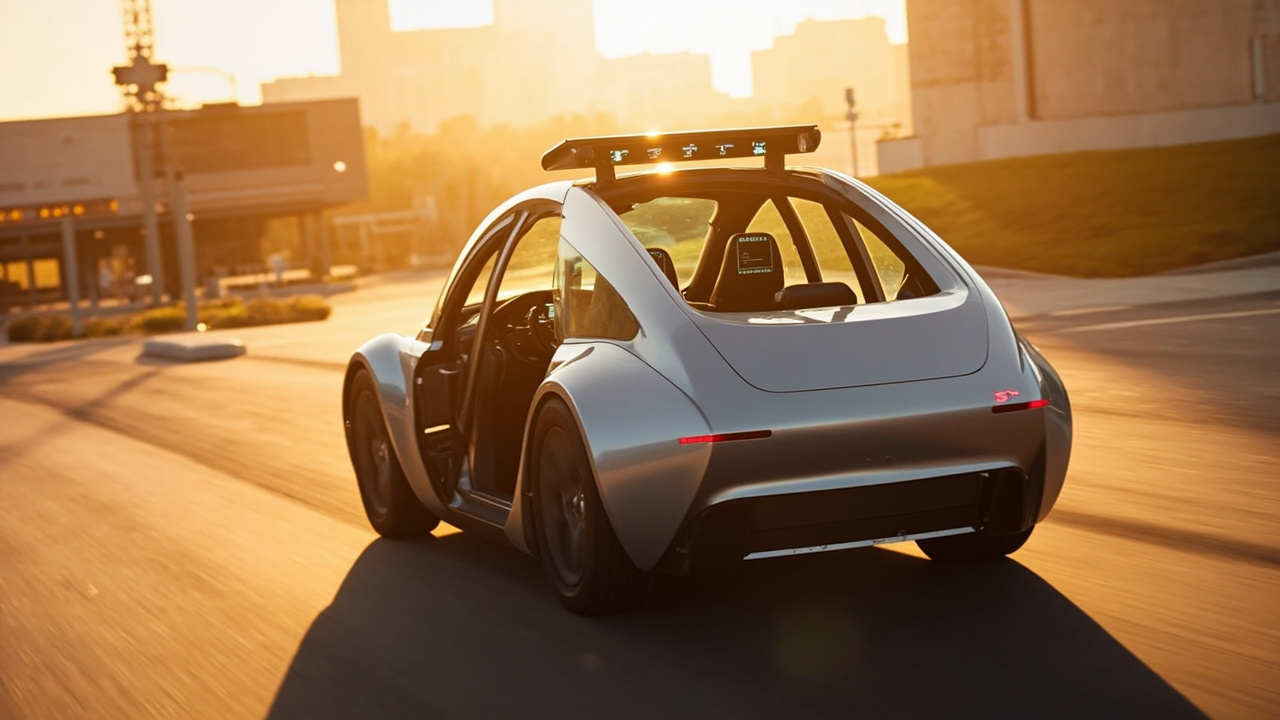
**Tesla has begun testing a production version of its Cybercab that has two seats, but no steering wheel or pedals, on public roads in Austin, Texas — bringing Elon Musk's years-long robotaxi promise closer to reality.**
The vehicle, which has no manual controls whatsoever, is being tested with a safety monitor in the right passenger seat, according to a video posted on X.
This test comes nearly two years after Tesla first revealed the Cybercab design — a purpose-built autonomous robotaxi meant to be hailed through Tesla's app. Roughly a year ago, Tesla began testing a robotaxi service in Austin using modified Model Y SUVs with safety monitors.
Two converging developments make this milestone especially significant:
First, the National Highway Traffic Safety Administration (NHTSA) last week proposed eliminating the requirement for brake pedals in "vehicles designed to be driven exclusively by automated driving systems." The rule is in public comment but expected to go through later this year.
Second, Tesla is now parking hundreds of Cybercabs in lots across multiple US cities, signaling preparation for a scaled deployment.
**Tesla's bet: cameras-only autonomy vs. Waymo's sensor-heavy approach**
Musk and Tesla executives have argued they can out-compete current robotaxi leader Waymo because Tesla builds both the cars and the driving software — giving greater cost control. Tesla is also trying to make the Cybercab fully autonomous using only cameras, whereas Waymo uses lidar and radar.
**The road ahead is not without risks.**
Tesla's existing Austin robotaxi service has seen its size wax and wane over the past year, with some vehicles involved in minor crashes. Waymo has faced its own challenges: its robotaxis currently cannot take highways due to construction-zone struggles, and it has recalled vehicles over flood-navigation and school-bus issues.
Rolling out gold-colored, two-seater Cybercabs will put an even greater spotlight on Tesla's autonomous driving push, making both its successes and struggles far more visible.
With NHTSA moving to remove regulatory barriers and Tesla beginning real-world testing of a production vehicle with zero manual controls, the autonomous vehicle industry is entering its most consequential phase yet.