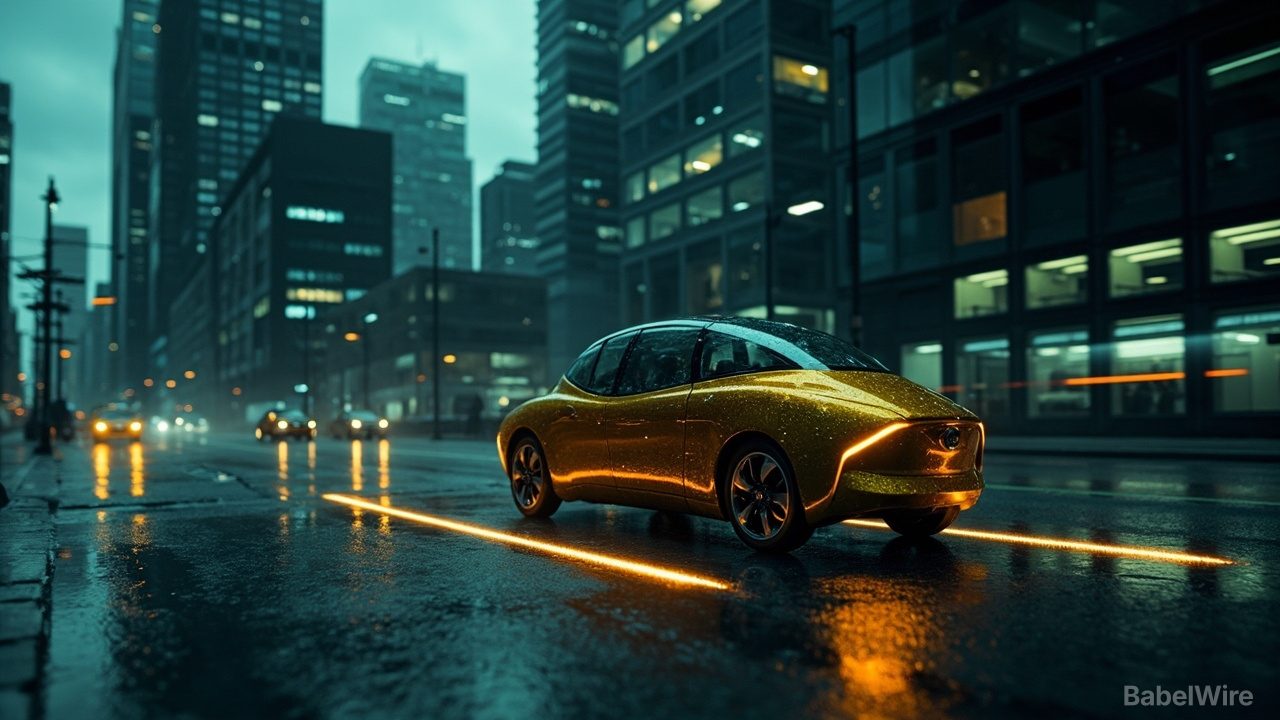
Tesla opened orders for the Cybercab to a hand-picked group of buyers on Friday, turning a vehicle that until now existed only inside its own robotaxi fleet into the first driverless car an individual can own.
The price is $29,990 — roughly $7,000 below a Model 3 and the cheapest vehicle Tesla has ever sold. But the car does not move without a subscription: a mandatory "Autonomy Subscription" of $299 a month, with the first month included, or about $3,600 a year before insurance, tyres and charging. Ordering requires a $1,000 non-refundable deposit, and the order page quotes an estimated December 2026 delivery in Austin, Texas.
Tesla announced the programme on its Robotaxi account on X, saying "select customers are now being invited to purchase Cybercab for personal use" and that initial availability is limited. The company has not said when, or whether, the invitation will widen to the general public.
Two limits matter more than the price. The first is geography. Tesla says the two-seater will operate only in "supported service areas" — the geofenced patches of Austin and other cities where its paid robotaxi service already runs. Buyers outside those zones are, in effect, paying for a car that cannot drive itself where they live. Order terms reported by Electrek also rule out commercial use and any modification, including wraps and window tinting.
The second is regulation. The Cybercab has no steering wheel, pedals or side-view mirrors, all of which US federal motor-vehicle safety standards generally require. Tesla has not explained publicly how it determined compliance, and the National Highway Traffic Safety Administration has been asking. Companies can apply to deploy non-compliant vehicles, but that programme has historically been capped at 2,500 vehicles a year; Amazon's Zoox recently won an exemption for 5,000 pods over two years. NHTSA also opened a safety probe into the Cybercab within hours of its Austin rollout in early September. Any expansion past a few thousand cars depends on rules the agency says it is still trying to streamline.
The milestone is real regardless of the paperwork. Every driverless car on US roads today — Waymo's, Zoox's, Tesla's own robotaxi fleet — is owned and operated by a company running a ride-hailing service. Selling one to an individual, with an app for monitoring the vehicle and managing rides, crosses a line the industry has talked about for a decade and never crossed.
It also lands awkwardly for Tesla's existing customers. Thousands of owners paid for Full Self-Driving on Model 3s and Model Ys and are still waiting for the unsupervised software they were sold. Elon Musk has said their cars will get it in the second quarter of next year, in areas where the robotaxi service operates — a promise that reads differently now that a purpose-built two-seater can be ordered for less than the car in their driveway. The company is also winding down the Cybertruck after a run of recalls and collapsing sales, which leaves the Cybercab carrying a great deal of Tesla's automotive story.
Rivals are moving in the same direction, more slowly. Rivian plans lidar and in-house silicon for the R2; General Motors intends to ship an eyes-off version of Super Cruise on the Cadillac Escalade IQ in 2028, starting on highways. None of them will hand a customer a car with no controls this year.
Whether Tesla actually delivers in December is the only claim that will settle the argument. The company has promised a million robotaxis by 2020, and unsupervised self-driving more or less every year since. What is different this time is a price, a deposit link and a delivery month attached to a product rather than a slide.