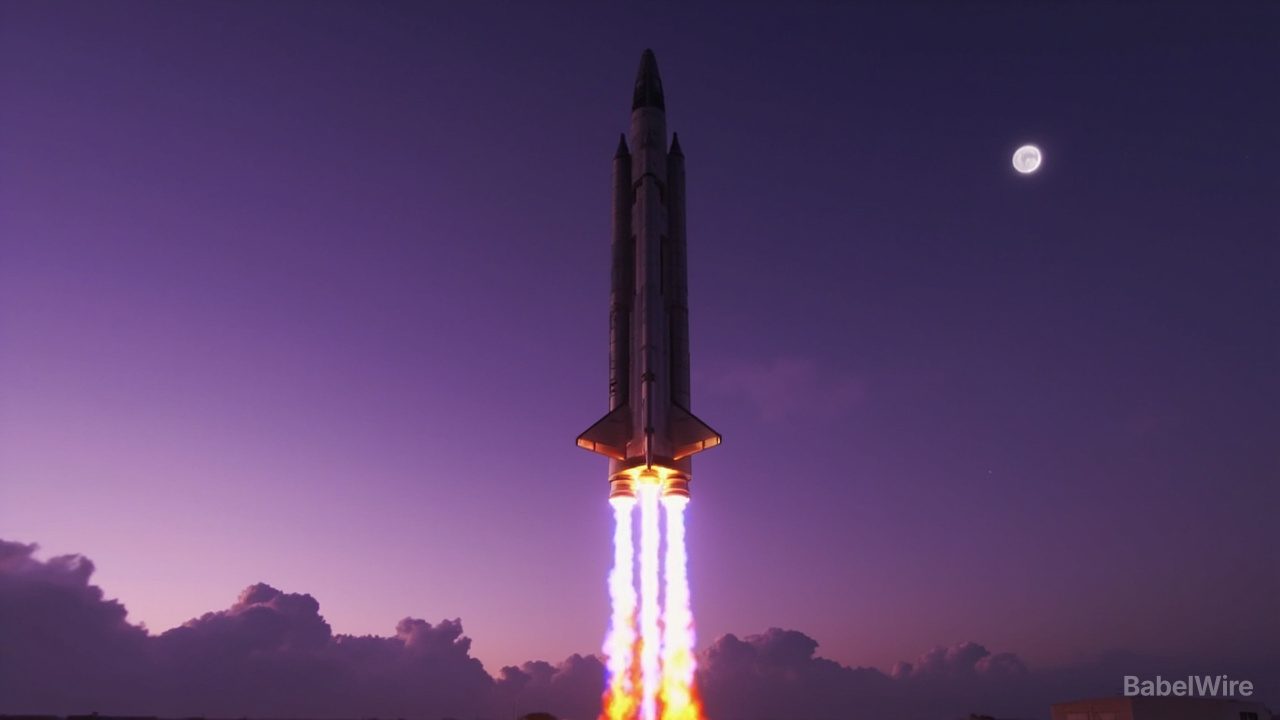
SpaceX launched the world's most powerful rocket on a critical 13th test flight on July 24, and there was no triskaidekaphobia on this mission.
The towering 400-foot (122-meter) Starship system lifted off from SpaceX's Starbase facility in South Texas at 6:51 p.m. EDT (2251 GMT) on what became the most successful test in the program's three-year history.
First Starlink V3 Deployment
For the first time, Starship carried and deployed 20 next-generation Starlink Version 3 internet satellites — large, flat spacecraft equipped with laser communications links and expansive solar arrays. The satellites deployed smoothly from a narrow slit in Starship's side like a giant PEZ candy dispenser, with the last two switching on flashlights to look back at their carrier before floating off into orbital darkness. While the satellites briefly connected with SpaceX's existing network of some 10,000 orbiting satellites, they followed the ship's suborbital trajectory and burned up in the atmosphere as planned.
In-Space Engine Relight
The upper stage successfully reignited one of its six Raptor engines in the vacuum of space — a critical capability that will allow future Starships to enter and leave orbit, change trajectories, and perform complex missions. This milestone had been abandoned during the previous Flight 12 in May due to engine issues.
'Softest Splashdown Ever'
After reentering Earth's atmosphere wrapped in a halo of neon pink plasma, Starship executed a three-engine landing burn, flipped upright, and gently settled onto the Indian Ocean before tipping over to float belly-up on the waves. A drone beamed stunning views of the intact spacecraft bobbing in the sea. "That is the softest splashdown we have ever had with Starship," said SpaceX spokesperson Dan Huot as cheers erupted at mission control. "This is a dream scenario for this team that's trying to get this heat shield data."
Booster Challenges Remain
Not everything went perfectly. The Super Heavy first-stage booster suffered another rough return, with only 5 of 13 planned engines firing during its landing burn. It hit the Gulf of Mexico harder than intended. However, this was still an improvement over May's Flight 12, where the booster spun out of control entirely and crashed.
What's Next
The successful test is crucial as SpaceX faces intense pressure to get Starship ready for NASA's Artemis IV mission — a crewed lunar landing planned for 2028. NASA Administrator Jared Isaacman, who took over the agency in December, congratulated SpaceX, writing: "Excited for what will be learned from this mission. When Starship comes online, its capabilities will be game-changing, not least of which will be ensuring we never give up the Moon again!" In a lunar coincidence, Friday's launch coincided with the 57th anniversary of the Apollo 11 astronauts' return to Earth. SpaceX still needs to demonstrate orbital operations, in-space refueling, and a land-based catch of the upper stage using the 'Mechazilla' chopsticks before Starship can begin routine commercial service, which the company hopes to achieve by the end of 2026.