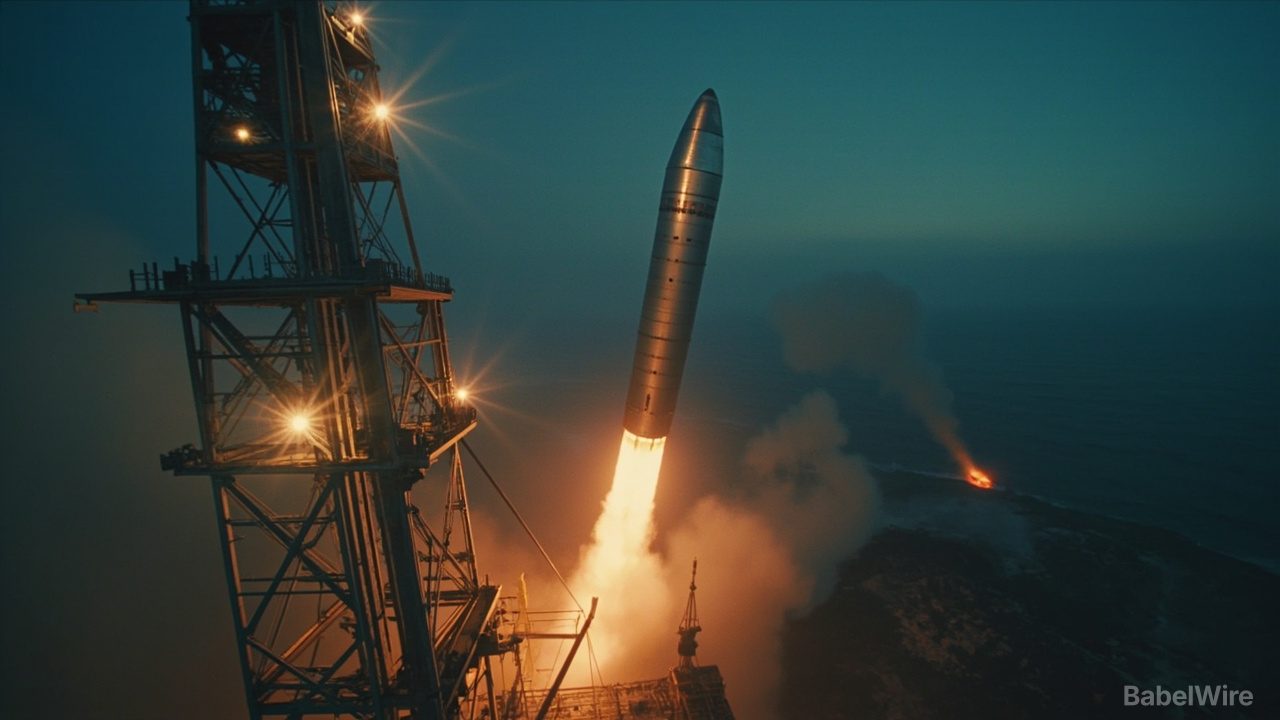
SpaceX is attempting the most ambitious feat of its Starship test campaign tonight: catching both halves of the vehicle on the same flight. Flight 15 is targeting a launch from the company's Starbase site in South Texas, with a 75-minute window opening at 5:45 p.m. EST (2245 GMT).
About 6.5 minutes after liftoff, SpaceX will for the first time try to catch a next-generation Super Heavy "V3" booster with the launch tower's "chopstick" arms. The Ship upper stage, meanwhile, is to insert itself into orbit, deploy 26 Starlink V3 satellites roughly 35 minutes after launch, and then — about 21 hours later — attempt the first-ever catch of an orbital upper stage back at Pad 2.
No vehicle returning from orbital velocity has been recovered this way before. Ship will re-enter over inhabited areas for the first time, crossing sparsely populated parts of northern Mexico and southern Texas before a bellyflop descent and a vertical flip into the tower's arms. SpaceX has called it the "Holy Grail of rocketry"; Elon Musk said success is "more likely than not" and described it as "the critical breakthrough needed to make life multiplanetary."
The stakes are industrial, not just symbolic. SpaceX has told the FAA it anticipates flying Starship 10,000 times a year by 2030 — more than one launch per hour — to build megaconstellations. Each V3 Starlink satellite adds a terabit of capacity, and the company wants 100,000 of them in orbit. Its more speculative Starmind project envisions up to a million satellites serving as orbital AI data centers.
There are no guarantees. Controllers will authorize the Ship catch only if post-orbital safety checks and an on-orbit heat-shield inspection by three V3 satellites pass; otherwise Ship will splash down or be diverted. Even a perfect double catch leaves orbital refueling, Ship reflight and crewed missions still to prove.
Sources
- reuters.comSpaceX to attempt first Starship spacecraft recovery on land in 15th flight
- space.comDouble-catch drama: Why Starship's Flight 15 is so important to SpaceX
- nytimes.comSpaceX Aims for Major Rocketry Milestone With First Starship 'Double Catch'
- cnn.comSpaceX is set to make an audacious grab for the 'Holy Grail' of rocketry
- space.comSpaceX Starship Flight 15 live updates