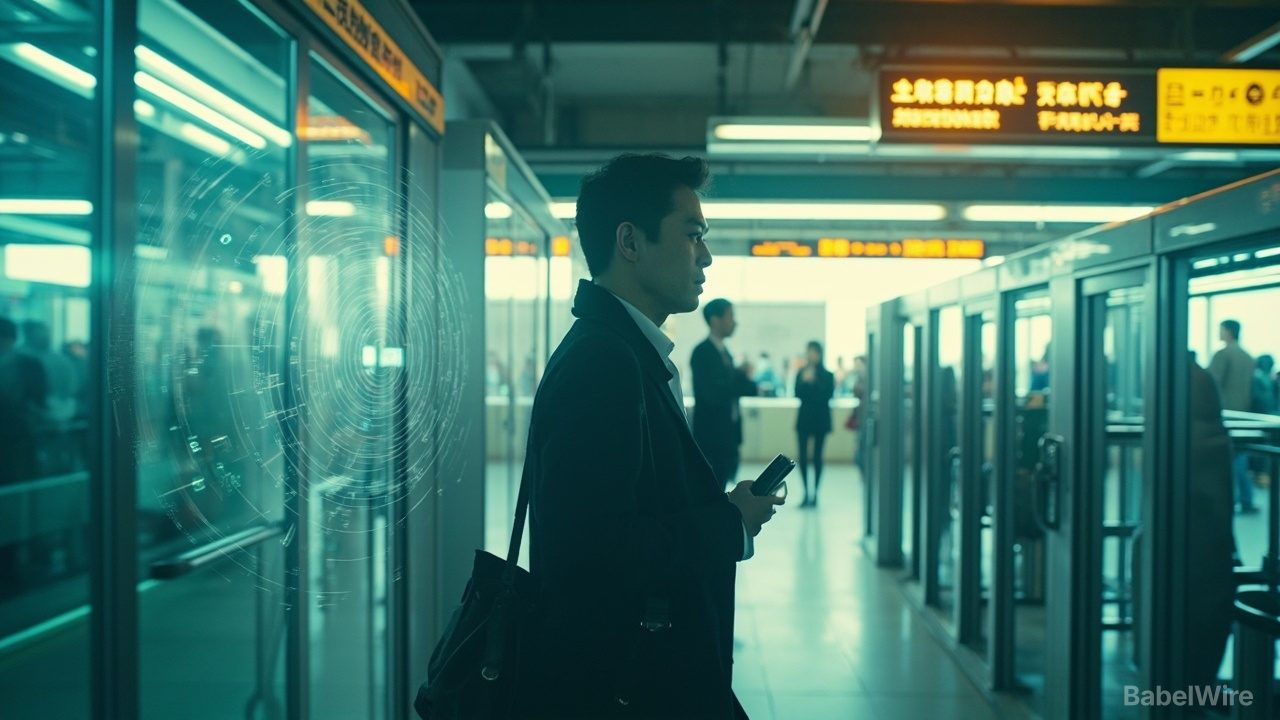
Japan's next generation of contactless ticketing is about to leave the card tap behind. East Japan Railway (JR East), working with Sony, will equip 40 stations with new gates that authenticate passengers over Ultra-Wideband (UWB), so a phone loaded with Mobile Suica can stay in a pocket or bag.
The system relies on Sony's "Spatial Authentication Platform AirAuth" to read the phone's UWB chip and confirm a valid ticket or balance. It follows a successful trial at the new Takanawa Gateway City station. The gates are fast — the Japan Times reports transaction times under 200 ms — which matters in a country where passengers walk briskly through ticket barriers.
The rollout is staged: 14 stations on Tokyo's Yamanote Line come first in 2027, including Shinagawa, which is already being rebuilt; by spring 2028 the count reaches 40, including stations serving both of the capital's airports, provided travellers use JR trains or the monorail. JR East aims to extend the technology to Shinkansen stations by the end of 2031. On other operators, Mobile Suica will continue to use NFC tap-and-go.
The UWB approach is an alternative to face-recognition gates (Face Pass), which have run into acceptance problems in Osaka. UWB is best known from Apple's AirTags, where precise short-range localisation is the point; here, that precision is what lets a gate detect a phone without it being held out. Nationwide adoption still looks unlikely, since the Felica-based IC card system is uneven outside major cities.
Sources
- heise.deJapan: Sony und JR East wollen 40 Bahnhöfe mit UWB-Ticketgates ausstatten
- japantimes.co.jpJR East to introduce touchless ticket gates in spring 2028
- timeout.comSuica is going touchless with walk-through ticket gates at all Yamanote Line stations
- www3.nhk.or.jpJR East planning touch-free ticket gates
- railway.supplyWalk-through ticket gates due at 40 Tokyo-area stations in 2028