A Record-Breaking Wall Street Debut
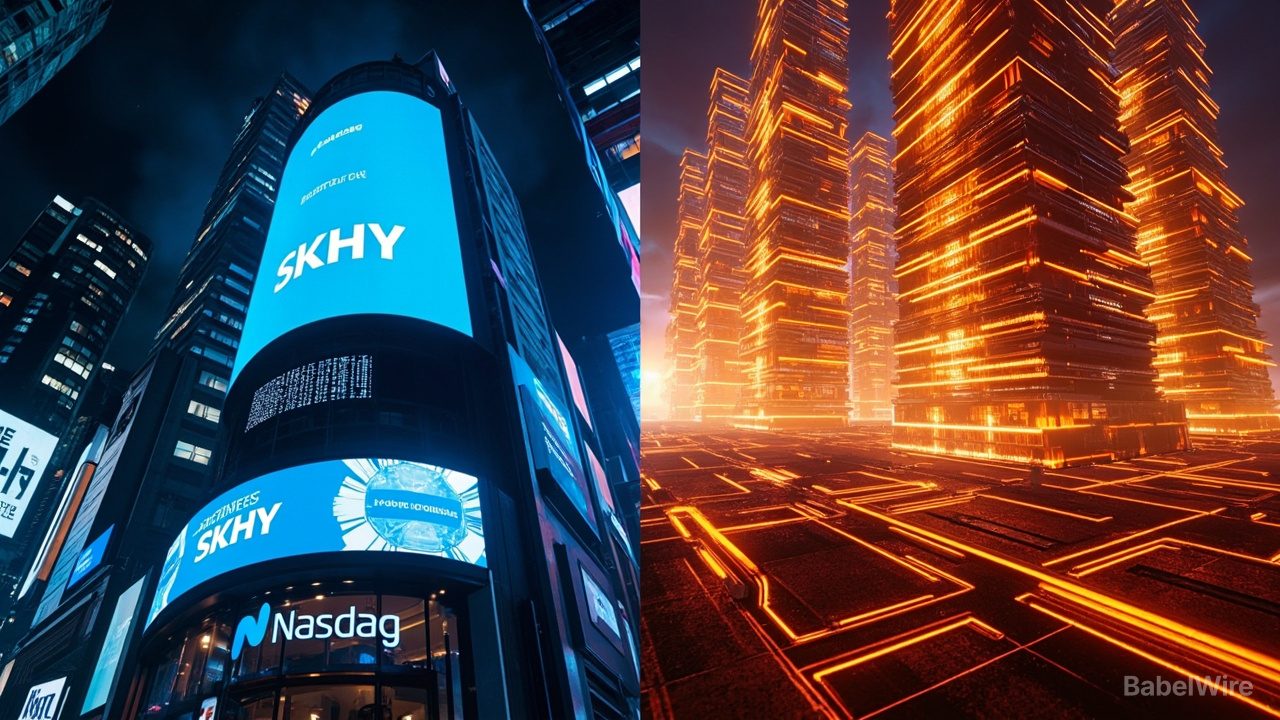
SK Hynix, the world's second-largest memory chip maker and dominant force in high-bandwidth memory (HBM), began trading on the Nasdaq on July 10 under the ticker SKHY, raising approximately $26.5 billion in the largest-ever US listing by a foreign company. The offering was more than seven times oversubscribed.
The deal ranks among the largest share sales in history, surpassed only by SpaceX's $85.7 billion debut in June 2026. It reflects the extraordinary demand for AI-related investments and the critical role memory chips play in powering artificial intelligence infrastructure.
The AI Memory Supercycle
SK Hynix's blockbuster listing is the most visible signal yet of what analysts are calling a "memory supercycle" — an unprecedented, sustained boom in demand for DRAM, NAND, and especially HBM chips driven by AI data center buildout.
HBM is a specialized type of memory that stacks multiple DRAM dies vertically, connected by thousands of microscopic channels. Positioned directly next to AI accelerators, it moves data far faster than conventional memory — exactly what training and running large language models requires. SK Hynix commands an estimated 58% of the global HBM market.
The numbers are staggering: Samsung Electronics expects second-quarter operating profit of approximately 89.4 trillion won ($59 billion) — roughly 19 times higher than a year earlier. Memory contract prices have quadrupled over the past year, with DRAM prices rising 93-98% quarter-on-quarter in Q1 2026 alone.
Structural Shift, Not Just a Cycle
Industry analysts argue this cycle is fundamentally different from memory's traditional boom-bust pattern. Bank of America has extended its super-cycle timeline to the end of 2027, with a scenario reaching 2030. SK Hynix's chairman has warned that global memory supply will likely remain roughly 20% below demand through 2030.
Key structural factors include: - Capex discipline: Samsung, SK Hynix, and Micron show more restraint than in past cycles - Production difficulty: HBM requires 3-4x the production capacity of conventional memory per unit - Long-term contracts: Multi-year agreements lock in pricing and allocation - Sold-out capacity: Micron's HBM is sold out through 2027; Kioxia's entire 2026 NAND output was pre-committed
What the Funds Will Finance
SK Hynix has stated the $26.5 billion will fund expansion of its HBM and advanced chip fabrication capacity. The company, along with Samsung, has announced plans for 800 trillion won ($530 billion) in new fabrication facilities in South Korea's south-west — part of a national strategy to "secure the core elements of AI faster than any other country."
Market Context
The listing arrives as the broader memory sector has dramatically outperformed the wider tech market. Kioxia shares are up over 590% year-to-date, SanDisk has seen similar gains, and valuations remain comparatively low on forward earnings — suggesting the market believes the earnings growth is real and sustainable.
However, analysts also flag risks: the sheer volume of new fab capacity scheduled to come online around 2028 could test supply discipline, and leveraged ETFs tracking Korean memory names could amplify any reversal.
For now, SK Hynix's historic Nasdaq debut cements its position as a linchpin of the AI economy — and signals that the memory supercycle has plenty of room to run.