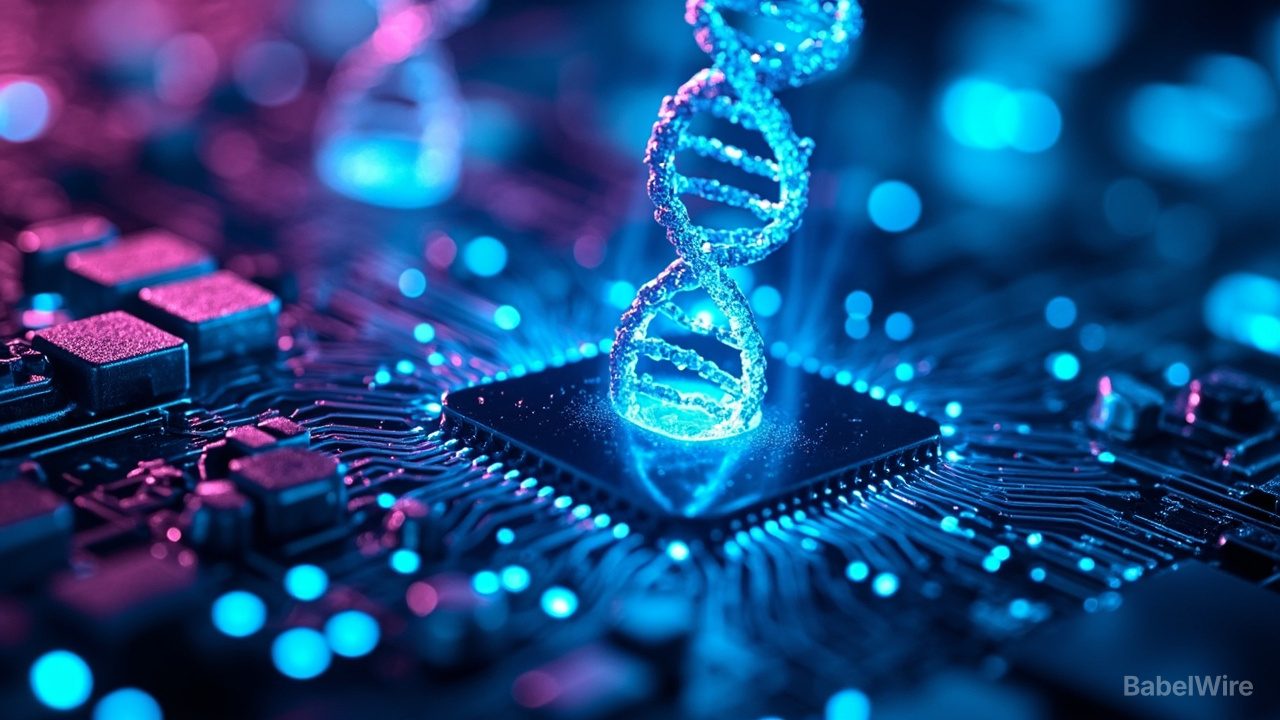
Cambridge, MA — In a striking convergence of microelectronics and biology, researchers at Harvard University have turned a silicon chip into a machine that writes DNA. The device, published this week in Nature Electronics, synthesizes 64 different DNA sequences in parallel using precisely controlled electrical currents and water-based enzymes — a clean alternative to the solvent-intensive chemical process that dominates DNA manufacturing today.
Led by Donhee Ham, the John A. and Elizabeth S. Armstrong Professor of Engineering and Applied Sciences at SEAS, the team repurposed a chip originally designed for recording electrical activity from neurons. By redesigning its surface electrodes, they discovered that the same precision current injection technology could control the chemical conditions needed for building DNA, one nucleotide at a time.
A Cleaner Way to Build the Molecule of Life
Synthetic DNA is the invisible workhorse of modern biotechnology — essential for diagnostics, genome engineering, cancer research, and vaccine development. Most of it is produced using phosphoramidite chemistry, a method that depends on hazardous organic solvents and typically requires large, centralized manufacturing facilities.
Enzymatic DNA synthesis has long been pursued as a gentler alternative, using water instead of toxic chemicals and mimicking the way living cells build DNA naturally. But until now, enzymatic methods have lagged far behind conventional manufacturing in throughput — the best previous demonstrations managed only about a dozen sequences at once. The Harvard chip's ability to synthesize 64 sequences of up to 39 nucleotides each represents a new benchmark.
How the Chip Works
The chip's surface contains 64 synthesis sites, each featuring two concentric ring electrodes surrounding anchored DNA molecules. When activated, the inner electrode generates protons that lower local pH, allowing the DNA strand to grow by one nucleotide. The outer electrode simultaneously removes stray protons, confining the acidic reaction to that single site. By repeating this process across cycles, the chip independently builds 64 unique DNA sequences across its surface.
"A defining feature of the chip was precision current injection," Ham explained. "At a certain point, we wondered whether that same current control could be redirected from cells to molecules. It worked."
DNA Data Storage and the Road Ahead
The team demonstrated a tantalizing application: encoding a 169-byte text message into the 64 DNA sequences the chip produced. While DNA-based data storage remains a long-term goal requiring enormous production scales, the researchers see water-based enzymatic synthesis as an increasingly attractive route as volumes grow, potentially offering a far more environmentally friendly method for writing DNA at very large scale.
A critical obstacle remains: the chemistry of deprotection, not the chip itself, proved to be the limiting factor when the team tried to scale up. The intermediate molecules produced during deprotection can drift into neighboring synthesis sites, mixing sequences. "The chip did what we asked it to do," said co-first author Han Sae Jung. "The limitation came from the deprotection chemistry, not from the silicon. That leaves a clear next step for the field — develop a more direct acid-driven deprotection chemistry."
The project was a collaboration among Harvard, the Broad Institute, DNA Script, and POSTECH, with support from IARPA, Horizon Europe, and Samsung.