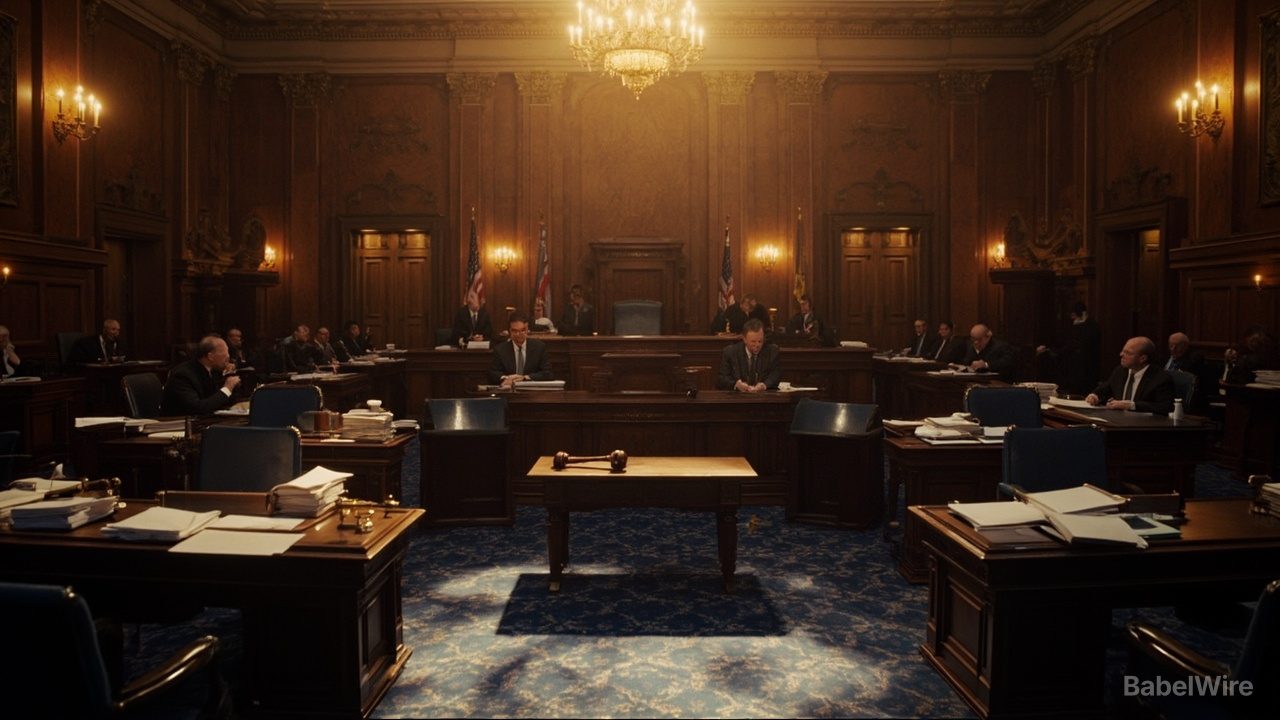
The United States Senate Judiciary Committee convened a pivotal hearing on Tuesday morning titled "From Genes to Machines: The Patent Eligibility Debate," wading into one of the most consequential questions in intellectual property law: what kinds of AI and biotech innovations can actually be patented.
Chaired by Sen. Chuck Grassley (R-Iowa) with Sen. Dick Durbin (D-Ill.) serving as Ranking Member, the hearing brings together a diverse panel of witnesses including Andrei Iancu, former Under Secretary of Commerce for Intellectual Property and Director of the USPTO; J. John Lee, Senior Director and Head of IP Policy at the Computer & Communications Industry Association; Dr. Debra G.B. Leonard, Professor of Pathology at the University of Vermont; and Sue Peschin, President and CEO of the Alliance for Aging Research.
At the center of the debate is the Patent Eligibility Restoration Act, sponsored by Sens. Thom Tillis (R-N.C.) and Chris Coons (D-Del.), which would fundamentally rewrite the rules that have governed patent eligibility for over a decade. The bill aims to eliminate the Alice/Mayo framework — a set of judicial exceptions that have blocked patents on abstract ideas and natural phenomena — while clearly defining statutory carveouts for unmodified genes and natural phenomena.
What's at Stake for AI
The timing of the hearing is critical for the AI industry. The USPTO's recent reversal of its AI patent guidance created fresh uncertainty for technology companies, while the relentless pace of frontier model releases — GPT-5.6, Grok 4.5, and the upcoming Gemini 3.5 Pro — has intensified the need for clarity on whether AI-generated inventions can be patented, who owns them, and how to protect novel techniques without locking up foundational methods.
Patent eligibility determines where durable value and litigation will concentrate over the next decade. A ruling that broadly allows AI method patents could trigger a wave of claims across the industry, while a narrow framework could push frontier labs toward trade secrets rather than public disclosures.
The Biotech Dimension
Recent court decisions have also intensified pressure on the biotech side. The REGENXBIO v. Sarepta ruling, widely analyzed through May and June 2026, exposed gaps in how patent eligibility applies to gene therapy. Witnesses are expected to weigh how the proposed legislation would affect diagnostics, gene editing, and personalized medicine.
The hearing lands in a concentrated week of AI policy activity. The Federal Reserve recently stood up its first AI task force, OpenAI proposed a $42.6 billion government equity stake, and polling shows 69% of U.S. workers support requiring AI firms to route equity into a public wealth fund. The patent question is the structural layer beneath all of these debates: it decides who captures the value of the AI and biotech booms.
Witness Testimony
Former USPTO Director Iancu is expected to argue that the current Alice/Mayo framework creates uncertainty that discourages investment in critical technologies, while patient advocacy groups like the Alliance for Aging Research will emphasize the need to balance innovation incentives with access to diagnostics and treatments.
Technology industry representatives are expected to push for clear eligibility standards that protect software and AI innovations without granting overly broad monopolies on fundamental methods.
This hearing will not resolve the debate on its own, but it marks an early and critical inflection point in how the legal foundations of the AI and biotech economies will be drawn.
Sources
- judiciary.senate.govSenate Judiciary Committee - Official Hearing Notice
- legis1.comSenate Judiciary Debates Patent Eligibility Rules - Legis1
- youtube.comFull Senate Hearing: From Genes to Machines - YouTube
- krauseonpatents.substack.comMy Statement for Tomorrow's Senate Patent-Eligibility Hearing - Krause on Patents