For the first time, researchers have identified a specific individual who contributed to the mathematical and astronomical knowledge of the Classic Maya period — a scholar named Sak Tahn Waax, meaning 'White-Chested Fox.'
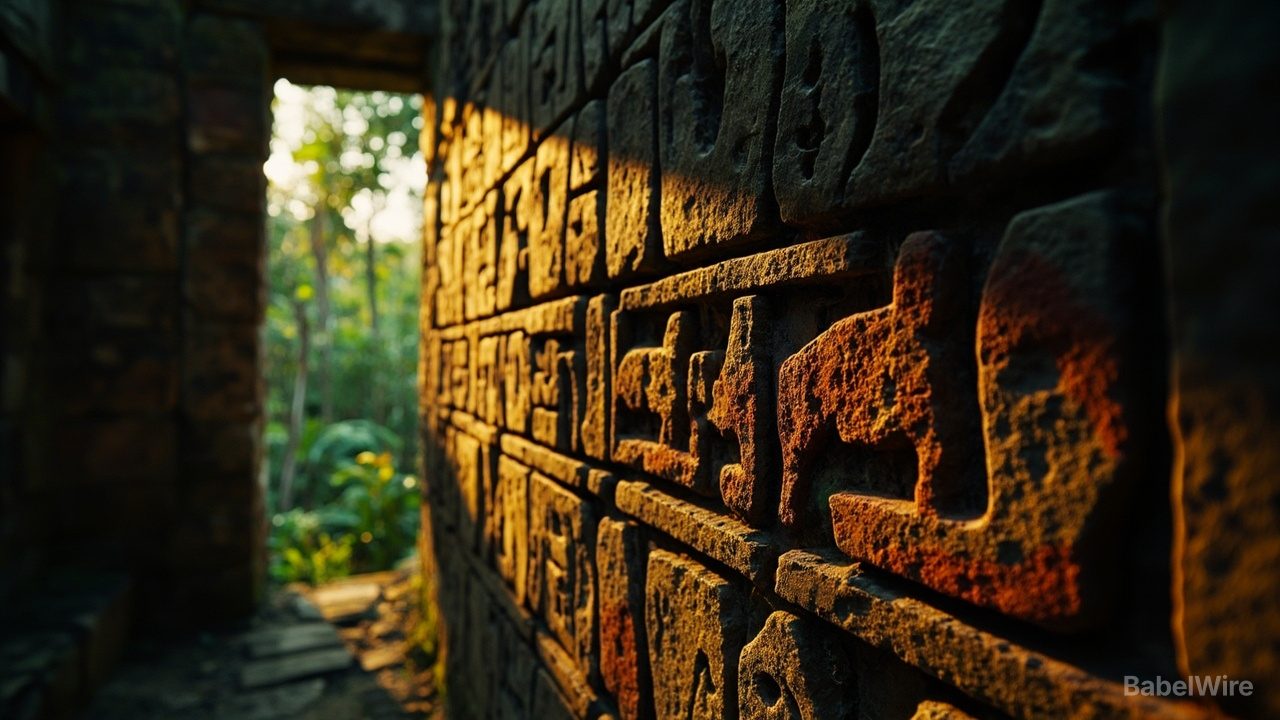
The discovery, published in the journal Antiquity, comes from the Xultun archaeological site in Guatemala, where more than 50 mathematical and astronomical 'microtexts' — short inscriptions listing dates, numbers, and calculations — were found on the walls of a small building.
"While artists' and sculptors' signatures for painted ceramic vessels and carved monuments have been identified, the scholars behind computational timekeeping have remained anonymous," said archaeologist Franco Rossi from MIT, a co-author of the study.
A Formula Unlike Any Other
One of these texts contained not only a complex mathematical formula but also the name of its author — Sak Tahn Waax. The formula cleverly connects the 260-day ritual day-count, the solar year, and the cycles of Venus and Mars in a way not seen in other Maya texts.
"The math involves his unique understanding of connections and patterns between several cycles of time," said Mayanist David Stuart from the University of Texas at Austin.
These calculations would have carried enormous significance in Classic Maya society, where celestial movements dictated the timing of royal events, religious ceremonies, and major building projects.
A Rough Draft of Genius
The wall inscriptions are informal — akin to a researcher's working notes or rough drafts — making them a uniquely intimate window into ancient intellectual life.
"These 'rough draft' calculations and tables are akin to finding an early version of a well-known manuscript, or a sketch of a great artwork," said archaeologist Heather Hurst from Skidmore College. "This fills out an important dimension of Classic Maya life that had typically been reconstructed through ethnohistories and Spanish accounts written centuries later."
Given the uniqueness of the formula, the researchers suggest Sak Tahn Waax may have wanted credit for his work — which is why he left his name alongside it.
Context and Legacy
The discovery places Maya intellectual achievements alongside those of other ancient civilizations. "Contemporaries of the ancient world in India, Iraq, China, and Greece were similarly calculating solar and planetary cycles, predicting eclipses, and charting star progressions, their achievements often ascribed to individual thinkers," said Rossi. "We can now add Sak Tahn Waax to such thinkers, highlighting the great Indigenous astronomy and calendrical traditions of the Americas."
Work is continuing to analyze dozens of other microtexts at the same site, some of which may also be the work of the newly identified White-Chested Fox.
Sources
- sciencealert.comWe Finally Know The Name of a Revered Maya Astronomer-Mathematician — ScienceAlert
- cambridge.orgThe identification and work of an eighth-century Maya mathematician — Antiquity journal
- science.orgScrawled signature names a Maya astronomer for the first time — Science.org
- theartnewspaper.comName of ancient Maya astronomer-mathematician deciphered — The Art Newspaper