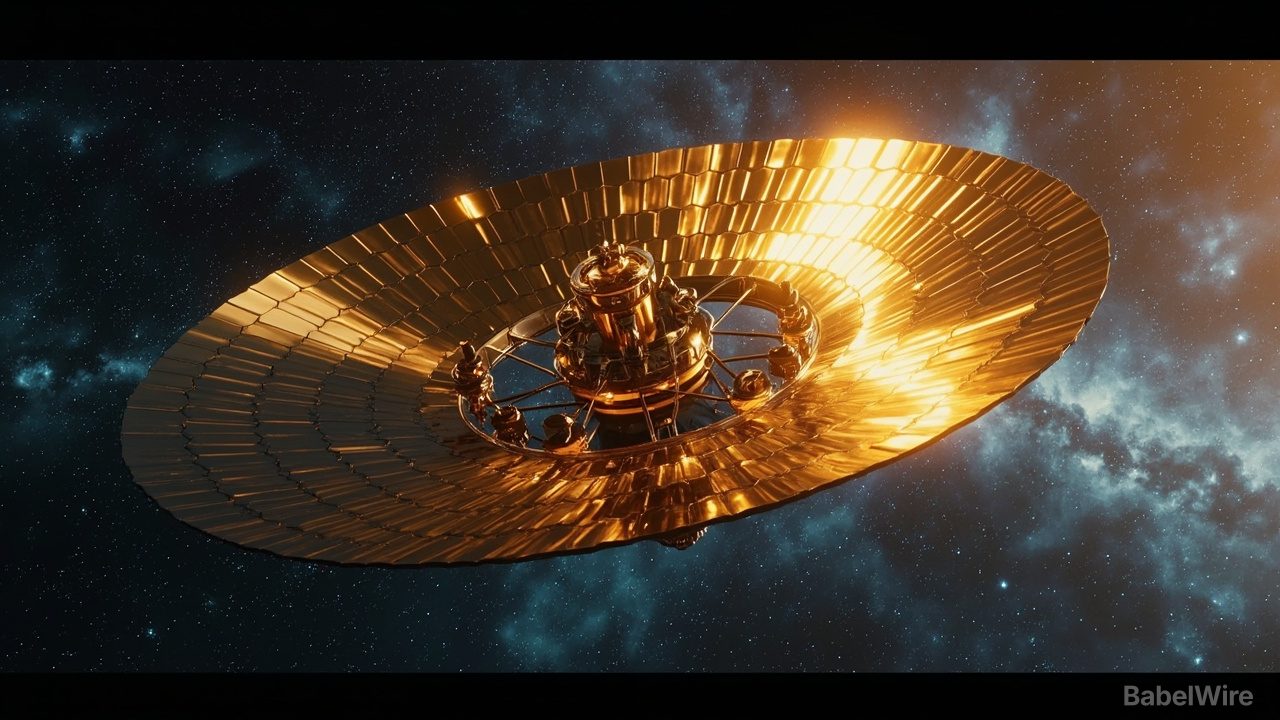
NASA's Nancy Grace Roman Space Telescope has returned its first images from space, the agency's first look at how the observatory performs beyond the ground-based tests that preceded its launch. The pictures — engineering-quality frames taken as the telescope cooled and its instruments were switched on — mark the start of a months-long commissioning phase, not the beginning of science operations, but they are the milestone that tells engineers the optics and detectors survived the ride to orbit intact.
Roman is designed to answer questions that Hubble and the James Webb Space Telescope cannot, mostly because of breadth rather than zoom. Its 2.4-metre mirror is the same size as Hubble's, but the Wide Field Instrument carries roughly 300 megapixels of detectors and sees an area of sky about 100 times larger than Hubble's infrared camera in a single exposure. NASA has described its survey speed as hundreds of times faster than Hubble's, which turns a telescope that peers at individual targets into a machine that maps the sky in bulk.
That breadth is aimed at two grand problems. The first is dark energy: by measuring how the expansion of the universe and the growth of cosmic structure have changed over billions of years, Roman should sharpen the case for what is accelerating the cosmos. The second is exoplanets. Beyond hunting worlds that transit their stars, Roman will use gravitational microlensing to find planets too far from their suns to be spotted any other way, including free-floating worlds drifting through the galaxy. A coronagraph instrument will demonstrate technology to block a star's glare and image nearby planets directly.
The first images are a checkpoint rather than a result. Over the coming months teams will focus the telescope, calibrate its detectors and rehearse the surveys that will fill its archive; earlier reporting noted the observatory carries enough fuel for roughly 22 years of operation, well beyond its primary mission. If commissioning proceeds as planned, the first science data will begin arriving later, and the flood of wide-field infrared images that follows is expected to reshape how astronomers study everything from supernovae to dark matter. For now, the message is simple: Roman works.