A New Bond for an Old Element
Chemists at Rice University have accomplished something textbooks said was unlikely: they have discovered a completely new way for a rare-earth metal to bind with oxygen. The finding, published in a leading peer-reviewed journal, could fundamentally change how scientists understand the chemistry of f-block elements — the lanthanides and actinides that power everything from smartphone magnets to nuclear reactors.
The breakthrough centers on neodymium, a silvery-white metal that is a critical component of the strongest permanent magnets (NdFeB magnets), used in electric vehicle motors, wind turbine generators, headphones, and MRI machines. Until now, neodymium's interactions with oxygen were thought to be limited to a narrow set of well-understood reaction types.
The Molecular Basket
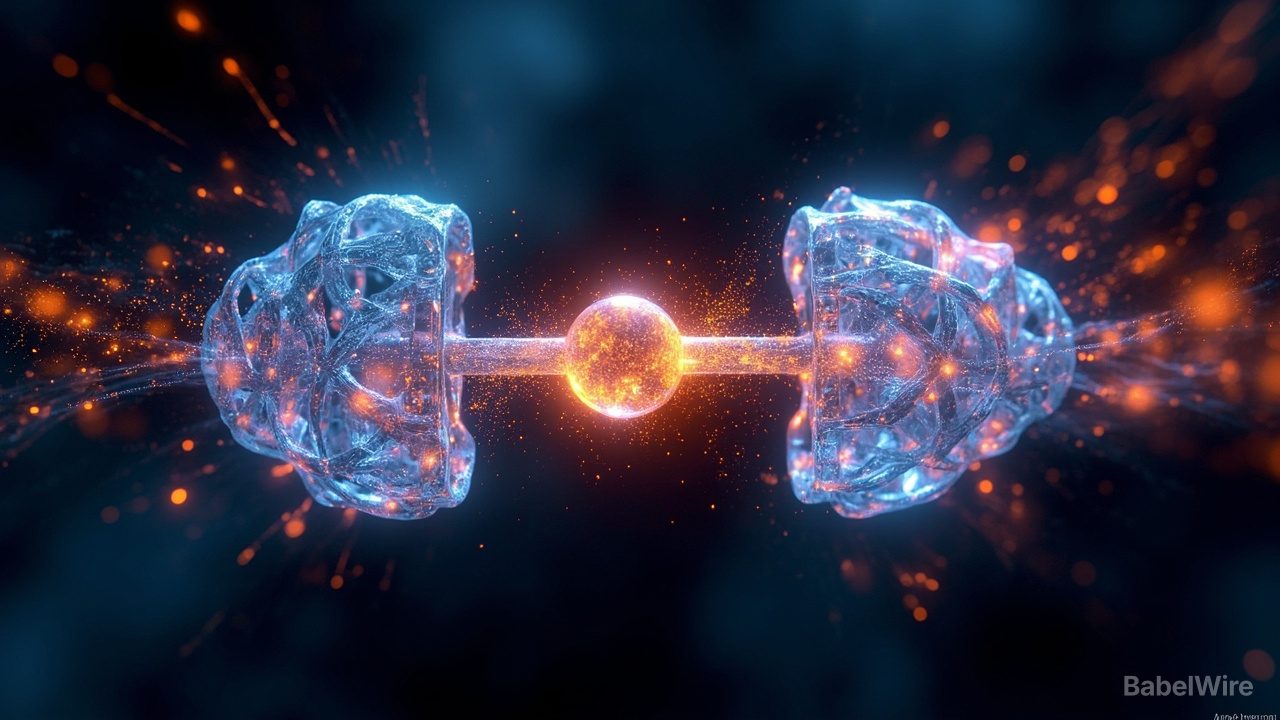
The Rice team, led by Professor Raúl Hernández Sánchez, designed an ingenious molecular structure that resembles a tiny basket. Each "basket" is built to hold a single atom of an f-block metal. The researchers then placed two of these baskets facing each other, with six carefully positioned atoms — including a dioxygen (O₂) molecule — suspended between them.
The result: neodymium centers not only bound the dioxygen but also facilitated an electron density rearrangement within the O₂ molecule, a phenomenon rarely seen with these heavy metals.
"What we discovered is that neodymium can bind dioxygen through pi interactions — a type of bonding that was not previously thought to be significant for f-block elements," explained Hernández Sánchez. "This opens a completely new chapter in our understanding of how these metals interact with their environment."
Why This Matters
The discovery has implications far beyond a single molecule:
Catalysis: Rare-earth metals are already used as catalysts in petroleum refining and chemical manufacturing. The new bonding mechanism could enable more efficient, selective catalysts that use less energy and produce less waste.
Materials Science: Understanding how rare-earth metals bind oxygen at the molecular level could lead to better corrosion-resistant alloys, improved optical materials, and more efficient phosphors for LED lighting and displays.
Clean Energy: Neodymium magnets are essential for electric vehicle motors and wind turbines. A deeper understanding of neodymium chemistry could lead to improved manufacturing processes and potentially even new magnetic materials.
Fundamental Chemistry: The finding challenges conventional wisdom about f-block elements, which were thought to have limited ability to participate in the types of electron-sharing interactions common among transition metals like iron, copper, and nickel.
A New Chapter
The researchers believe their molecular basket design can be adapted to study other f-block metals, including other lanthanides and actinides, potentially revealing a whole family of previously unknown chemical behaviors.
"We're really just scratching the surface," said Hernández Sánchez. "This opens up an entirely new area of f-block chemistry that we're only beginning to explore."
The work was supported by Rice University and national science funding agencies. It adds to a growing body of research from the university's chemistry department, which has been at the forefront of rare-earth element chemistry, including flash Joule heating methods for recovering valuable rare-earth elements from electronic waste.
For an industry racing to secure supply chains for critical minerals — rare-earth refining is dominated by China — any advance that deepens fundamental understanding of these elements is strategically significant. The molecular basket may be tiny, but the chapter it opens could be very large indeed.
Sources
- sciencedaily.comScienceDaily — A Tiny Molecular Basket Unlocks a Powerful New Kind of Chemistry
- news.rice.eduRice News — Rice Scientists Discover New Way Metals Bind Oxygen, Possibly Starting 'New Chapter' in Chemistry
- scitechdaily.comSciTechDaily — A New Chapter in Chemistry? Scientists Uncover New Way Metals Bind Oxygen
- bioengineer.orgBioengineer.org — Rice Scientists Uncover Novel Metal-Oxygen Binding Mechanism