Ask a topologist to picture the fourth dimension and you will not get a picture. You will get a method.
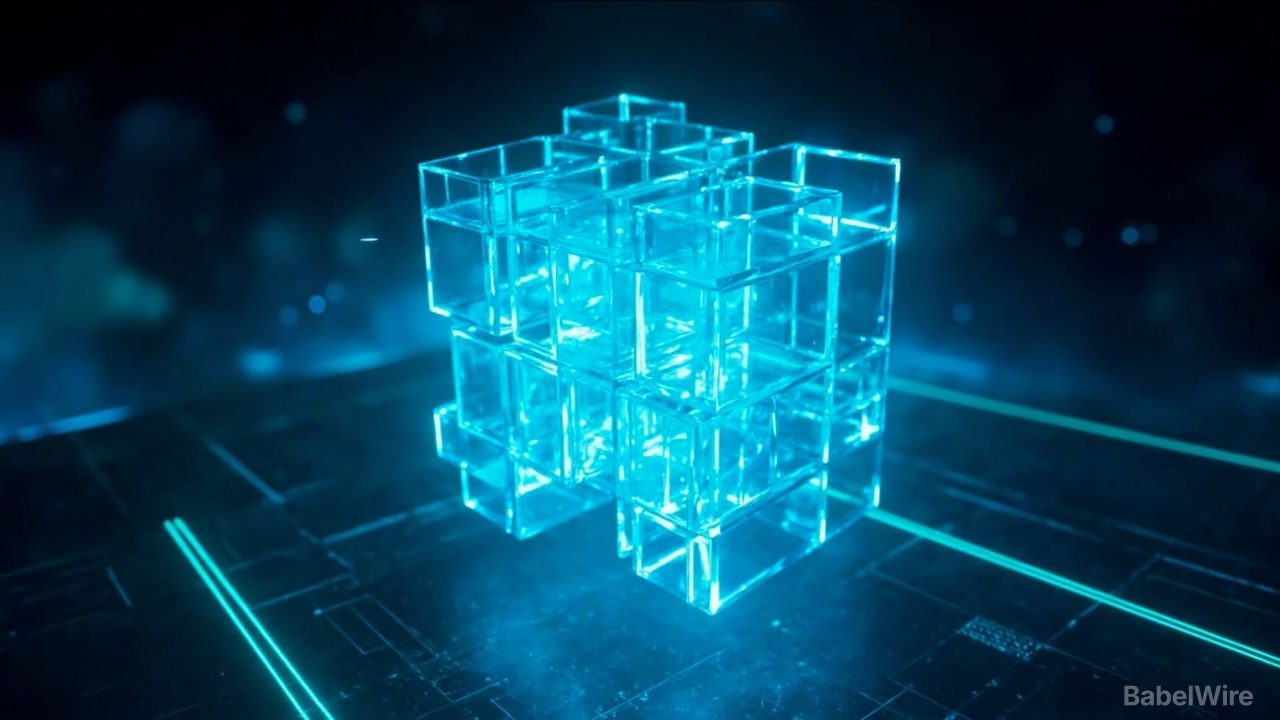
Maggie Miller, who studies four-dimensional manifolds, told Quanta Magazine's podcast The Joy of Why that our intuition about space is built from three dimensions and quietly breaks when a fourth is added. Her approach is not to imagine an impossible shape but to treat a 4D object as a sequence of ordinary 3D snapshots — a reel of cross-sections, each a slice of the same object at a different point along the fourth axis. Watching how the slices change is what makes the extra dimension legible.
That is more than a party trick. Dimension changes the rules of topology. In three-dimensional space a knotted loop of string is genuinely stuck: no amount of wriggling undoes a trefoil. Give the loop a fourth dimension to move through and such knots come undone, because there is room to slide a strand past a spot that in 3D is occupied. The extra room cuts both ways: in four dimensions, surfaces can be knotted in ways that have no lower-dimensional analogue — which is precisely the territory Miller works in.
The practical takeaway is that "seeing" the fourth dimension is a learned discipline rather than a perceptual one. Mathematicians do not visualize 4D directly; they build reliable handles — slicing, projecting, and tracking how a shape's pieces move — and then reason carefully about what those handles leave out. Moving back and forth between a four-dimensional object and its three-dimensional film is the kind of tool that lets a person work inside a space they can never look at.