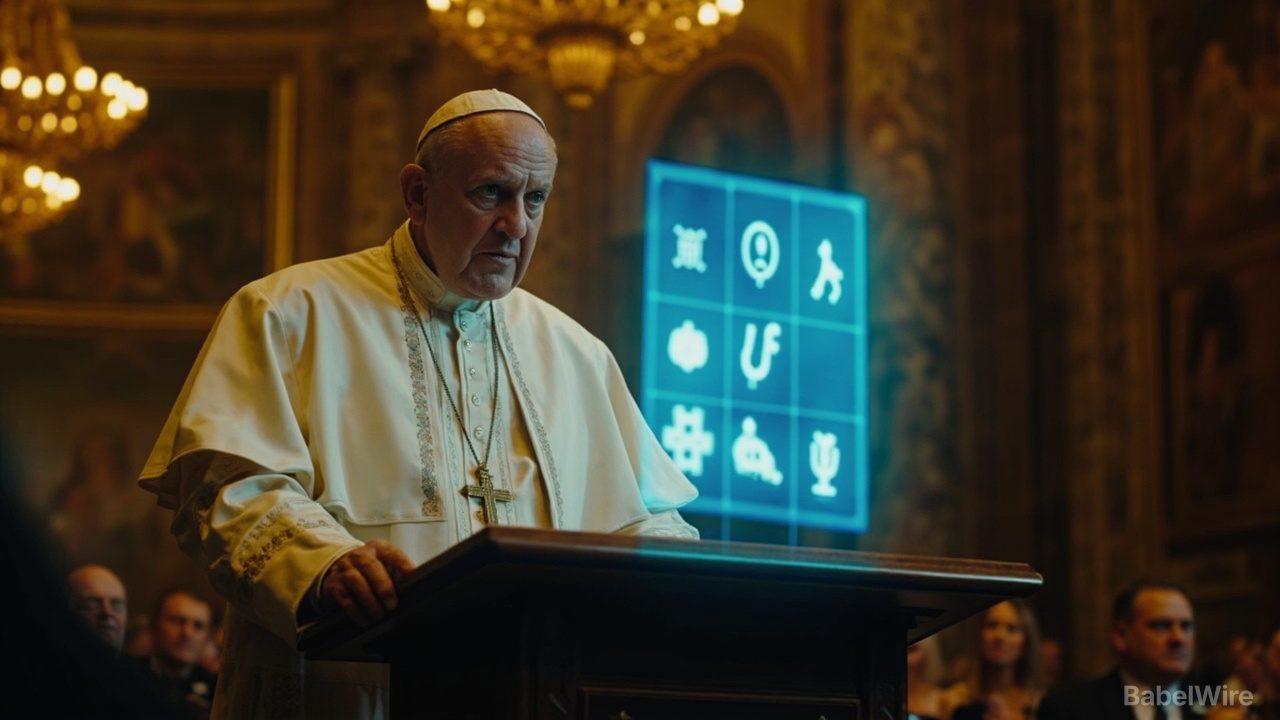
Pope Leo XIV addressed the International Catholic Legislators Network in the Vatican's Clementine Hall on August 21, 2026, delivering the most concrete AI-legislation guidance he has given since Magnifica Humanitas, his May 2026 encyclical on AI and human dignity.
Where that document ran 245 paragraphs of broad social-doctrine framing, this address distilled the position into four discrete requirements for what sound AI legislation should contain: (1) encourage scientific and technological creativity, (2) safeguard fundamental human rights including protection from exploitation, (3) preserve personal privacy, and (4) ensure transparency and guarantee that AI strengthens democratic institutions.
The headline line, posted to @Pontifex and viewed over 420,000 times within hours, declared: "The world does not need an artificial intelligence that diminishes humanity; rather, it needs human intelligence enlightened by wisdom, political authority guided by conscience and technological innovation directed by charity."
The fourth point — that AI use should guarantee democratic institutions get stronger, not just avoid weakening them — represents the most pointed overlap with secular multilateral AI governance, echoing concerns raised at the G7 Evian AI summit.
None of this carries legal force outside Vatican City, but three signals are worth tracking for AI builders: transparency requirements are converging across religious and secular policy voices, "protect users from exploitation" is broader than most current AI law, and democratic-institution impact is becoming its own compliance category for anything touching elections, civic information, or public discourse.