Two New Technologies Could Finally Destroy Toxic 'Forever Chemicals' in Water
Researchers at the Helmholtz-Zentrum Dresden-Rossendorf (HZDR) in Germany are testing two technologies designed to destroy per- and polyfluoroalkyl substances (PFAS) — the vast family of industrial chemicals known as 'forever chemicals' for their extraordinary resistance to natural breakdown.
PFAS have spread across the globe through wastewater and are now found in rivers, oceans, and drinking water. Some are suspected of damaging genetic material and raising cancer risk, though the biological effects of many of the 10,000+ compounds classified as PFAS remain poorly understood.
Method 1: Collapsing Bubbles at Thousands of Degrees
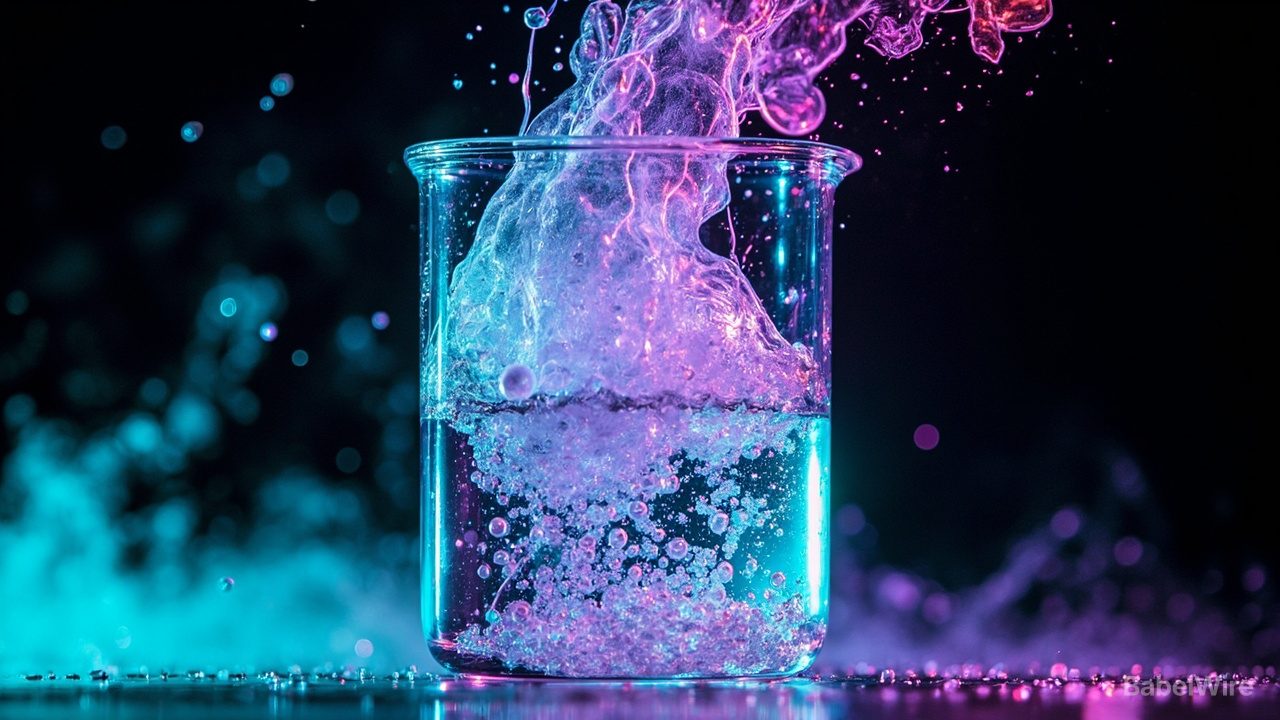
The first approach uses hydrodynamic cavitation. PFAS-enriched water is passed through a constriction, generating tiny vapor bubbles. Because long-chain PFAS behave like surface-active substances, they collect on the bubble surfaces.
"When the bubbles burst under rising ambient pressure, the PFAS attached to the bubbles are exposed to local temperature spikes of several thousand degrees Celsius," explains Dr. Sebastian Reinecke, head of the Department of Water and Environmental Technologies at HZDR.
The cavitation also creates highly reactive hydroxyl radicals that attack intermediate breakdown products. In tests focused on PFOS (perfluorooctane sulfonate), a particularly persistent PFAS variant, the process degraded about 37 percent of dissolved PFOS molecules. The team is working to increase this to over 80 percent.
Method 2: Cold Plasma Attacks at the Surface
The second method combines cold atmospheric plasma with gas dispersion. Gas is introduced into PFAS-contaminated water, and the PFAS molecules attach to rising gas bubbles. When these bubbles reach the surface, they are broken down by the plasma.
This treatment almost completely degraded both long-chain and short-chain PFAS, releasing about 35 percent of the fluorine atoms as harmless fluoride salts. The results were significantly faster than cavitation, though the method consumes more energy per volume unit.
The Combined Future
The team's long-term goal is to combine both technologies into a single system, bringing together the strengths of each approach. Dr. Reinecke believes they can achieve high degradation rates by combining the highly reactive species from the plasma with the effects of cavitation.
If successful, this combined approach could lead to a commercially viable technology for destroying PFAS in contaminated water before the chemicals spread into the environment — offering hope for tackling one of the world's most stubborn pollution problems.
_The research is co-financed by the European Union and the Saxon state government as part of Germany's National Water Strategy._