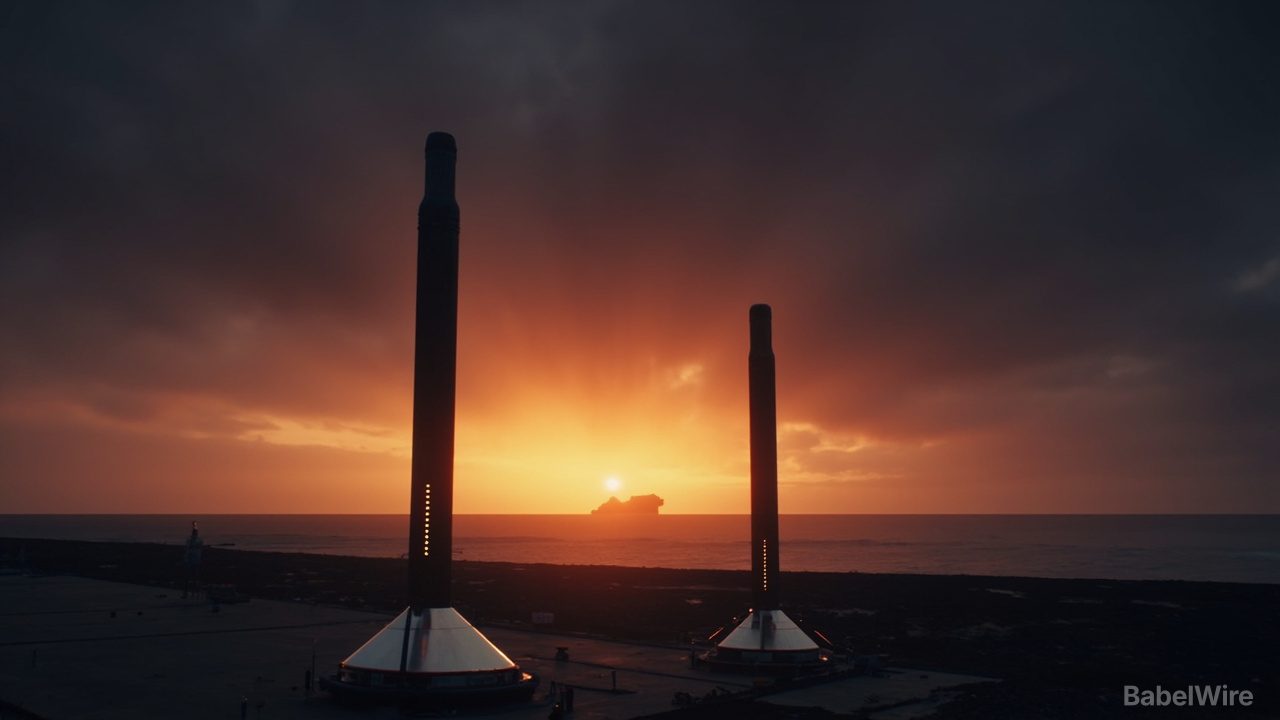
The US military is moving to shore up the commercial launch industry as SpaceX prepares to retire its Falcon rocket, a shift defense officials appear to view as a national-security risk.
The Pentagon's Office of Strategic Capital (OSC) announced a $150 million conditional loan to Rocket Lab on Tuesday, two weeks after a matching $150 million commitment to Stoke Space. The loans are the first significant OSC support for launch companies from an office created in 2022 to fund 'vital' national-security technologies; OSC has also lent $150 million to satellite-tracking firm LeoLabs.
The concern is capacity. SpaceX has stopped taking commercial orders for Falcon 9 launches after 2028 as it focuses on the super-heavy-lift Starship, and plans to retire Falcon entirely if Starship delivers. Government Falcon 9 and Falcon Heavy launches are expected to continue longer, with Space Force orders allowed through 2029 and launches running to 2033. But the Space Force's other near-term option, United Launch Alliance's Vulcan, has been grounded twice in two years by solid-rocket-booster problems, forcing missions back to SpaceX.
Space Systems Command now forecasts up to 249 medium-to-heavy launches through the early 2030s, more than double its estimate two years ago. Beyond SpaceX and ULA, it has made Blue Origin, Rocket Lab, Stoke Space, Relativity Space and Impulse Space eligible to compete. Stoke's loan will help build a second pad at Cape Canaveral for its Nova Block 2 rocket; Rocket Lab's will support flight-rate and manufacturing upgrades for its partially reusable Neutron.
The crunch is already reshaping prices. Rocket Lab raised Neutron's base launch price to $70 million from $55 million, citing surging bookings, and reported a record backlog of 117 missions. 'Launch is extremely constrained, and that is exactly the situation we predicted,' said founder and CEO Peter Beck.