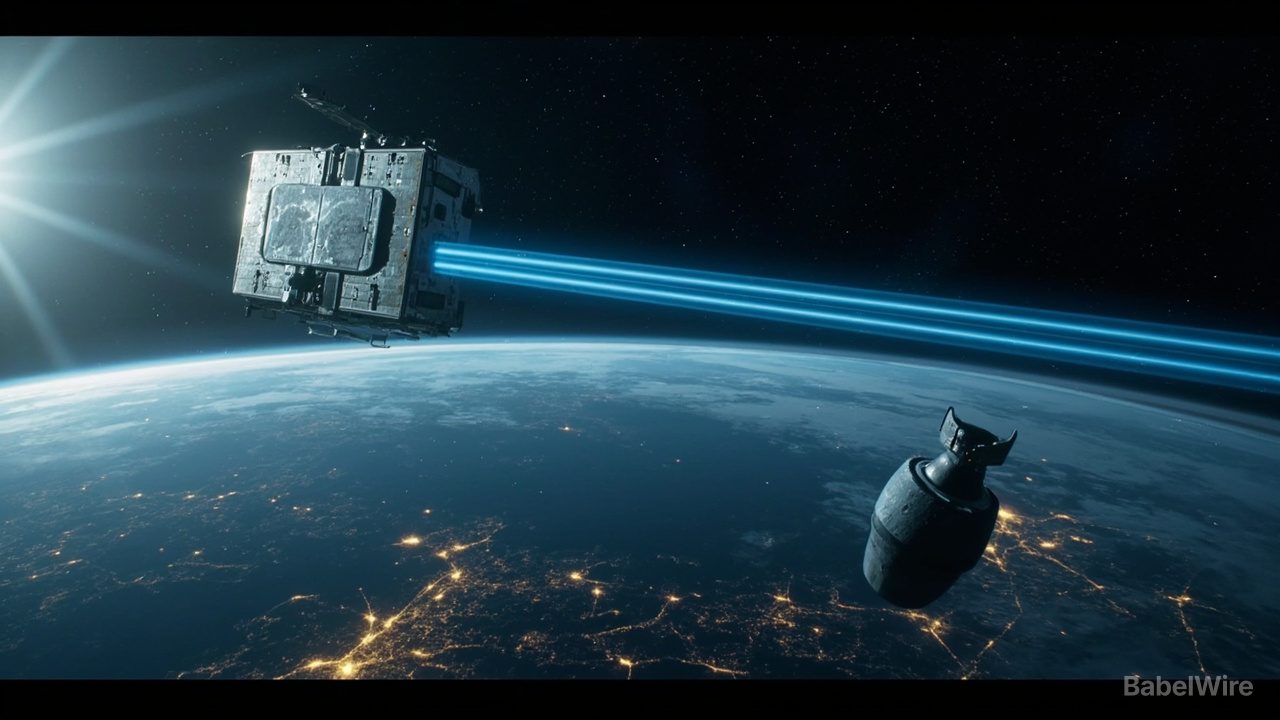
A new study published in Nature describes a method to detect nuclear warheads secretly placed in Earth orbit — using a satellite no bigger than a shoebox.
The concept is simple and elegant: any nuclear weapon orbiting Earth would constantly be bombarded by cosmic rays and trapped radiation in the Van Allen belts. These interactions cause the weapon's fissile material to emit a distinct neutron signature — a telltale fingerprint that a compact detector satellite could identify from a distance.
How It Works
Nuclear warheads contain fissile materials like plutonium-239 or highly enriched uranium-235. When cosmic rays and high-energy protons from space radiation strike this material, they trigger spallation reactions — knocking neutrons loose. These neutrons are then emitted in a characteristic energy spectrum that differs from natural background radiation.
The proposed shoebox-sized satellite would carry a neutron spectrometer optimized to detect this specific signature. By orbiting Earth and scanning other satellites, it could identify which ones harbor nuclear devices.
The Strategic Context
The ability to detect covert nuclear weapons in space arrives at a critical moment: - The Outer Space Treaty (1967) prohibits placing weapons of mass destruction in orbit, but verification has always been the weak link - Anti-satellite weapon development has accelerated globally, raising concerns about weaponization of space - Nuclear-powered satellites (using reactors for power, not weapons) are common and need to be distinguished from actual warheads
The detector provides a path to verifiable arms control in space — something that has eluded diplomats for decades.
Technical Challenges
While the physics is sound, practical deployment faces hurdles: - The detector must discriminate between warheads and nuclear power sources used in some deep-space probes - Orbital mechanics: covering all potential hiding places requires constellation-level coverage or highly maneuverable platforms - Countermeasures: a nation hiding a warhead might shield it, though shielding would itself be detectable
Implications
If deployed, such detectors could serve as independent verification for a future space-based arms control treaty. The research demonstrates that hiding a nuclear weapon in orbit may no longer be feasible — a development that could reshape strategic thinking about space militarization.
As one researcher put it: "The era of space being a blind spot for nuclear verification is ending."