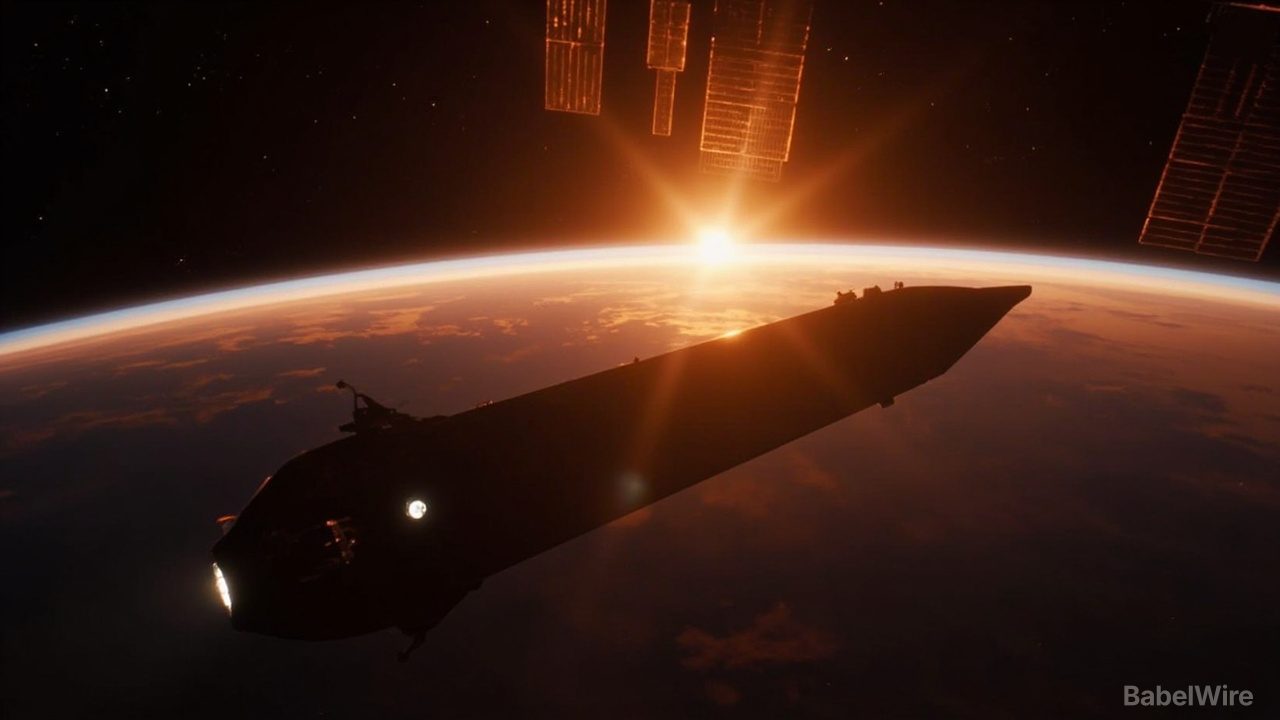
SpaceX has filed an application with the FCC to launch up to one million satellites as part of an orbital data center system — a proposal that would place AI computational centers in low Earth orbit. Scientists are now raising the alarm about what this could mean for astronomy and the night sky itself.
The Scale of the Threat
According to a study published in the Monthly Notices of the Royal Astronomical Society, and amplified by the European Southern Observatory (ESO), the proposed constellation would dwarf anything currently in orbit. Currently, there are roughly 14,000 satellites in space. SpaceX's proposal envisions 500,000 to 1,000,000 new satellites operating between 500 km and 2,000 km altitude, using sun-synchronous orbits to maximize solar power for the onboard data centers.
Simulations presented by Shane Ross, an aerospace engineer at Virginia Tech, show that from a typical mid-latitude location, the constellation would be visible as giant rings of light across the sky, particularly during twilight hours.
What Astronomers Say
The study's authors warn of devastating consequences for astronomy:
- Naked-eye visibility: Thousands of satellites would be bright enough to see without a telescope, fundamentally changing what the night sky looks like - Professional telescope interference: Light trails from the satellites would contaminate long-exposure images, potentially making certain types of observations impossible - The giant rings effect: Orbital mechanics mean the satellites would appear to form distinct rings or bands across the sky, a permanent new feature of the nighttime environment - Cumulative impact: Unlike individual satellite trails that can be edited out, a constellation of this density would create continuous interference
The Royal Astronomical Society stated that the constellation could create giant rings of artificial satellites that would be devastating for professional astronomical observations.
Why This Matters
The night sky is one of humanity's oldest shared resources. Professional astronomers warn that ground-based telescopes — including major facilities like the Vera Rubin Observatory currently under construction in Chile — could see their observing time severely curtailed. International space law currently has no mechanism to protect dark skies from commercial satellite constellations.
SpaceX and Google are reportedly in talks to explore the orbital data center concept. The ESO described the situation as beyond the limit, warning that the combination of communication satellites, reflector satellites, and data center satellites could fundamentally and irreversibly alter humanity's view of the cosmos.
Sources
- scientificamerican.comOrbital data centers could transform our night sky forever — Scientific American
- eso.org"Beyond the limit": one million satellites and mirrors in space — ESO
- academic.oup.comImpact on astronomy of data centres orbiting Earth — Oxford Academic
- spacenews.comAstronomers fear orbital data centers will interfere — SpaceNews