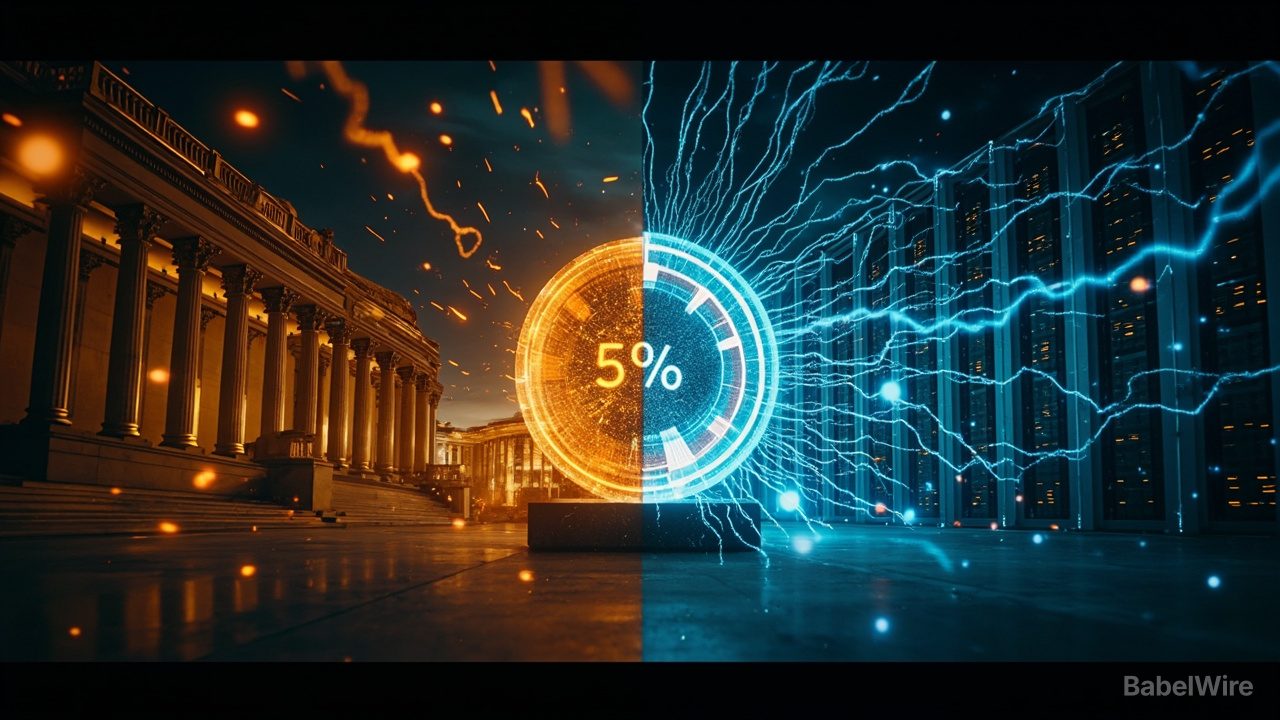
In what would be one of the most unusual public-private arrangements in tech history, OpenAI has reportedly proposed giving the US government a 5% ownership stake in the company, valued at approximately $42.6 billion at its current private valuation.
The proposal, first reported by the Financial Times, extends beyond OpenAI alone. Sam Altman has floated a structure where multiple leading AI labs would each cede 5% stakes, pooled into a vehicle modeled on the Alaska Permanent Fund — the sovereign wealth fund that distributes oil revenue to every Alaska resident. Under this model, the American public would effectively own a diversified portfolio of frontier AI companies.
The Strategic Logic
For OpenAI, the calculus is clear: a government with a financial stake in the company's success has an economic interest in its commercial growth, creating structural alignment between regulatory oversight and corporate performance. The proposal is part of OpenAI's voluntary engagement with the White House's frontier model standards framework as it prepares for its planned September 2026 IPO.
Altman has floated the concept publicly in recent weeks, and OpenAI has been in active discussions with the Trump administration. If the stake arrangement is announced before OpenAI's S-1 becomes effective, it would shape the IPO roadshow narrative. If it lands after, it creates a post-IPO governance question for public shareholders.
The Critics' Case
But the proposal has drawn immediate and sharp criticism from governance scholars and tech commentators. Ben Werdmuller wrote on Semafor that OpenAI wants to give "us 5% of its success. It is a bad bargain." The core objection is structural: a regulator with an equity stake in the company it regulates cannot enforce rules impartially against that company.
Governance experts have noted that this arrangement would create an inherent conflict of interest. Would the Department of Commerce or Treasury — as a shareholder — push for weaker AI safety regulations to protect the value of its stake? Would antitrust enforcement be softer against a company the government partly owns?
OpenAI's proposal explicitly asks other leading labs to cede the same stake, which would expose Anthropic, Google, and xAI to the same governance conflict. Anthropic has not publicly commented on whether it would participate.
The Bigger Picture
The proposal arrives amid a broader debate about whether frontier AI companies are becoming infrastructure-like institutions whose economic benefits, risks, and governance cannot be left entirely to private markets. The Crunchbase H1 2026 report released July 2 documented that global VC funding hit a record $510 billion in the first six months, with OpenAI and Anthropic alone accounting for $217 billion — 43% of all global startup capital.
Critics on the left argue the government should demand more than 5%. Critics on the right argue the government should not own tech companies at all. Whether the White House accepts the proposal and whether Congress would authorize such an arrangement remain open questions that will define AI governance debates through the rest of 2026.