The Age of AI Hardware Begins
OpenAI has officially entered the consumer hardware market — and it's starting with not one, but two intriguing products. The company that brought us ChatGPT is betting that the next frontier of AI interaction isn't on a screen, but on your desk and in your home.
The Codex Micro: A Command Center for AI Agents
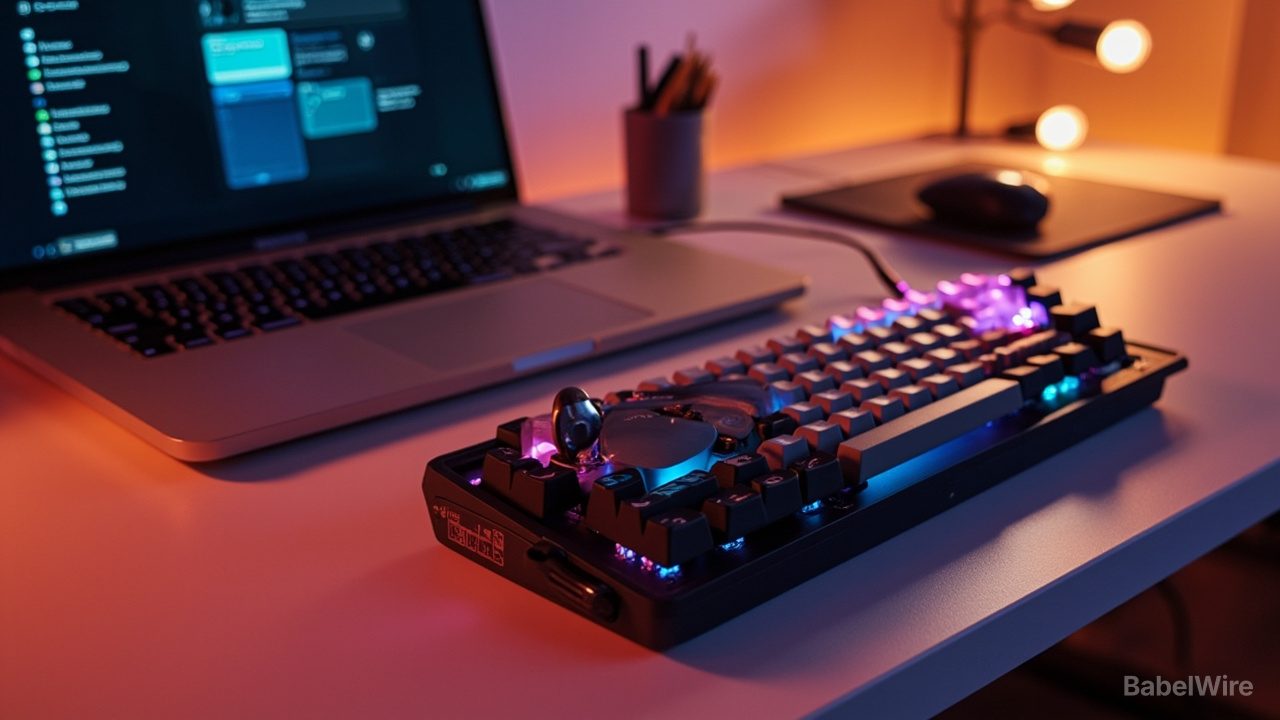
First up is the Codex Micro, a $230 limited-edition keyboard co-designed with Work Louder, a specialty keyboard maker. It's a compact macro pad designed to be the physical command center for managing OpenAI's fleet of AI coding agents.
Key features: - Agent Keys — Light-up keys showing agent status in real time - Command Keys — Customizable shortcuts for frequent Codex actions - Joystick — For launching common workflows with a flick - Reasoning Dial — Adjusts how much compute power an agent uses on a task
"It's like a DJ deck for AI developers," one early reviewer noted. The device connects and configures via the ChatGPT desktop app.
OpenAI emphasized this is a limited-run collaboration — more of a design statement and developer novelty than a mass-market product. But it signals the company's ambition to put physical interfaces on AI.
The Secret Project: A Screenless AI Companion Speaker
More consequential is what Bloomberg revealed on July 14: OpenAI is developing a portable, screenless smart speaker designed as an AI companion. The device features: - No screen — voice and touch interaction only - Mechanical elements that can move on their own — suggesting physical expressiveness - A "personality" designed to feel humanlike
Designed with input from former Apple engineers (including those who worked on the iPhone's design language), the device is reportedly a long-term project. It's expected to launch in 2027.
The Apple Lawsuit
Complicating matters: Apple recently sued OpenAI, accusing the company of stealing trade secrets related to its hardware designs. OpenAI denies the allegations. The timing — a hardware launch amid a hardware theft lawsuit — has raised eyebrows across the industry.
What It Means
OpenAI's hardware push represents a bet that the future of AI is ambient, physical, and always-on. The Codex Micro is a playful first step for developers; the companion speaker would be the real test of whether OpenAI can translate its software dominance into compelling hardware.
Sources
- techcrunch.comTechCrunch — Amid hardware legal battle, OpenAI releases a $230 keyboard for Codex
- bloomberg.comBloomberg — OpenAI's First Device Will Be Movable, Screenless Speaker
- businessinsider.comBusiness Insider — OpenAI's New $230 Mini Keyboard Is for Codex Power Users
- cnet.comCNET — OpenAI's First Device Will Reportedly Be a Portable Smart Speaker