Green hydrogen has a water problem. Splitting water with renewable electricity is the cleanest route to the fuel, but it consumes a resource that in many of the sunny, windy places best suited to the process is already scarce. A reactor that produces hydrogen, electricity and fresh water together, reported by Physics World, is an attempt to dissolve that conflict rather than manage it.
The logic of combining the three is straightforward once the outputs are seen as one system. Desalination needs energy; electrolysis needs purified water; and both processes shed heat that is usually vented. A design that couples them can use some of its own electricity for desalination, feed the resulting pure water to the electrolyser, and recover waste heat to raise the overall efficiency of whichever stage benefits most. What would otherwise be three separate plants drawing on the same stressed water source becomes one plant that both consumes and produces fresh water.
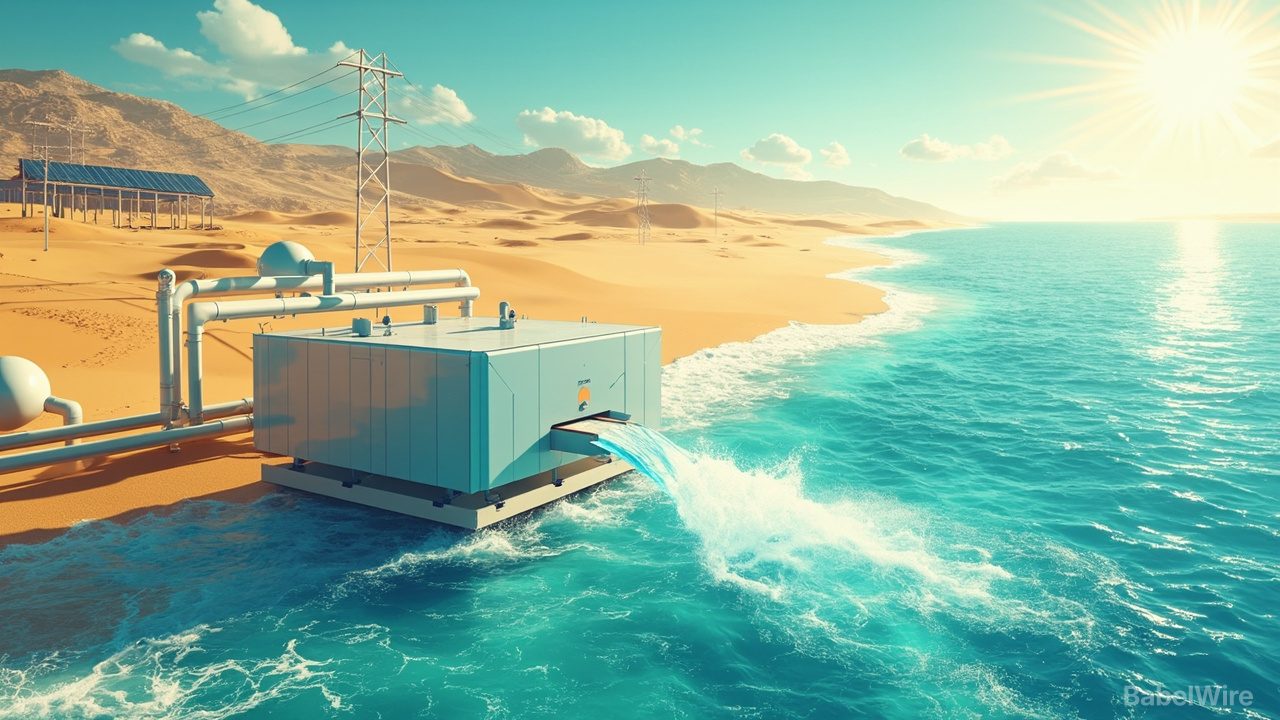
For regions with abundant sun, wind and seawater but little rain, the appeal is obvious. The alternative — large electrolyser farms importing or competing for drinking water — has already drawn objections, and a reactor that ships water as a co-product rather than a casualty of fuel production changes the local arithmetic. Fresh water is also the more immediately valuable output for many of the communities that would host such systems.
The obstacles are the usual ones for elegant multi-output designs. Each additional stage adds components, materials and failure modes; thermal integration that looks efficient on paper often loses in the real world to lower-grade heat and the cost of the extra equipment. Whether the reported system's numbers hold outside the laboratory, what scale it has been demonstrated at, and how it compares with separate, mature plants — desalination is a well-established industry, electrolysis less so — are not settled by the description available here.
Still, the direction is instructive. The first generation of clean-hydrogen thinking treated water as a free input. As deployment scales, water has become a constraint that designs have to answer for. A reactor whose headline feature is that it gives water back is a sign of how that accounting has changed.