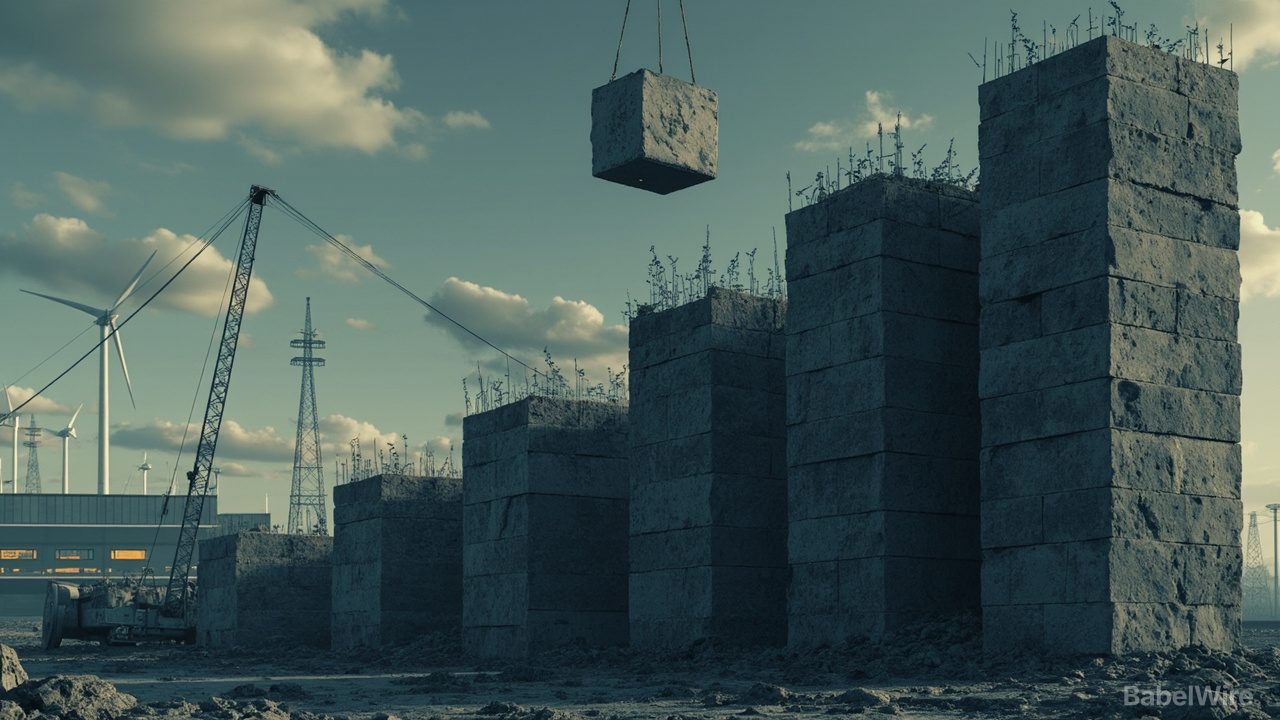
Nvidia spent three years selling shovels to a gold rush. According to reports on Thursday, it is now preparing to co-sign the loan on the mine.
Reuters, citing The Information, reported that Nvidia is in talks to offer AI cloud provider Nscale billions of dollars in credit guarantees, backing the debt funding for a data center that Anthropic has agreed to lease. Reports put the guarantee in the billions, with figures above $5 billion circulating; the site is Nscale's Monarch campus in West Virginia, where Anthropic has committed to roughly 460 megawatts.
Neither company has confirmed terms. The structure is what matters.
A neocloud like Nscale has one way to build: borrow now, get paid over a 10- to 15-year contract later. A 460MW campus is a multi-billion-dollar bet in concrete and copper, placed years before the first invoice clears. Lenders will finance it only if someone creditworthy stands behind the revenue. Anthropic's commitment provides the revenue; Nvidia's guarantee lowers the price of the debt that front-runs it.
For Nvidia the logic is straightforward and slightly uncomfortable. Its revenue depends on neoclouds being able to buy GPUs faster than their cash flow allows. Underwriting their debt keeps the orders coming. And it is not charity: a guarantee is a contingent liability, not a check. If Anthropic keeps paying, Nvidia's exposure is a footnote. If Anthropic doesn't, Nvidia inherits a building full of its own chips and a claim on a company whose collateral is compute depreciating on a five-year curve.
Investors of a certain age will reach for the obvious comparison. In the late 1990s, Lucent, Nortel and Ericsson lent billions to telecom upstarts that bought their equipment. When demand slowed, the loans became the losses, and vendor financing turned a cyclical downturn into a solvency problem. The difference this time is that the buyers are not unknown local carriers but the best-funded AI labs on earth, with contracts measured in decades and, in Anthropic's case, a filed IPO prospectus.
The uncomfortable similarity is the signal being sent. When the seller starts guaranteeing the buyer's credit, the binding constraint is no longer demand for the product. It is the buyer's balance sheet. Nvidia is effectively saying that the customer's ability to finance 460MW is what stands between an order and a shipment.
This landed in the same week Microsoft cut its capital expenditure forecast by $5 billion, blaming delayed third-party GPU capacity — the same third-party capacity, in all likelihood, that neoclouds like Nscale are supposed to deliver. The two stories are one story from opposite ends: the buildout is now gated by financing and by physics, not by appetite.
What to watch is unglamorous. Whether the guarantee appears as a disclosed commitment in Nvidia's next filing, and at what amount. What spread Nscale's debt prices at, with and without the backstop. Whether the next neocloud gets the same treatment. A guarantee is cheap to talk about and expensive to honor, and the only place it becomes real is the footnote.