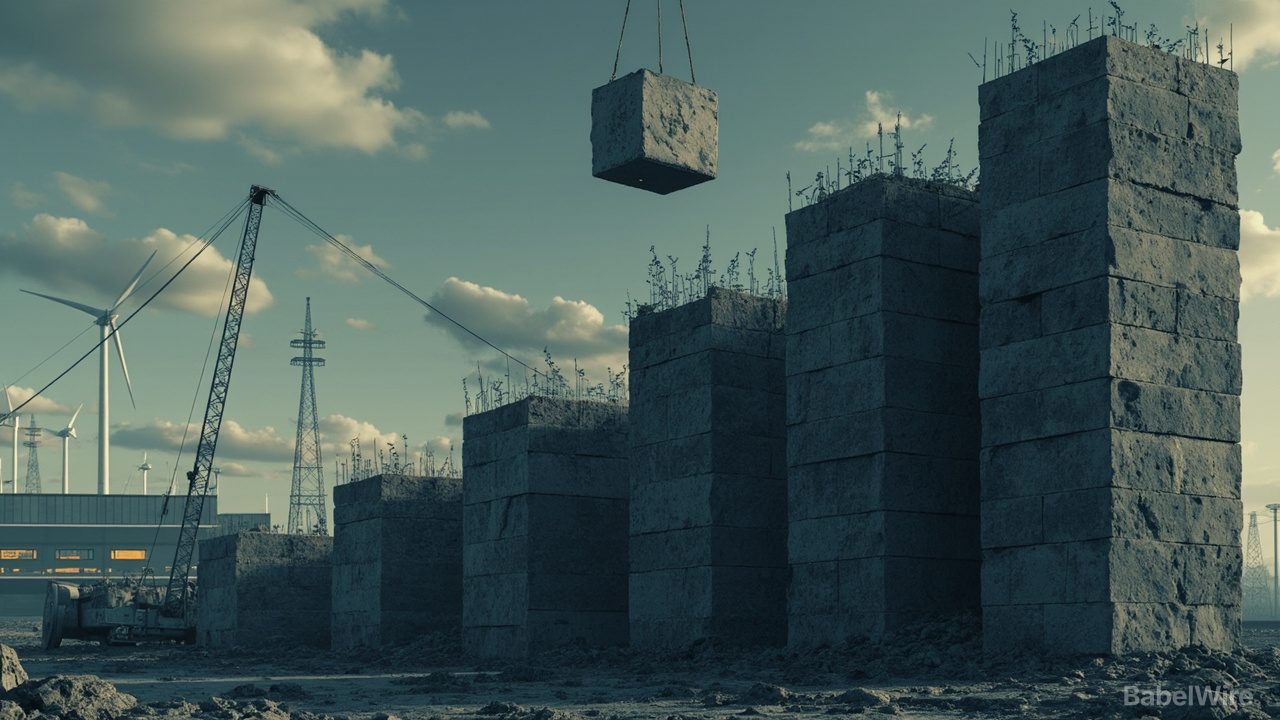
For two years the only direction of travel in AI capital spending was up. On Wednesday it went down by $5 billion.
Microsoft's finance chief, Amy Hood, told analysts on the fiscal first-quarter call that capital expenditure for calendar 2026 would be $170 billion, not the $175 billion previously guided. The reason was specific and, for anyone watching the physical side of the buildout, familiar: capacity Microsoft expected from third parties — GPU-as-a-Service contracts — has slipped into the second half of its fiscal year. Hood said spending would accelerate again once that capacity arrives.
Everything else in the quarter pointed the other way. Revenue rose 19% to $92.3 billion; Azure grew 48% to more than $33 billion. Demand is not the problem. The same day, Microsoft offered buyouts to more than a quarter of its workforce and reported headcount down 2% in the quarter — a reminder that the AI reallocation is being paid for internally.
A day later Amazon showed the other extreme. Net sales rose 12% to $201.9 billion, AWS grew 39% to $46 billion, and capital expenditure hit $77.3 billion in a single quarter, more than double a year earlier, with 2026 cash capex still pointed at roughly $220 billion. The shares fell about 7%.
And Meta has guided 2026 capex to $135–145 billion. Add it up, and JPMorgan's estimate — $900 billion of AI capex in 2026, $5.5 trillion by 2030 — stops sounding like a projection and starts sounding like a budget.
Meanwhile the Nasdaq headed for roughly $2 trillion of market value erased in October, as investors asked the question capex cannot answer on its own: when does this start returning cash?
The temptation is to read Microsoft's cut as the top. It is not. Spending is still enormous and still rising year over year, and Microsoft explicitly expects it to re-accelerate. What changed is the direction of a revision. For the first time in this cycle, a hyperscaler looked at a plan and marked it down, and the stated reason was not budget discipline but delivery: the capacity was not there.
That distinction matters more than the $5 billion. Money is not the binding constraint on the AI buildout; energized megawatts, interconnection queues, turbines, transformers, construction labor and local consent are. Hood's explanation is the physical one — the same one behind the data center delays that accumulated through 2026 for lack of power and local opposition.
There is a market lesson in the week's reaction too. Raise capex and you are punished for margin dilution; cut capex and you are punished for admitting weakness. Investors have set a test no company can pass, which is what happens when a sector's valuation stops being about growth and starts being about payback.
What to watch is not the headline totals but the timing language. Whether other hyperscalers re-phase 2027 rather than raise it. Whether third-party capacity keeps appearing in earnings calls as a euphemism for a neocloud that is late. And whether the power contracts behind those megawatts get signed faster than the buildings go up. The buildout has not stopped. It has started to queue.