The Dawn of Physical AI in Japan
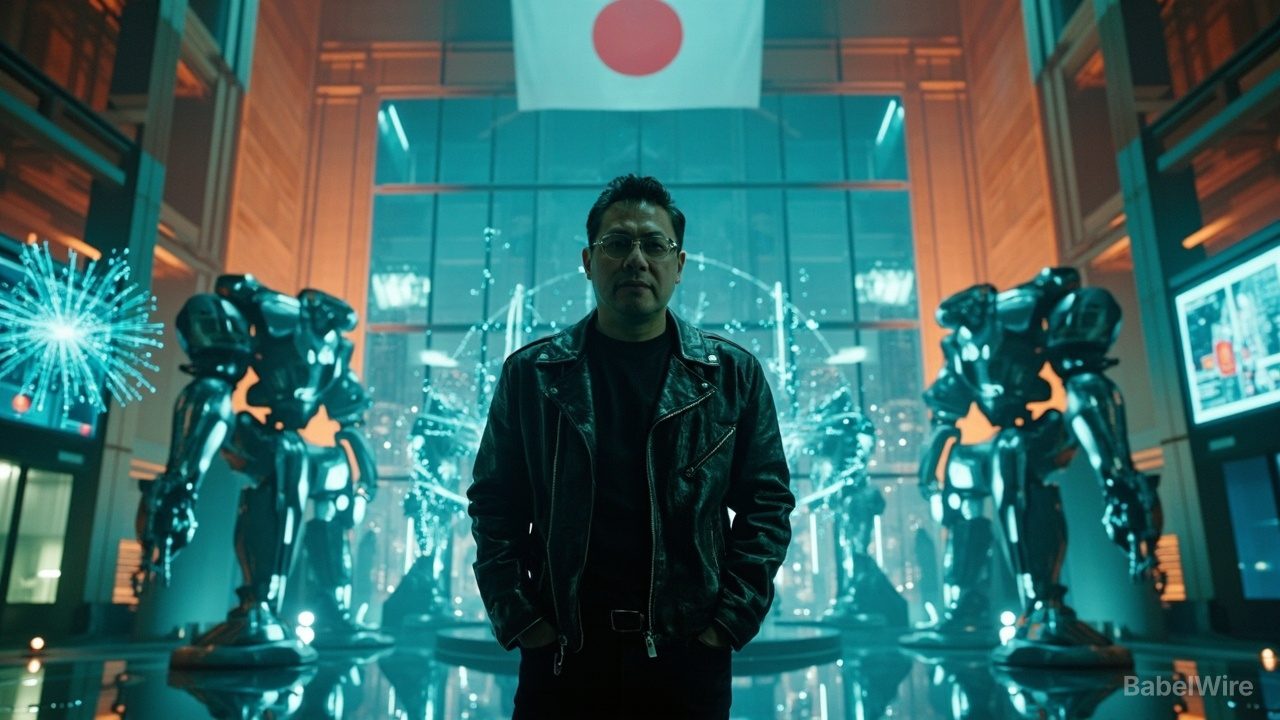
TOKYO — Nvidia CEO Jensen Huang declared that "Physical AI is the next industrial revolution — and it will be made in Japan" as he stood shoulder-to-shoulder with the leaders of Japan's four most iconic industrial and robotics companies at a packed press conference in Tokyo on Thursday.
Huang, dressed in his signature leather jacket despite Tokyo's sweltering July heat, announced partnerships with Fanuc, Yaskawa Electric, Kawasaki Heavy Industries, and Fujitsu to build what they are calling a "sovereign collaborative control platform" for Physical AI — AI that can perceive the real world, reason about it, and take physical action through robots and machinery.
Who's Who in the Alliance
- Fanuc — The world's leading factory automation and CNC robot maker will integrate Nvidia's full-stack AI platform into its industrial robots, aiming to bring "AI systems that are flexible and usable by operators of all skill levels" to the shop floor. - Yaskawa Electric — The industrial robotics pioneer, which recently brought its MOTOMAN NEXT autonomous AI robot to market (featuring built-in Nvidia GPUs), will deepen its integration with Nvidia's physical AI stack. - Kawasaki Heavy Industries — Known for its healthcare and nursing-care robotics, Kawasaki will collaborate on hospital solutions that autonomously connect every stage of the patient journey — from admission to surgery to post-operative care. - Fujitsu — As the alliance's technology orchestrator, Fujitsu will develop the sovereign collaborative control platform using Nvidia Omniverse, Isaac, and Cosmos foundation models, targeting manufacturing, logistics, and healthcare.
Noetra's Massive Chip Order
In a parallel announcement, Noetra — a government-backed physical AI company whose investors include Sony — revealed it would purchase 27,500 of Nvidia's next-generation Rubin chips. Construction on Noetra's AI computing facility is slated to begin in April 2027, with operations starting in June 2028.
Why This Matters
Japan faces a demographic crisis: a rapidly aging population and shrinking workforce. The country's industrial giants see Physical AI as the answer — not to replace human workers, but to multiply their capabilities. Huang captured the moment: "Japan invented modern industry. With AI, Japan will define its next era."
The alliance aims to standardize and open-source the collaborative control platform, making it available to any company or research institution. The goal is nothing less than re-establishing Japan as the world's leader in robotics — a position it held in the 1980s but has seen eroded by competition from the US, China, and Europe.
The Bigger Picture
This announcement is part of a broader Japan AI week. Earlier in the week, Nvidia expanded its partnership with Toyota across autonomous driving, factory simulation, and urban intelligence. It also celebrated 30 years of collaboration with SEGA, bringing Virtua Fighter Crossroads to Nvidia's new RTX Spark platform.
RIKEN, Japan's premier research institute, simultaneously announced two new supercomputers powered by Nvidia Blackwell GPUs — RIKYU (1,600 GPUs for AI-for-science) and ROQUO (540 GPUs for quantum-classical hybrid computing) — cementing the technological foundation for Japan's AI ambitions.
"With AI, robots will become smart, easily adaptable, and accessible," Huang said. The question now is how quickly Japan's factories, hospitals, and logistics centers will transform.
Sources
- reuters.comReuters — Nvidia partners with Japan robotics firms on AI development
- global.fujitsuFujitsu — Press Release: Physical AI Development with FANUC, Yaskawa, Kawasaki
- blogs.nvidia.comNvidia Blog — NVIDIA and Japan Bring Full-Stack AI and Robotics to Every Industry
- asia.nikkei.comNikkei Asia — Fanuc picks Nvidia over Japan chipmakers as partner on AI robots