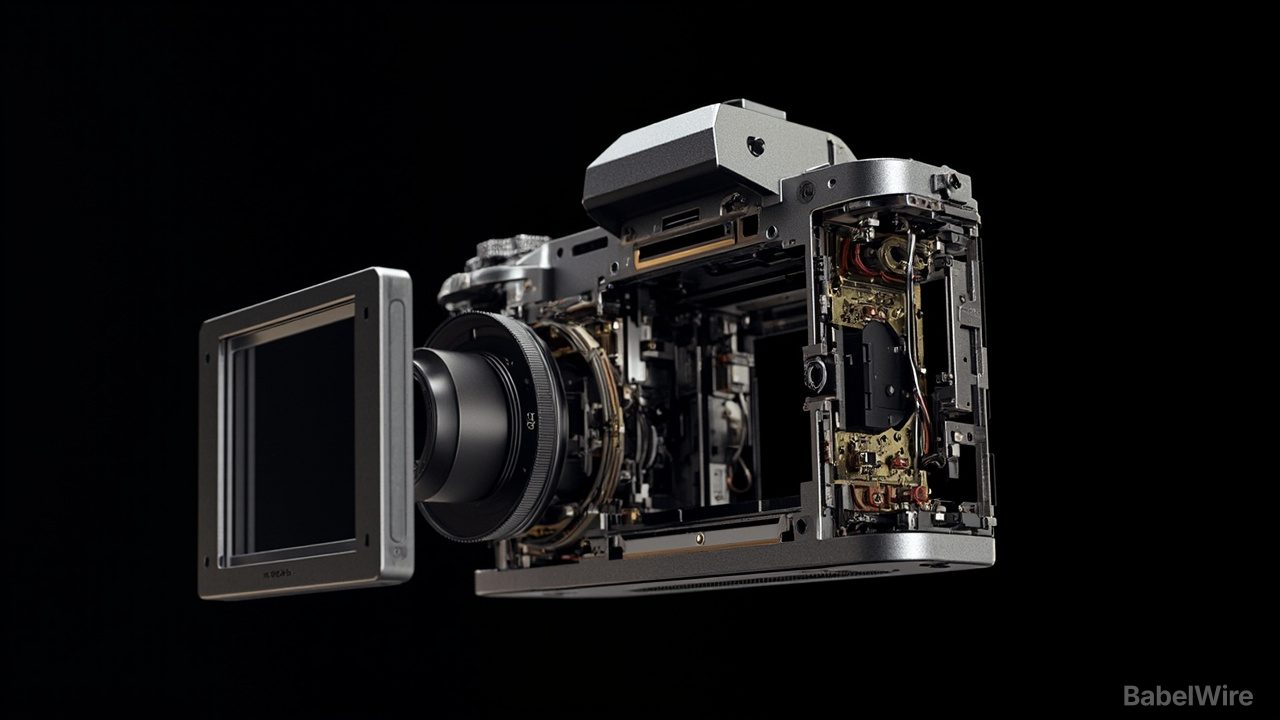
Nikon has a full-frame mirrorless camera that undercuts the Z5 II by leaving two things out: in-body image stabilisation (IBIS) and the mechanical shutter. The Verge's verdict is right there in the headline — you might not miss either.
That is a bigger deal than it sounds. IBIS has been treated as table stakes on full-frame mirrorless bodies for years, and the assembly is expensive: magnets, coils, position sensors, control electronics and the mechanism that floats the sensor. Cutting it saves money and space. Dropping the mechanical shutter as well removes another precision part with moving, wearing components.
The costs are well known. Without a mechanical shutter the camera relies on an electronic readout, and with a slow sensor that brings rolling-shutter skew in fast pans and video, plus banding under artificial light if anti-flicker does not catch it. Flash sync and short flash durations are limited or impossible with an electronic-only shutter. Without IBIS, older lenses that have no stabilisation of their own lose their safety net, as do handheld low-light shots and unstabilised video. Sensor-cleaning systems are often driven by the same IBIS mechanism, so that may go too.
Nikon is not the first to sell an electronic-shutter-only camera — its own Z8 and Z9 do the same. But those bodies pair it with stacked sensors that read out in a fraction of the time, i.e. with expensive silicon. In a budget body the readout speed stays the weak point, and that is exactly where the trade-off will show up in daily use.
The target buyer is well defined: people stepping up to full frame for the first time, students, and tripod, studio and landscape shooters — along with anyone who already owns stabilised glass. For that group the arithmetic works, which is what makes the bet reasonable. Full specifications and pricing across markets are still firming up, according to early reports.