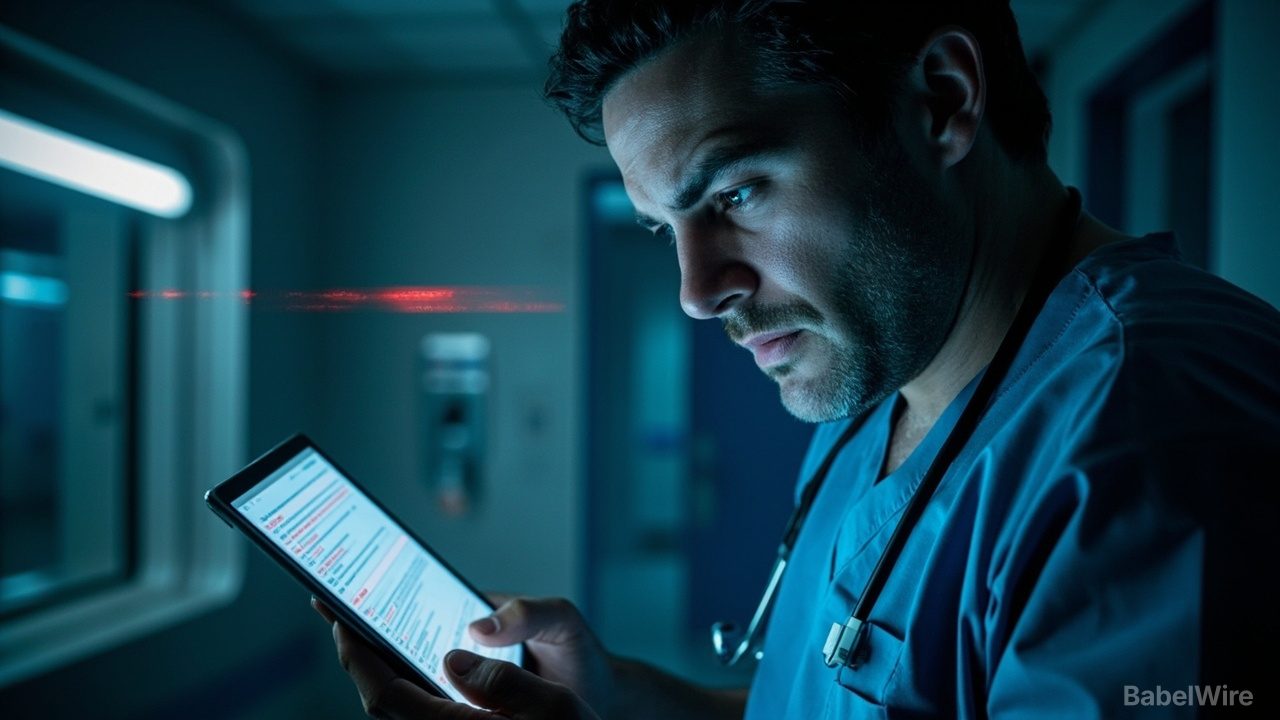
AI technology that listens to and transcribes patients' consultations with doctors can put them at risk by getting the names of drugs and illnesses wrong, an NHS watchdog has warned.
Healthwatch England, the statutory NHS patient champion, has highlighted multiple cases where AI scribe tools produced errors that patients caught but clinicians missed. In one case, a woman was left badly shaken when the AI scribe's summary wrongly said she had demyelination — serious nerve damage that can lead to multiple sclerosis. It was only when the patient, an NHS health professional, queried the result of her MRI scan that the hospital corrected it to "null demyelination."
In another case, an AI scribe confused the drug a GP had prescribed with a different one of a similar name. On another occasion, an AI-generated summary letter failed to mention that a hospital consultant had told the patient to seek a repeat prescription from their GP for migraines, which could have left them unable to get medication.
Healthwatch said it had heard "multiple stories from patients who have noticed these errors when a health professional hasn't," adding that "these inaccuracies may persist in their records if the patient doesn't catch them."
The findings come as the NHS rapidly deploys AI scribes — 27 different tools are already in use by GPs and hospital doctors in England. The government's 10-year health plan expects AI scribes to "liberate staff from their current burden of bureaucracy and administration, freeing up time to care."
However, Healthwatch flagged a regulatory gap: the Medicines and Healthcare products Regulatory Agency (MHRA) has decided not to classify AI scribes as medical devices, meaning there will be no England-wide oversight to ensure they are safe and effective.
Dr. Shier Ziser Dawood, a London GP, warned in the British Journal of General Practice that AI scribes may prove "a double-edged sword." She recounted an AI scribe telling a patient she had recommended they "continue their Prozac" — a drug she had never prescribed or discussed. These "hallucinations" mean doctors must review all transcripts, potentially negating the time savings.
Research by Dr. Charlotte Blease at Uppsala University found that GPs believe errors are more likely when consultations involve multiple people, patients with complex medical histories, or those whose first language is not English. Despite this, more than half of 1,003 UK GPs surveyed believed their ambient AI records were more accurate than their own notes.
The Patients Association chief executive Rachel Power said: "Trust and confidence in this technology depend on good communication and genuine partnership with patients, and right now both are missing."