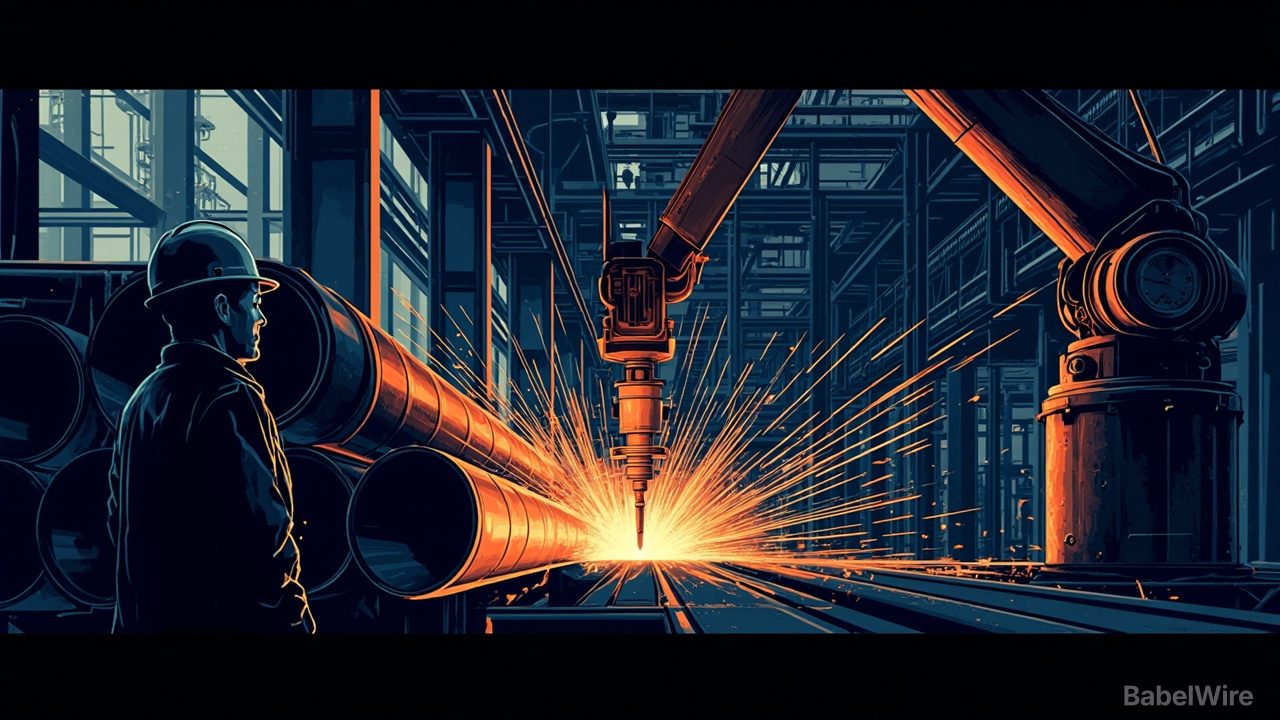
One of the hardest jobs left in the skilled trades — fitting, aligning and welding pipe in refineries, chemical plants and industrial construction — is the target of a new automation push. TechCrunch reports that Nexterity is pitching machines for the dangerous, physically punishing end of pipefitting rather than trying to replace the trade wholesale.
Pipefitting is a good test case for industrial robotics precisely because it is the opposite of a car-assembly line. The work happens in cluttered, unpredictable spaces: hundreds of metres of pipe in varying diameters, tight tolerances, awkward angles, and strict safety and quality codes. It is also ageing out. Developed economies are short of pipefitters, welders and other tradespeople, and the shortfall is projected to widen as experienced workers retire.
That combination — hard to staff, hazardous, and expensive to get wrong — is exactly the profile robotics vendors have been courting as they move beyond the structured factory floor. Humanoids and mobile manipulators get the headlines, but the more immediate commercial case is often narrower: automate the specific, repeatable, injury-prone subtask and leave the judgement calls to a human.
The obstacles are real. Site conditions vary far more than in a plant, acceptance and certification standards are demanding, and any automation has to work alongside union labour and existing crews rather than against them. How Nexterity intends to clear those hurdles, and at what cost per installation, is the part of the pitch that will decide whether this stays a demo or becomes a product.