A 50-Year Belief Upended
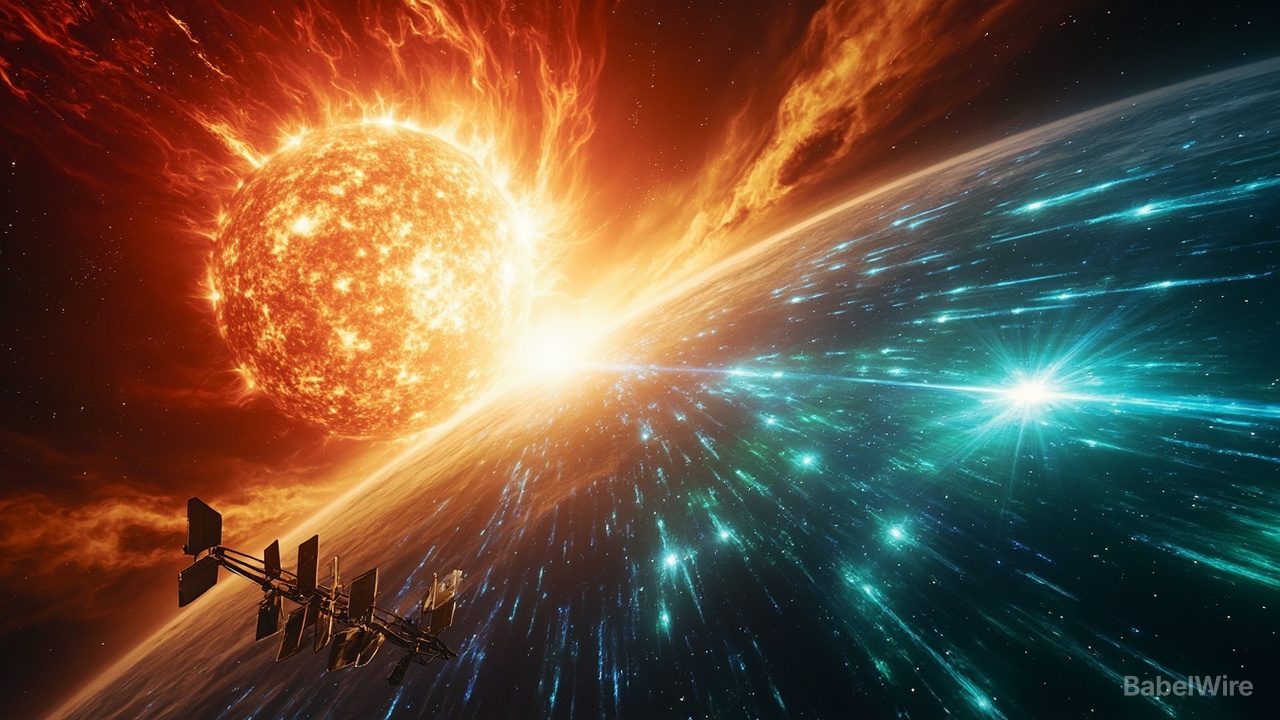
For decades, scientists believed there was a ceiling to how intensely Earth responds to solar storms. A new NASA-led study, published Wednesday in Nature, suggests this upper limit is an illusion — meaning solar storms could have far worse effects on our technology than previously thought.
Electric currents in Earth's upper atmosphere — which can disrupt satellites, communications, and navigation signals — were thought to increase with solar wind strength only up to a point, then plateau. But physicist Nithin Sivadas of NASA's Goddard Space Flight Center and his team say this apparent saturation is merely an artifact of measurement uncertainty.
The Measurement Problem
The key issue: most solar wind measurements are taken by spacecraft located about a million miles closer to the Sun than Earth. Statistically, the solar wind that actually reaches Earth's magnetic shield is most likely weaker than what these distant spacecraft measure, Sivadas explained. This created the illusion that strong solar winds do not produce proportionally strong currents — because the winds driving those currents were actually weaker than recorded.
To test this, the team analyzed over a million solar wind measurements taken by NASA spacecraft much closer to Earth — including MMS and THEMIS. These showed a direct, linear relationship between solar wind strength and the resulting electrical currents in Earth's upper atmosphere, with no sign of leveling off.
What This Means
If confirmed, the findings challenge decades of space weather modeling. A solar storm without an upper limit could mean:
- Satellites experience stronger electrical charging and drag during extreme events - Power grids face more intense geomagnetically induced currents, risking transformers - Communications and GPS suffer deeper outages during severe storms - Aviation routes near the poles may need more conservative rerouting protocols
Sivadas emphasized that more observations of truly strong solar wind events are needed to definitively confirm whether Earth's response truly has no upper bound.
Context
The study adds urgency to space weather preparedness at a time when solar activity is ramping up toward the next solar maximum. The paper was published alongside the work of NASA's COFFIES Science Center, which recently made breakthroughs on related solar enigmas.
---
Sources - NASA Science Blog — New NASA Study Says Possibly No Limit to Solar Storm Effects - Nature (published July 15, 2026) - RealClearScience