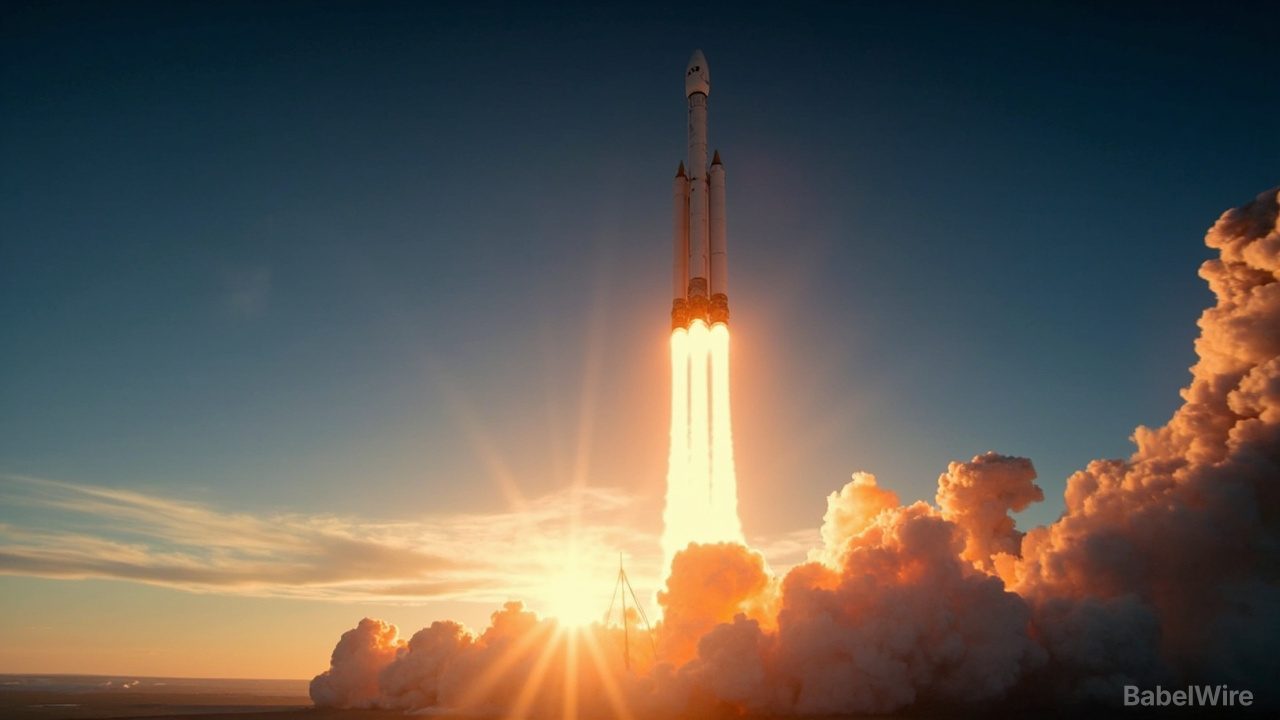
NASA's Nancy Grace Roman Space Telescope lifted off at 7:26 a.m. EDT on August 30 aboard a SpaceX Falcon Heavy from Launch Complex 39A at Kennedy Space Center in Florida, marking the beginning of one of the agency's most ambitious astrophysics missions.
The Falcon Heavy's 27 Merlin engines generated over 5 million pounds of thrust as the telescope headed toward a Sun-Earth L2 orbit approximately 1 million miles from Earth. Roman will spend five years surveying the cosmos with a field of view 100 times greater than Hubble's.
The telescope's primary mission is to investigate dark energy — the mysterious force driving the accelerating expansion of the universe — by mapping billions of galaxies across cosmic time. Roman will also discover thousands of exoplanets through gravitational microlensing and conduct the widest infrared surveys ever attempted.
"Roman's wide field of view and rapid survey capabilities will help scientists map billions of galaxies, uncover planets beyond our solar system, study black holes, and provide vast volumes of daily data for astronomers to analyze," NASA said in its launch blog. The observatory is named after Nancy Grace Roman, NASA's first chief astronomer, who helped champion the Hubble Space Telescope.



