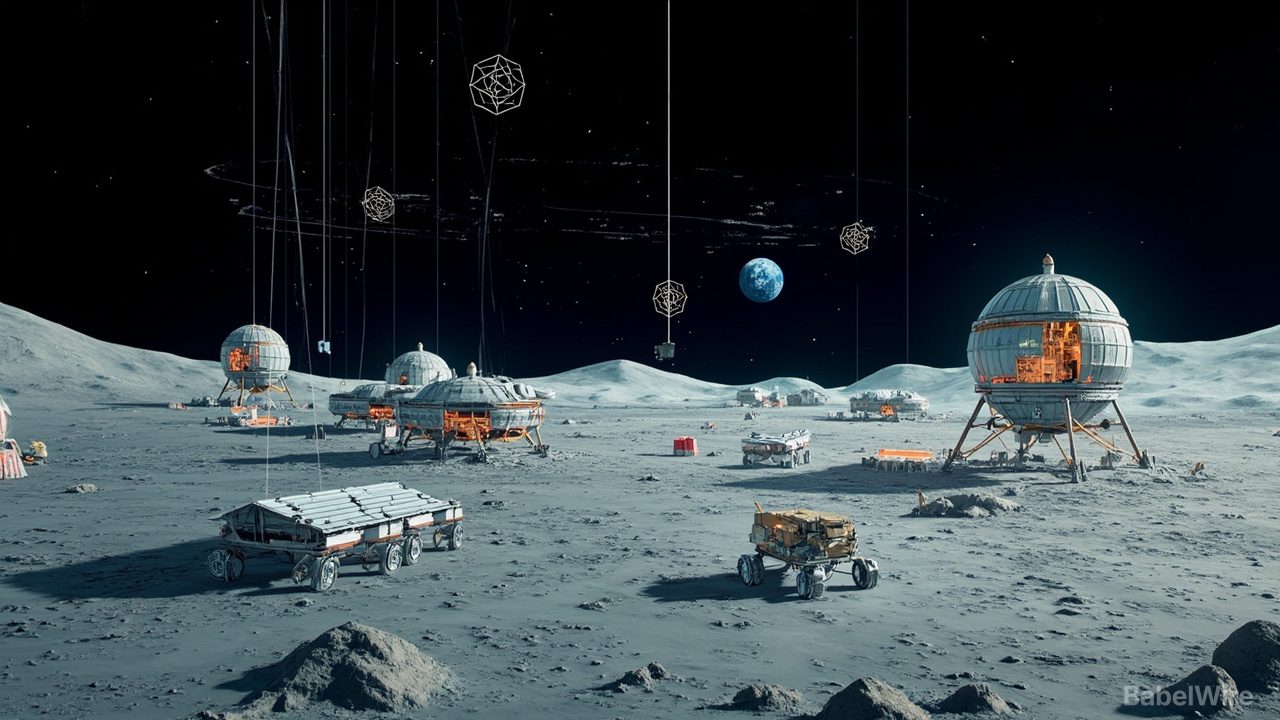
NASA's path back to the Moon is being built as much by procurement reform as by rockets. At a marathon news conference over the weekend — part of its MAX POWER event on November 7 — senior officials rolled out a rapid-fire series of lunar awards and solicitations covering landers, nuclear-powered rovers, scouting drones, power generation and storage, and communications satellites, worth roughly $10 billion in total.
The pace struck observers as unusual. "The pace that's occurring, and the nature of the procurements is unprecedented," said Mike Gold, a former NASA associate administrator who set up the Artemis Accords and now leads Redwire Space. "You are seeing an all-hands-on-deck approach. Big companies, small companies, new companies, old companies."
What stands out is how NASA is buying. The agency is leaning on Broad Agency Announcements that ask industry what it can do for a capability rather than prescribing requirements in detail, and it has adopted a DARPA-style two-step process: companies submit short white papers first, and only those NASA selects must prepare full proposals. Gold said that let Redwire focus the bulk of its resources on the opportunities the agency actually wanted.
NASA is also casting an unusually wide net, from primes like SpaceX, Blue Origin, Lockheed Martin and Northrop Grumman to startups such as Impulse Space, ispace-US and Voyager Technologies. It is betting partly on hardware that does not yet fly — a high-risk, high-reward approach in a contest with China to reach and settle the Moon. Funding includes $2.6 billion repurposed from the shuttered Lunar Gateway program.
"We are building the Moon Base mission by mission," said NASA Administrator Jared Isaacman, who argued that many small awards let future administrations dial missions up or down without putting the whole program at risk inside a roughly $25 billion annual budget.
Sources
- arstechnica.comArs Technica — NASA takes an all-hands-on-deck approach in its return to the Moon
- nasa.govNASA — NASA Awards Moon Base Transportation, Technology, Science Projects
- space.comSpace.com — NASA unveils $10 billion in moon base contracts
- spacepolicyonline.comSpacePolicyOnline — NASA Shares Moon Base Progress, Contract Awards