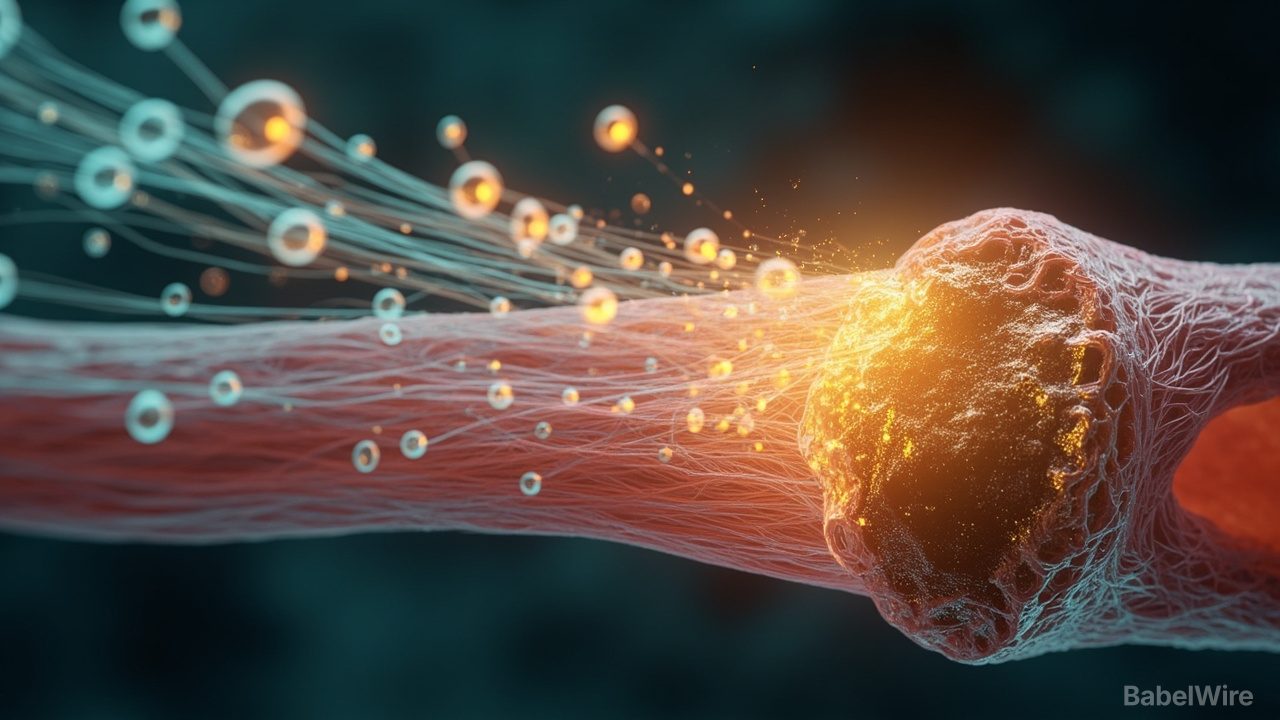
Broken bones heal thanks to far more than the bone itself. A study published in Bone Research reveals that dormant progenitor cells living in skeletal muscle wake up after an injury, migrate to the fracture and transform into bone-forming cells — opening a new therapeutic target for both improving fracture healing and preventing unwanted bone growth.
The cells are fibroadipogenic progenitors (FAPs), normally resting residents of skeletal muscle, plus a smaller population of superficial periosteal cells on the bone's outer surface. Led by Dr. Ugur M. Ayturk of the Skeletal Health and Orthopedic Research Program at Hospital for Special Surgery, the team found that Clec3b is a highly specific marker of these dormant cells. Using a fluorescently tagged mouse model, they watched the cells stay put during normal growth — never migrating into bone — and then spring into action after fracture.
Within three weeks of injury, about 28 percent of the osteoblasts in the healing callus traced their origin to Clec3b-lineage cells. Some descendants also became bone marrow stromal cells, helping rebuild the bone's internal support network. Single-cell RNA sequencing confirmed the transition: dormant Clec3b cells gave rise to populations with molecular signatures of osteoblasts and marrow stroma.
The researchers also established where the regenerative cells come from: skeletal muscle is the primary source. Even when the periosteum was surgically removed before injury, Clec3b-positive cells still reached the fracture and formed bone; bone grafts with surrounding muscle produced substantially more of them than muscle-free grafts.
There is a darker side to the cells' power: they also contribute to heterotopic ossification, the abnormal bone growth in soft tissue after severe injury. Blocking a key bone-formation pathway or depleting the cells reduced both fracture healing and abnormal growth — evidence that the same population drives both. 'These cells could represent a promising therapeutic target to enhance fracture healing,' says Ayturk, with the added possibility of limiting their activity to prevent unwanted bone after serious trauma.