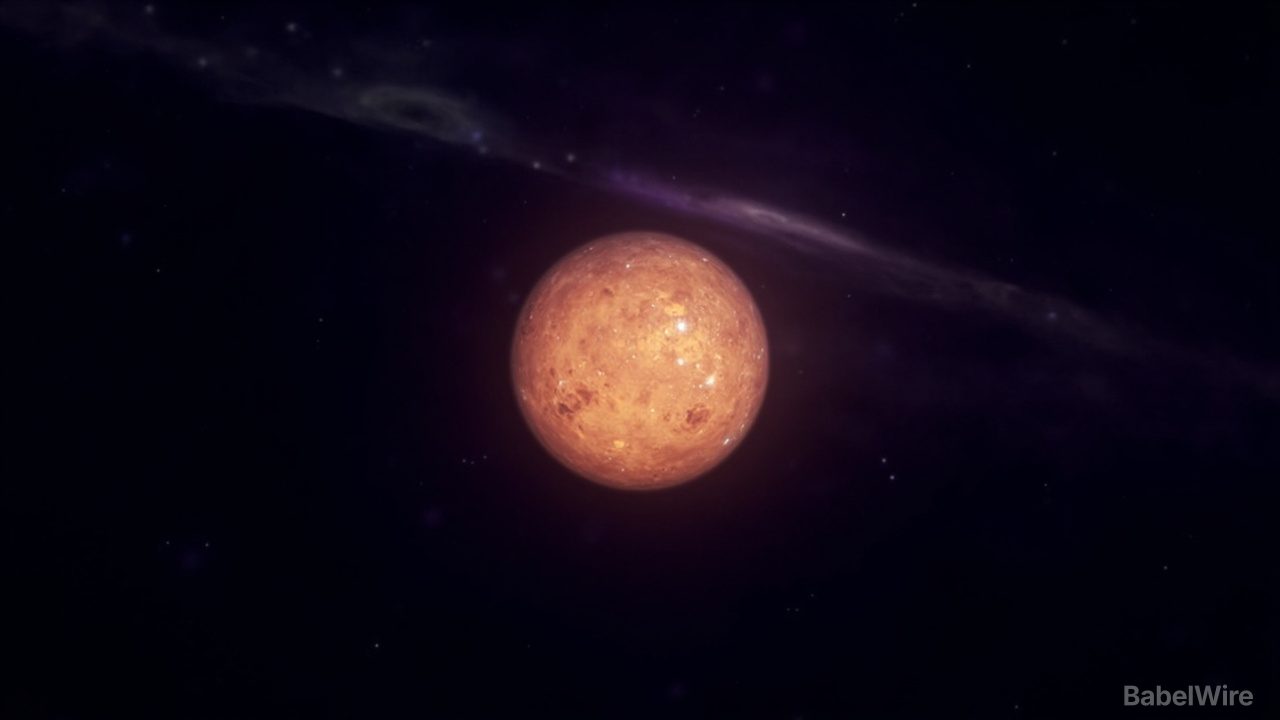
An international team of astronomers has discovered the most pristine star ever observed in the known universe. Named SDSS J0715-7334, the star has less than 0.005 percent of the Sun's metal content, making it twice as metal-poor as the previous record holder and 40 times more metal-poor than the most iron-poor known star.
The discovery, led by Alexander Ji of the University of Chicago and including Carnegie astrophysicist Juna Kollmeier, was made using data from the Sloan Digital Sky Survey-V and the Magellan telescopes at Carnegie Science's Las Campanas Observatory in Chile. The findings are published in Nature Astronomy.
All elements heavier than hydrogen and helium in the universe were produced by stellar processes: fusion reactions within stars, supernovae explosions, and collisions between dense stellar objects. Finding a star with very little metal content means finding an object from the second generation of stars that formed just a few hundred million years after the Big Bang.
SDSS J0715-7334 exists about 80,000 light-years from Earth. By incorporating data from the European Space Agency's Gaia mission, the team determined that it was born elsewhere and was pulled into our Milky Way galaxy over time, likely from a smaller dwarf galaxy.
The students who participated in the discovery made the key observations during a spring break observing trip to Las Campanas. The team identified candidates using SDSS-V data, then used the Magellan Clay telescope to take high-resolution spectra, confirming SDSS J0715-7334 as the new gold standard of stellar purity.
Pristine stars from the second and third generation after the universe first developed structure are rare, and surveys like SDSS-V are specifically designed to find these needles in the stellar haystack. By studying them, astronomers can test theories of how the first stars formed and evolved.
Published in Nature Astronomy.
Sources: Carnegie Science (May 2026); Nature Astronomy (2026); University of Chicago press release.