A major breakthrough in quantum technology reported on July 2, 2026 has turned magnons — tiny magnetic waves in crystalline materials — from laboratory curiosities once considered too short-lived for practical use into promising carriers of quantum information. Researchers extended their lifetime by nearly 100 times, reaching up to 18 microseconds, and discovered that the main limitation was not a law of physics but the purity of the material itself.
What Are Magnons?
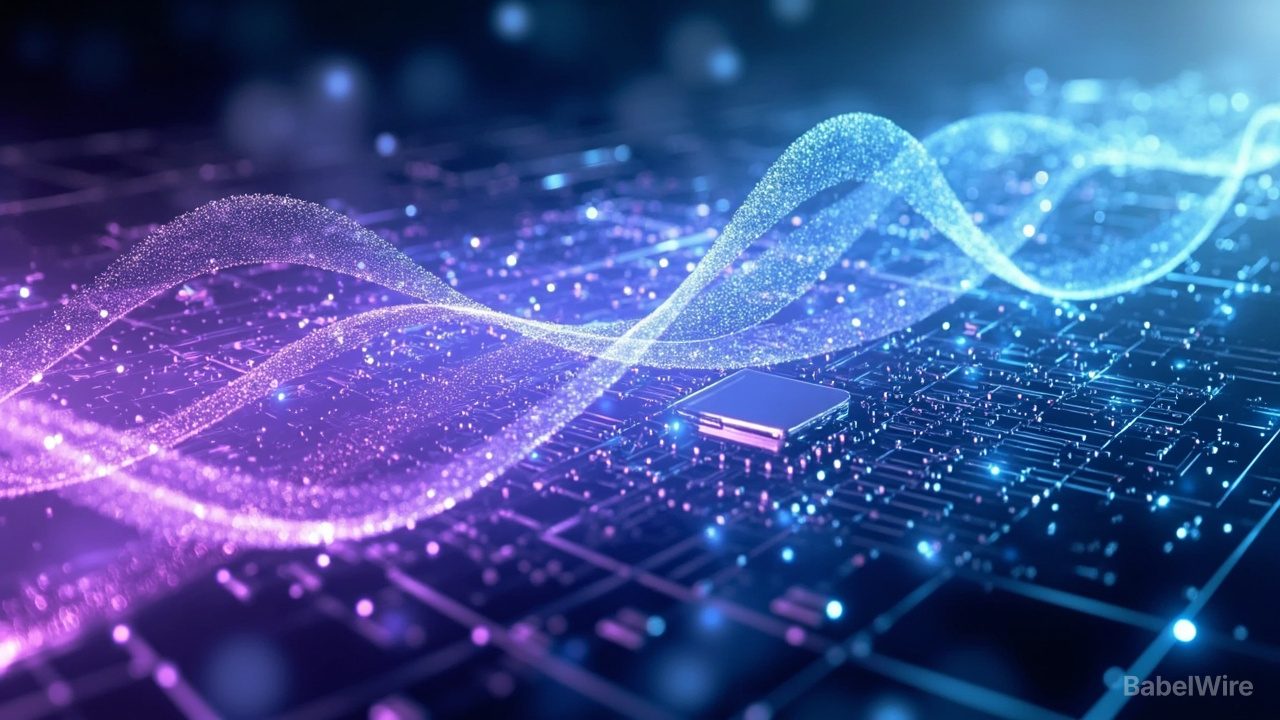
Magnons are quasiparticles representing collective excitations of electron spins in a magnetic material. Think of them as ripples propagating through the ordered magnetic structure of a crystal — each ripple carrying a quantum of spin energy. Because they interact weakly with their environment, magnons were theoretically attractive for quantum information processing, but their practical utility was limited by extremely short coherence times.
The Breakthrough
The research team, whose work was featured in ScienceDaily's top physical sciences headlines for July 2, developed new material fabrication and control techniques that extended magnon coherence times from the hundreds of nanoseconds range to 18 microseconds — an improvement of nearly two orders of magnitude.
'What we discovered is that the main limitation wasn't fundamental physics — it was the purity of the material,' the lead researcher explained. 'Once we eliminated impurities and optimized the crystalline structure, the magnons stayed coherent far longer than anyone predicted.'
This distinction is crucial: if the limit were imposed by the laws of quantum mechanics, no amount of engineering could overcome it. But if the limit is material quality, then further refinements in fabrication could push magnon lifetimes even further.
Why It Matters
Magnons offer several advantages over other quantum information carriers:
- Wavelength compatibility. Magnons operate at wavelengths that integrate naturally with existing magnetic and spintronic devices, unlike photons which require complex optical interfaces. - On-chip integration. Because magnons propagate in solid-state materials, they can be integrated directly into silicon-based quantum chips without the need for external couplers. - Low decoherence. The weak environmental interaction that once made magnons hard to control now becomes an advantage: once coherence is established, it persists.
Applications on the Horizon
The extended lifetimes open the door to magnon-based quantum memory, quantum interconnects, and hybrid quantum systems combining magnon-based storage with superconducting qubit processors or photonic communication links.
The Road Ahead
The team believes that further material optimization could extend magnon lifetimes to hundreds of microseconds — potentially making them competitive with the best existing quantum memory technologies. 'This isn't an incremental improvement,' the researcher said. 'This transforms magnons from a theoretical possibility into a practical platform. The question is no longer whether magnons can work — it's what we can build with them.'
The work adds to a string of quantum technology advances in 2026, including the demonstration of quadsqueezing at Oxford, NASA's Cold Atom Lab on the ISS generating ultra-cold quantum matter, and new quantum control techniques that can reverse the perceived arrow of time in quantum systems.