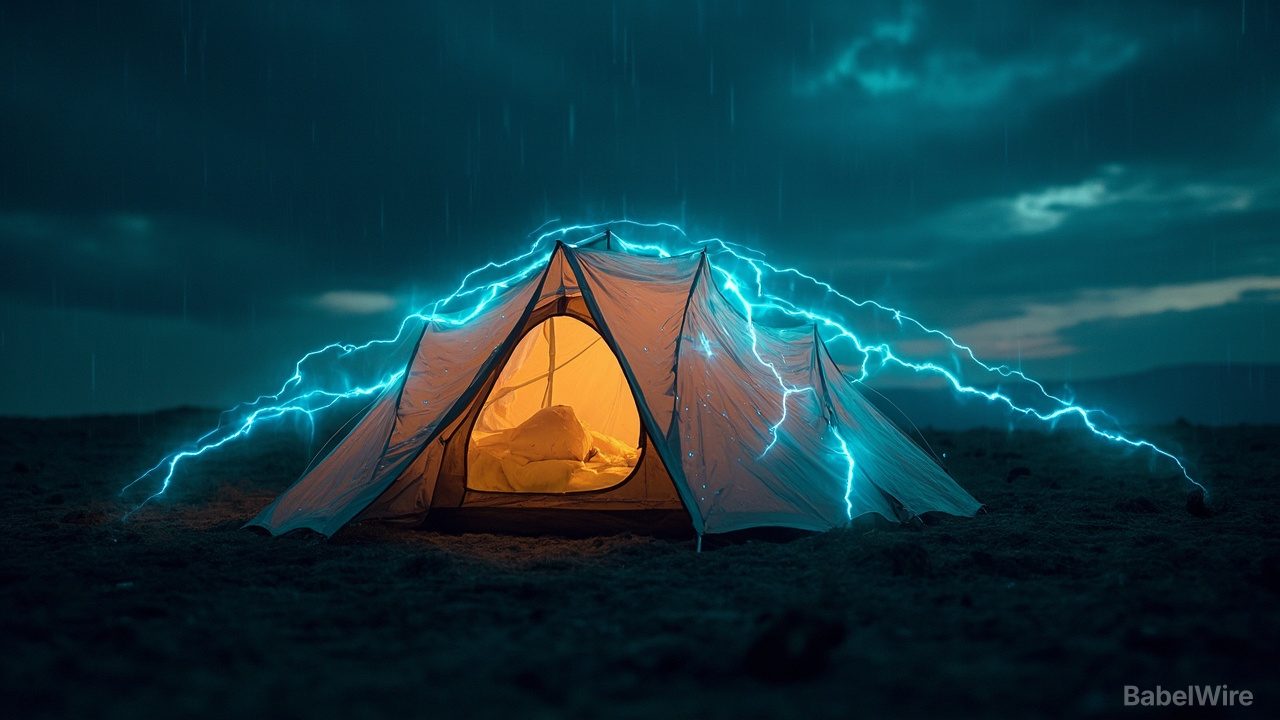
A tent that harvests electricity from the wind shaking its walls, the sound of rain, and the movement of the people inside it may sound like science fiction. But a team of researchers has demonstrated exactly that concept in the journal Matter, with a 'smart magnetoelastic tent' designed for sustainable energy access in remote and underserved communities.
The technology relies on the giant magnetoelastic effect: a soft composite material that produces electricity when it is stretched, bent or vibrated. Because the tent's fabric itself is the generator, no separate bulky equipment is needed — the shelter doubles as a power plant for small devices such as lights, sensors, phone chargers and medical monitors.
The generator is inherently waterproof and dustproof, which the researchers highlight as a major practical advantage: it eliminates the need for fragile encapsulation that limits conventional energy-harvesting devices in harsh outdoor conditions.
The application focus is significant. The paper frames the tent as an energy-access solution for people living off the grid — including unhoused communities, disaster-relief camps and remote settlements — where a reliable source of small-scale electricity can be transformative.
The concept remains at the prototype stage, and the amounts of power generated are modest, suited to low-power electronics rather than appliances. But as a demonstration, it points toward a future in which the built environment — tents, clothing, shelters — quietly becomes part of the energy infrastructure, generating useful electricity from the motions that surround us every day.