Uncontrolled bleeding remains the leading cause of preventable death in combat injuries and a major killer in emergency medicine worldwide. Now, researchers at the Korea Advanced Institute of Science and Technology (KAIST) have developed a spray-on powder that can halt life-threatening bleeding in roughly one second — a breakthrough that could transform battlefield medicine, emergency response, and surgical care.
The material, named AGCL powder, is a next-generation powder-type hemostatic agent developed by a joint team led by Professor Steve Park of the Department of Materials Science and Engineering and Professor Sangyong Jon of the Department of Biological Sciences at KAIST. The team included an active-duty Army Major, ensuring the technology was designed with real combat conditions in mind.
How It Works
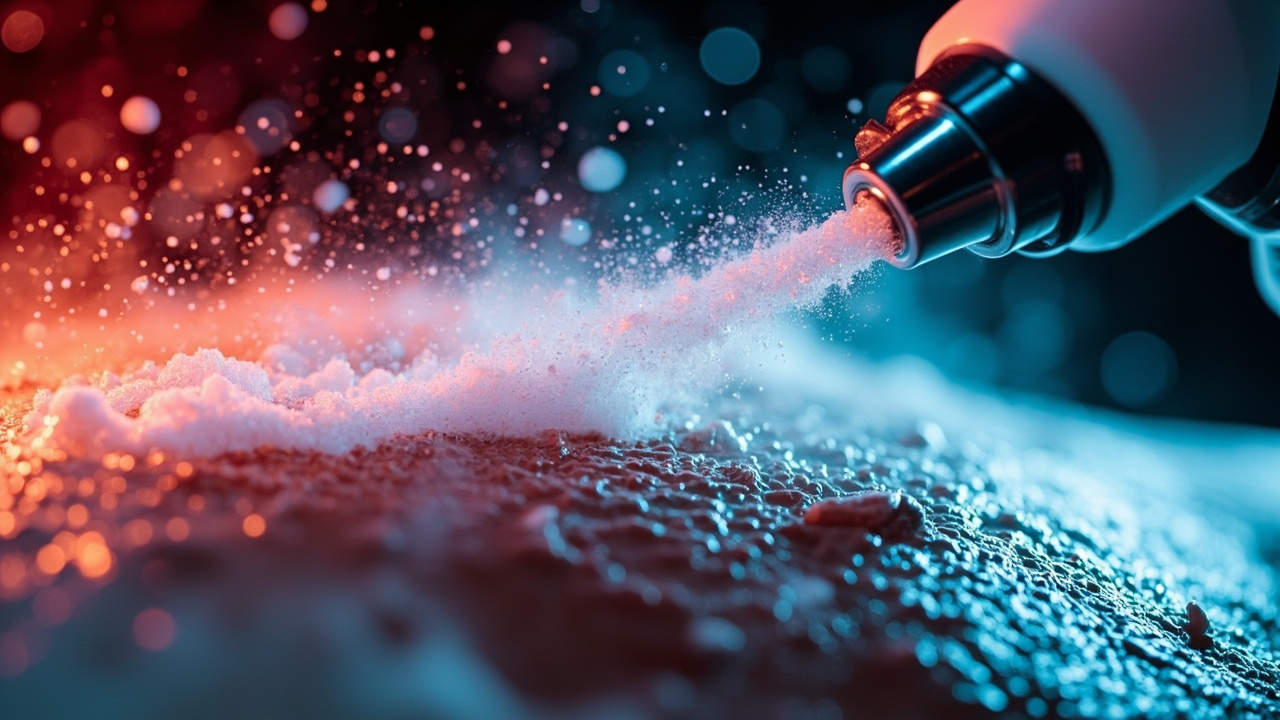
When sprayed onto a wound, AGCL powder instantly reacts with calcium and other cations in the blood to form a strong, flexible hydrogel barrier. The transformation happens in about one second, effectively sealing the wound. Unlike traditional patch-type hemostatic products, which struggle with deep or irregular wounds due to their flat shape, AGCL's powder form can conform to any wound geometry.
The powder's three-dimensional internal structure allows it to absorb over seven times its own weight in blood (725%), rapidly blocking blood flow even under high-pressure, excessive bleeding situations. It demonstrated adhesive strength exceeding 40 kPa — enough to withstand firm pressure from hand application.
Safety and Tissue Regeneration
AGCL powder is composed entirely of naturally derived, biocompatible materials — alginate, gellan gum, and chitosan. It shows a hemolysis rate of less than 3%, a cell viability rate of over 99%, and 99.9% antibacterial efficacy, making it safe for contact with blood. Remarkably, animal experiments confirmed excellent tissue regeneration effects, including rapid wound recovery and promotion of blood vessel and collagen regrowth.
In surgical liver injury experiments, bleeding volume and hemostasis time were significantly reduced compared to commercial hemostatic agents, and liver function returned to normal levels within two weeks. No abnormal findings were observed in systemic toxicity evaluations.
Battlefield-Ready
One of the most practical advantages: AGCL powder maintains its performance for two years even when stored at room temperature and in high humidity — critical for military operations, disaster zones, and developing countries where cold storage is unavailable.
"The core of modern warfare is minimizing the loss of human life," said Ph.D. candidate Kyusoon Park, an Army Major who participated in the research. "I started the research with a sense of mission to save even one more soldier. I hope this technology will be used as a life-saving technology in both national defense and civilian medical fields."
The research, published in Advanced Functional Materials, has already earned the 2025 KAIST Q-Day President's Award and the Minister of National Defense Award. It represents a rare and successful spin-off where defense science and technology expanded into the private sector — much like GPS, computers, and microwave ovens before it.