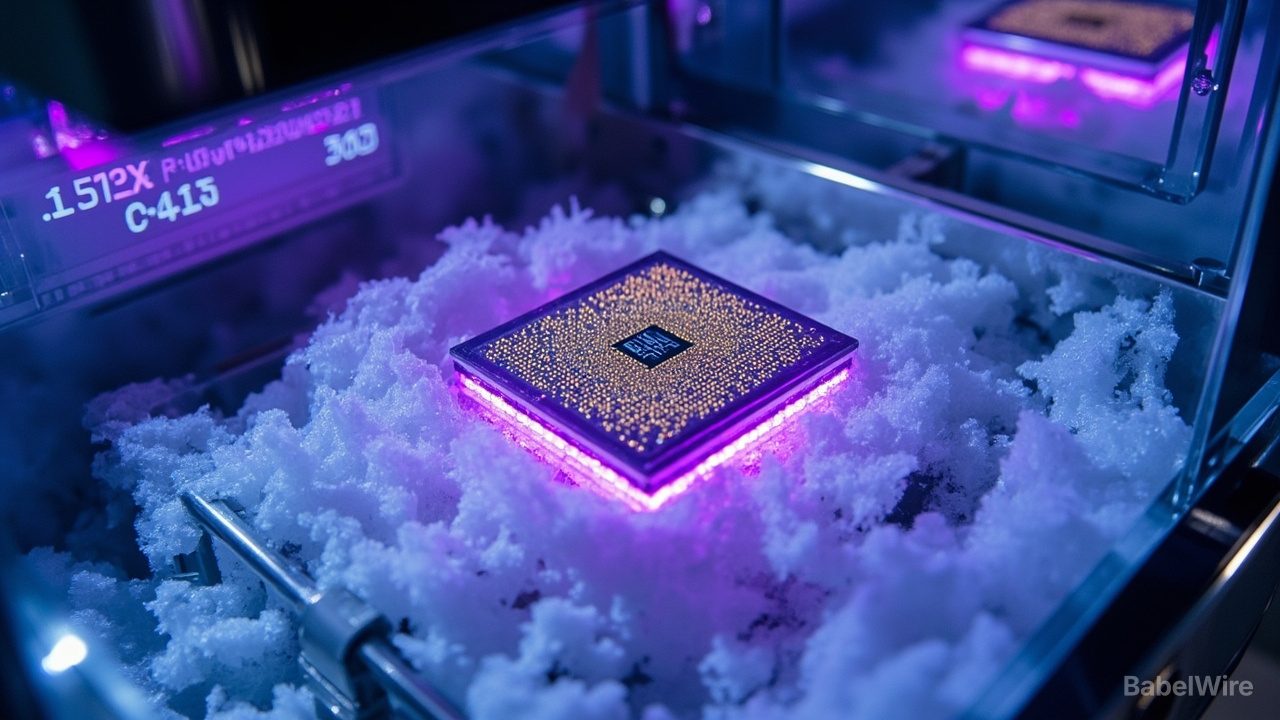
IQM Quantum Computers, a Finnish full-stack quantum computing company, made history on Thursday by becoming the first European quantum company to list on a major US exchange. But the debut was anything but a celebration: shares spent most of the day below the IPO price, and the company's own prospectus contained a stark warning that the technology may never achieve commercial scale.
"Large-scale commercial traction of quantum computing technology may never occur," IQM stated in its SEC filings — a level of candor unusual for a company going public, but arguably an honest assessment of where the quantum industry stands today.
The lukewarm reception on Nasdaq reflects a broader reality: despite decades of research and billions in investment, no one — not even companies building quantum computers — can say when the elusive "quantum advantage" will arrive, when quantum chips will consistently outperform classical computers for a wide range of practical tasks.
Founded in 2018 as a spinout from Aalto University in Espoo, Finland, IQM sells both physical quantum computers and cloud-based quantum computing time. It has grown from 8 customers in 2024 to 22 in 2025, including VTT Technical Research Centre of Finland and the Leibniz Supercomputing Centre in Germany. Two recent customers are from the private sector, a milestone for the company.
IQM went public via a merger with RAAQ, a SPAC (blank-check company), raising approximately €198 million ($226 million) in new liquidity — on top of $300 million raised in a Series B last September. The company now trades under the ticker IQMX on both Nasdaq in the US and Nasdaq Helsinki, where Finland's sovereign wealth fund Tesi is expected to remain a supporter.
The timing is strategically significant. President Trump recently signed executive orders to accelerate quantum timelines, and the US Department of Energy has committed to deploying "the world's first fault-tolerant, scientifically relevant quantum computer" by 2028. IQM has already established a quantum tech center in Maryland and deployed a computer at Oak Ridge National Laboratory.
"We can benefit directly from it," IQM CEO and co-founder Jan Goetz told TechCrunch, referring to the US government push.
CEO Goetz expressed pride at being first to market among European quantum peers — beating French competitor Pasqal, which also announced SPAC plans — but emphasized the long game. "It always feels good to be first and to be a pioneer, but ultimately it's about long-term success."
IQM's listing comes amid a global quantum investment surge, with the US, EU, UK, France, Germany, and others racing to build quantum infrastructure. Yet the gap between government-funded research and commercially viable products remains wide — and IQM's candid prospectus language serves as a reminder that the quantum revolution may still be years, if not decades, away.
Sources
- techcrunch.comTechCrunch — IQM, Europe's first public quantum company, admits the future of the tech is uncertain
- reuters.comReuters — Samsung, SK Hynix mega South Korea chips gamble
- cnbc.comCNBC — Finland's IQM to become one of Europe's first listed quantum companies
- investors.comInvestor's Business Daily — Quantum Computing Stocks: Europe's IQM To Debut On Nasdaq