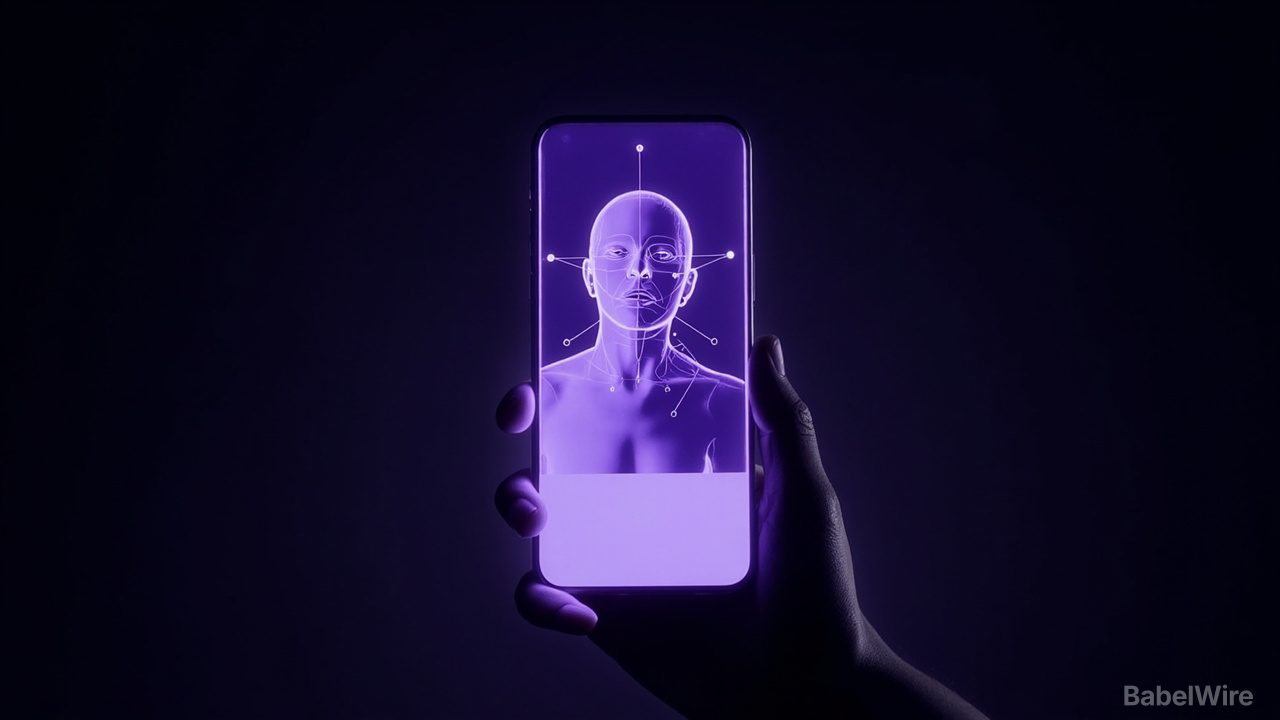
Meta is taking Instagram's AI age estimation worldwide. A user who signed up with a fake adult birthday can still end up inside a Teen Account — sorted there by what the system infers from their profile, their behaviour and their photos.
The company announced the expansion on November 9. The system had been running in the US, the EU and Brazil; now, by Meta's account, it will automatically place 'millions more teens' into Teen Account protections. The signals it draws on are broad: which profiles and kinds of content someone interacts with, which birthday messages they receive, and, per Meta, 'general themes and visual cues' from uploaded photos and videos — including height and bone structure. In Australia it has added Apple's device-level age-range signal as an extra input.
The consequences are concrete. Anyone the system judges to be under 13 loses the account — the minimum age for a Meta service. Anyone placed between 13 and 17 lands in a Teen Account: private by default, with content limits and no direct messages from strangers. Parents can set supervision, time limits and usage reports. A user 16 or younger cannot change those settings without a guardian's permission. Parents in the US will get an in-app notification next month explaining how the estimation works.
The timing is not incidental. In August, Meta settled a $17.1 billion lawsuit and agreed to strengthen its age assurance and tighten restrictions on teen users. The European Commission had already ruled that Meta was not doing enough to keep children off Facebook and Instagram. The global rollout answers that pressure — and arrives while Australia and other governments legislate hard age floors for social media.
The method is the interesting part. Checking a passport is definitive, but it is a privacy problem and an expensive one at billions of accounts. Estimation is cheap, invisible, and cannot be defeated by lying on a signup form. It is also less accurate: errors run in both directions. A 19-year-old estimated at 15 loses features she is old enough to use. A 13-year-old who reads as 20 gets no protection at all. Meta describes the process as estimation rather than identification, and has published no accuracy rate, no false-positive rate and no route to appeal a clearly wrong classification.
Then there is the data question. Inferring height and bone structure from photographs is closer to biometric analysis than to asking for a date of birth. Meta says the signals exist to estimate age; critics see another processing of minors' images for a purpose the people in them cannot anticipate.
For now the expansion covers Instagram only. Automatic age checks on Facebook, live for US accounts since May, have not been extended to other regions. And if you want to know how to correct a wrong estimate, the announcement offers no procedure — only the suggestion that parents make sure their teen's age is 'accurately reflected'.