A Cosmic Firework for the Nation's Birthday
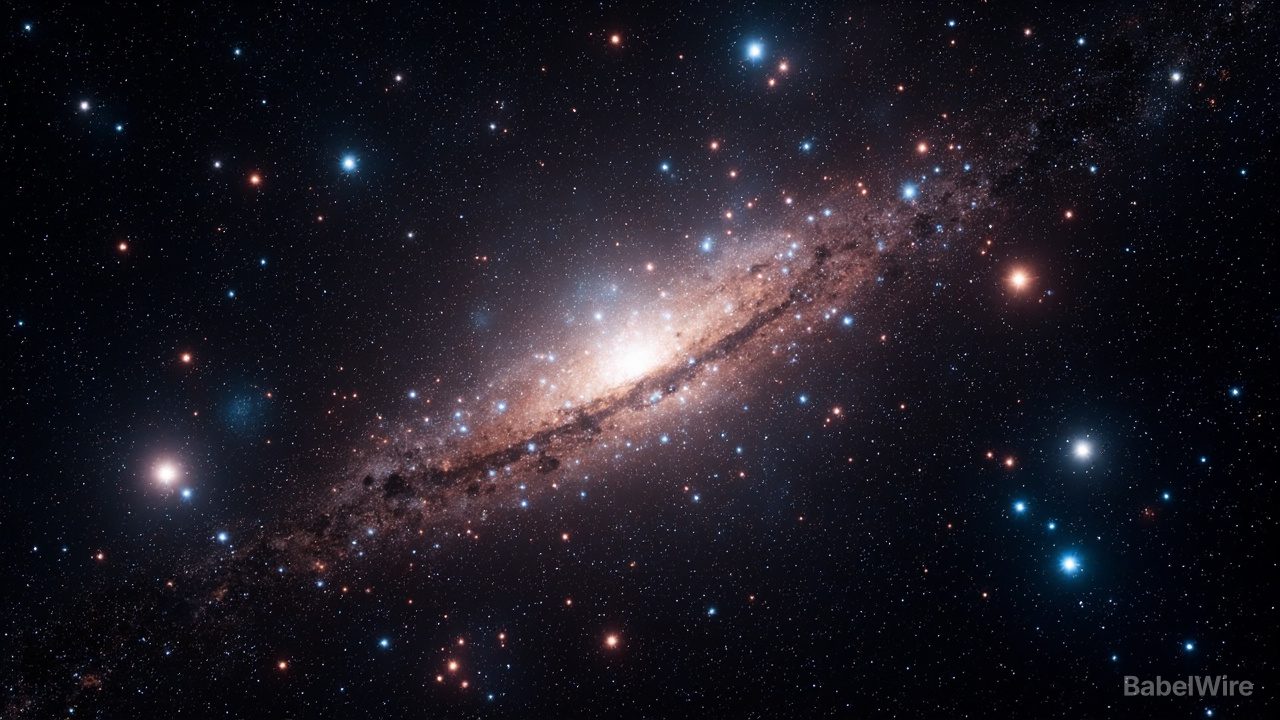
NASA's Hubble Space Telescope has captured a spectacular red, white, and blue view of one of the Milky Way's oldest star clusters to celebrate the United States' 250th anniversary. The image of Messier 3 (M3) — a globular cluster containing more than 500,000 stars located approximately 34,000 light-years from Earth — was released on July 4, 2026, as part of a series of cosmic portraits marking the occasion.
But the image is more than a birthday card. Hidden within the ancient cluster are clues to how exploding stars — supernovae — helped enrich the early Milky Way with the heavy elements necessary for planets and life.
An 8-Billion-Year-Old Time Capsule
Globular clusters like Messier 3 are among the oldest objects in the universe, with ages exceeding 8 billion years. They are essentially fossil relics from the early days of galaxy formation, containing stars that formed before the Milky Way's disk even existed. Because all the stars in a cluster formed at roughly the same time from the same cloud of gas, they serve as natural laboratories for studying stellar evolution.
The red, white, and blue colors in the image are not an artistic filter — they reflect the actual temperatures of the stars. Blue-white stars are the hottest and most massive, while red stars are cooler and smaller. The mix of colors reveals the cluster's stellar population at various stages of life, from youthful blue giants to ancient red dwarfs.
Clues to the Milky Way's History
'Messier 3 is helping us understand how the Milky Way built up its heavy element inventory over time,' the Hubble team explained. 'The cluster contains multiple generations of stars, and the chemical signatures embedded in their light tell us about the supernovae that exploded in the early universe.'
When the first stars in Messier 3 exploded as supernovae, they seeded the surrounding space with elements like carbon, oxygen, and iron — the building blocks of planets and life. Later generations of stars in the cluster incorporated these heavier elements, and astronomers can trace this chemical enrichment process by analyzing the cluster's starlight.
NASA's 250th Celebration Series
The Messier 3 portrait is part of a broader set of cosmic images NASA released for the July 4 holiday. The Chandra X-ray Observatory also released four striking red, white, and blue images featuring an exploded star, a stellar nursery, a rapidly star-forming galaxy, and more — all selected for their patriotic color palette.
'What better way to celebrate than by looking at the universe that gave rise to all of us,' a NASA spokesperson said. 'These images remind us that the elements that make up our bodies — the carbon in our cells, the iron in our blood — were forged in stars like those in Messier 3 and scattered across space by supernovae. We are, quite literally, made of star stuff — and on this 250th birthday, that connection feels especially meaningful.'