Impossible Light
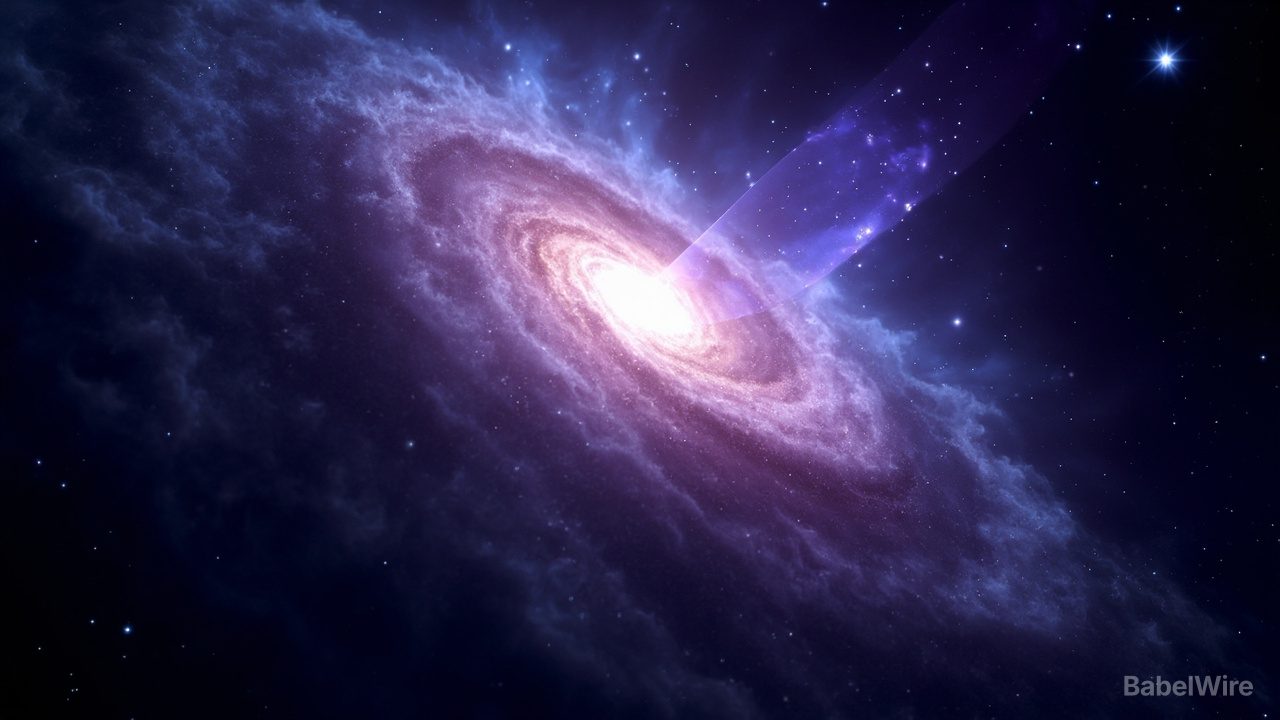
The Hubble Space Telescope has detected light from a galaxy that, by all conventional understanding, should not have been visible. The galaxy, designated MXDFz4.4, existed when the universe was only 400 million years old — a time when the cosmos was still shrouded in a dense fog of neutral hydrogen that should have blocked any visible light from reaching us.
Yet there it is: a clear detection of light from this impossibly distant object, forcing astronomers to reconsider their models of the early universe.
The Epoch of Reionization
The discovery is directly relevant to one of cosmology's biggest open questions: how did the universe transition from the 'Dark Ages' — a period after the Big Bang when the cosmos was filled with opaque neutral hydrogen gas — to the transparent, star-filled universe we see today?
During the Epoch of Reionization, the first stars and galaxies emitted intense ultraviolet radiation that gradually ionized the neutral hydrogen, burning through the cosmic fog and making the universe transparent to light. MXDFz4.4 appears to have been one of these early reionization sources, and its brightness suggests it was producing far more ultraviolet radiation than theoretical models predicted for such early times.
'This is like finding a lighthouse beacon from a time when all the lights should have been off,' the research team explained. 'The fact that we can see this galaxy at all tells us that reionization was happening earlier and more vigorously than we thought.'
How Hubble Did It
The detection was achieved through an exceptionally long exposure using Hubble's Wide Field Camera 3, part of the Frontier Fields program that uses gravitational lensing from massive galaxy clusters to magnify the light from even more distant objects. MXDFz4.4's light was stretched by the expansion of the universe from ultraviolet into the infrared band, where Hubble's instruments could detect it.
What It Means
'Impossible' detections like this force a reckoning in cosmology. If galaxies like MXDFz4.4 were common in the early universe, our models of galaxy formation and the timeline of reionization need significant revision. The James Webb Space Telescope, with its superior infrared sensitivity, is now following up on this detection to gather spectroscopic data that could confirm the galaxy's distance and composition.
'The universe keeps surprising us,' the researchers concluded. 'Every time we think we understand the early cosmos, it throws us a curveball like this. That's what makes cosmology so exciting — the universe is always more creative than our models.'