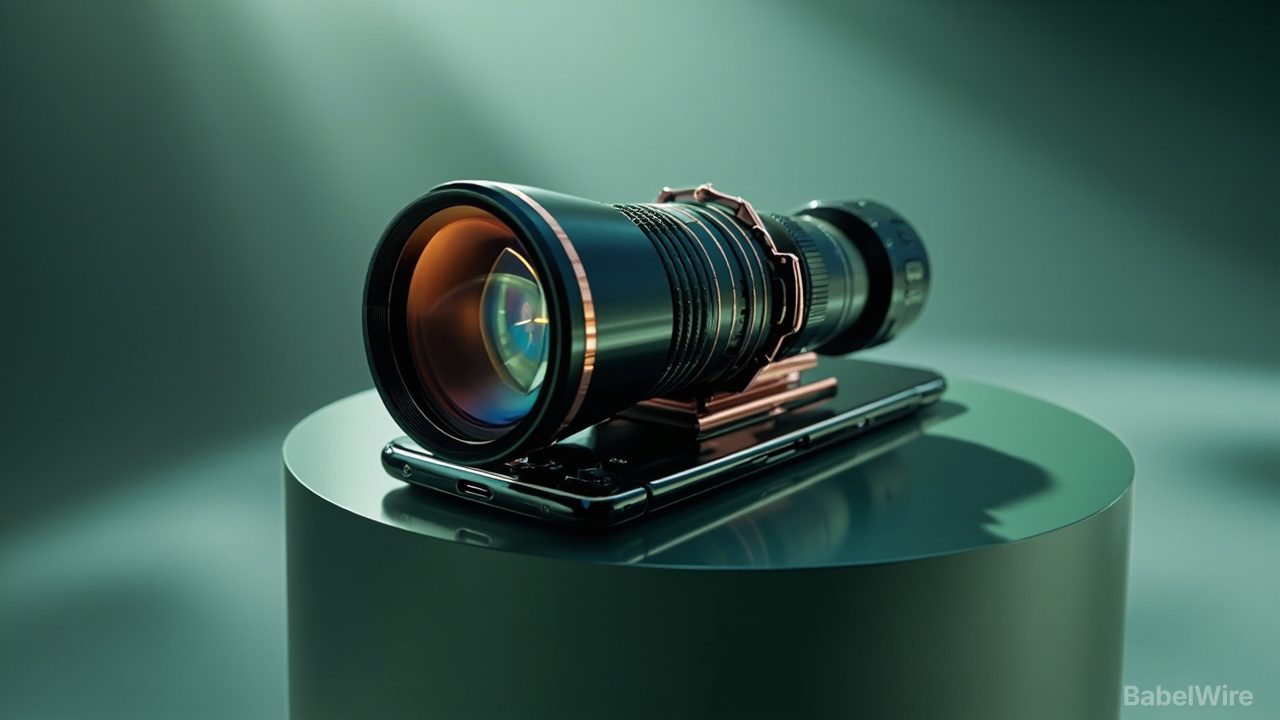
Huawei has launched its Mate 90 series in China, and the flagship Mate 90 Pro Max takes an unusual turn: instead of chasing ever-bigger sensors inside the phone, Huawei is selling a detachable camera module that carries its own 1-inch sensor.
The headline numbers are aggressive. The phone pairs a 6.9-inch, 2848x1320 dual-layer OLED panel with a 1-120Hz LTPO refresh rate and up to 12,000 nits of local peak brightness — a figure that would make it one of the brightest phone displays yet. Power comes from a 6,800mAh battery with 100W wired and 50W wireless charging, and the 16GB models run Huawei's Kirin 9050 Pro chip on HarmonyOS 7.
The built-in camera array is 50MP main, 40MP ultrawide and a 200MP periscope telephoto with OIS, supporting up to 4x optical and 100x digital zoom. The distinctive Ruiying Z10 module is the Collector's Edition add-on: a 1-inch RYYB sensor with 10x continuous optical zoom covering a 24-240mm equivalent range.
The trade-off is cost and bulk. The Mate 90 Pro Max starts at CNY 9,499 (about $1,417) for 12GB+512GB and runs to CNY 12,999 (about $1,940) for the 1TB Collector's Edition. The Ruiying Z10 module alone costs CNY 5,999 (about $900), while the complete Pro Max camera kit is priced at CNY 19,499 (about $2,910).
The launch matters outside China mostly as a signal. Huawei, which has been rebuilding its premium line around own-designed silicon and software, is betting that hungry mobile photographers will accept a second piece of hardware clipped to their phone — the same argument that failed to stick for earlier modular-camera attempts industry-wide.
Availability is domestic for now, with no announced Western release — consistent with how Huawei has positioned its recent flagships.