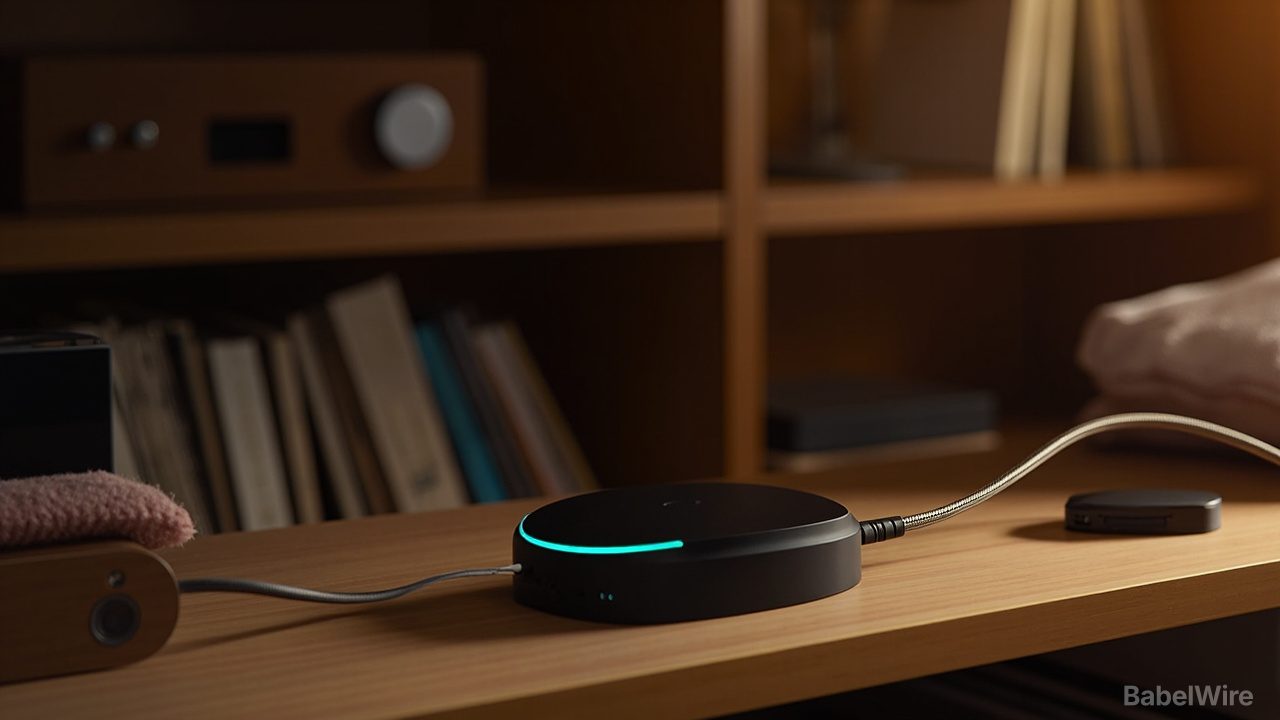
Home Assistant has released the Connect AUX-2, a small $69 (€59) box the project calls a 'smart home multi-tool' — hardware whose purpose is to drag the non-smart devices already in your house into an automation system.
The device does several jobs at once. It streams audio, so a decades-old amplifier or speaker can join a multi-room setup. It controls legacy equipment over RS-232 serial, a port that industrial and AV gear has used for decades. It acts as a Bluetooth hub to bring in sensors and devices that speak the short-range radio protocol, and it can host a Z-Wave adapter to extend a mesh network. Wi-Fi, Ethernet, USB-A, USB-C and Power over Ethernet are on board, according to the specifications, and the project says a wizard helps with setup.
The pitch is a direct answer to planned obsolescence: rather than replacing working equipment because it lacks an app, route it through a box that speaks to Home Assistant. Press coverage framed it the same way — ZDNet called it a way to modernise older devices, and Forbes described it as a bridge for 'dumb' technology. The Verge published hands-on impressions after the launch on Nov. 11.
Home Assistant, the open-source home automation platform, has been steadily building a hardware line to complement its software. Earlier Connect devices served narrower jobs, such as acting as a radio adapter for a single protocol. The AUX-2 is a broader bet: one box that absorbs serial, audio, Bluetooth and radio duties, sold at a price that undercuts most smart-home bridges.
For enthusiasts the appeal is obvious, but the story is larger than one accessory. As appliance makers keep adding cloud accounts and app requirements, the alternative is local hardware that gives old gear new commands — and the market for that alternative is now big enough to justify a product line.
Sources
- home-assistant.ioNo device left behind: Home Assistant Connect AUX-2 — Home Assistant
- home-assistant.ioHome Assistant Connect AUX-2 — product page
- theverge.comHands on with Home Assistant's new 'smart home multi-tool' — The Verge
- zdnet.comThis tiny box gives your older tech smart home superpowers — ZDNet