Harvard University researchers have achieved a breakthrough that could revolutionize the multi-billion-dollar DNA synthesis industry: a silicon chip that writes genetic code using nothing more than electricity and water.
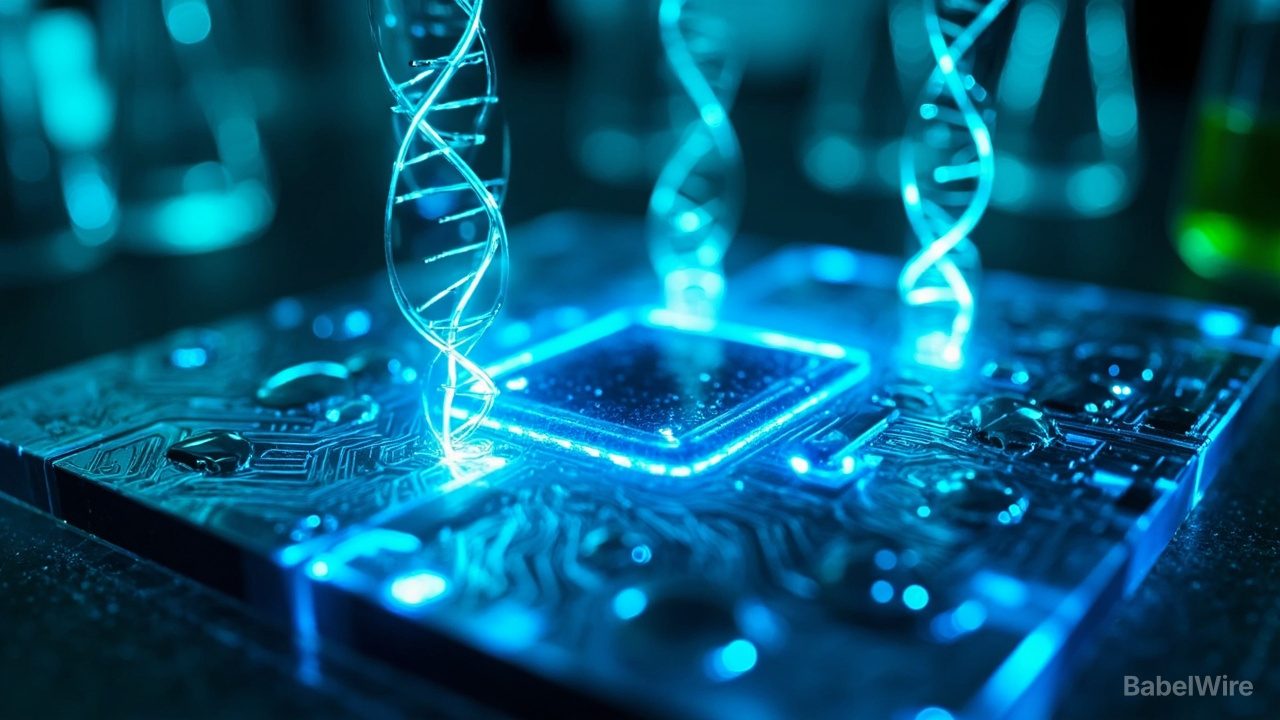
Published in Nature Electronics, the study describes how the team repurposed a CMOS silicon chip — originally designed for brain-cell interfacing — to synthesize 64 distinct DNA sequences simultaneously on its surface. Instead of relying on toxic organic solvents used in traditional DNA manufacturing, the chip uses localized electrical currents to control enzymatic reactions in water.
"We turned a chip that was built to talk to neurons into a DNA writing machine," said the lead researcher. "It's a completely green process — no benzene, no harsh chemicals, just electricity, water, and enzymes."
Traditional DNA synthesis is a chemical process that requires expensive, toxic solvents and generates hazardous waste. It has changed little since the 1980s. The new chip-based method could dramatically lower the cost and environmental footprint of gene synthesis, potentially accelerating progress in synthetic biology, gene therapy, and vaccine development.
The chip's surface features 64 distinct sites, each capable of building a DNA strand letter by letter. An electric current at a specific site activates enzymes that add the next nucleotide, allowing parallel synthesis of many different sequences at once. The process is controlled by the same kind of software that manages semiconductor operations.
"The ability to scale this with standard semiconductor manufacturing means we could eventually put thousands of synthesis sites on a single chip," the researchers noted.
The commercial implications are significant. The global DNA synthesis market is projected to reach $25 billion by 2030, driven by demand for gene therapies, mRNA vaccines, and engineered crops. Current manufacturing capacity is a bottleneck — the world can synthesize only a fraction of the DNA that researchers want to study.
Dr. George Church, the renowned Harvard geneticist affiliated with the work, called it "a foundational advance that aligns DNA synthesis with the economics of Moore's Law."
The technique still faces challenges: error rates need improvement, and the synthesized DNA strands are currently limited to a few hundred base pairs. But the team is already working on next-generation chips capable of longer sequences and higher throughput.
Sources
- sciencedaily.comScienceDaily — Harvard scientists turn a silicon chip into a DNA writing machine
- phys.orgNature Electronics — Semiconductor chip writes 64 DNA sequences using enzymatic synthesis (via Phys.org)
- medicaldaily.comMedical Daily — Harvard Built a Silicon Chip That Writes DNA Using Electricity and Water