Android's AirTag, finally
The Pixel Tag is on sale now. Google's first first-party item tracker costs $29.99, or $99.99 for a four-pack, roughly matching Apple's AirTag 2 on price. It works with the Find Hub network and app — the service Google renamed from Find My Device last year.
The tag was announced in August and arrives after years in which Android owners had to choose between trackers from Samsung, Motorola and Pebblebee. Google's version is the first of that group to ship with both ultra wideband and Bluetooth 6.0 Channel Sounding, and the first Find Hub tracker with NFC.
What you get
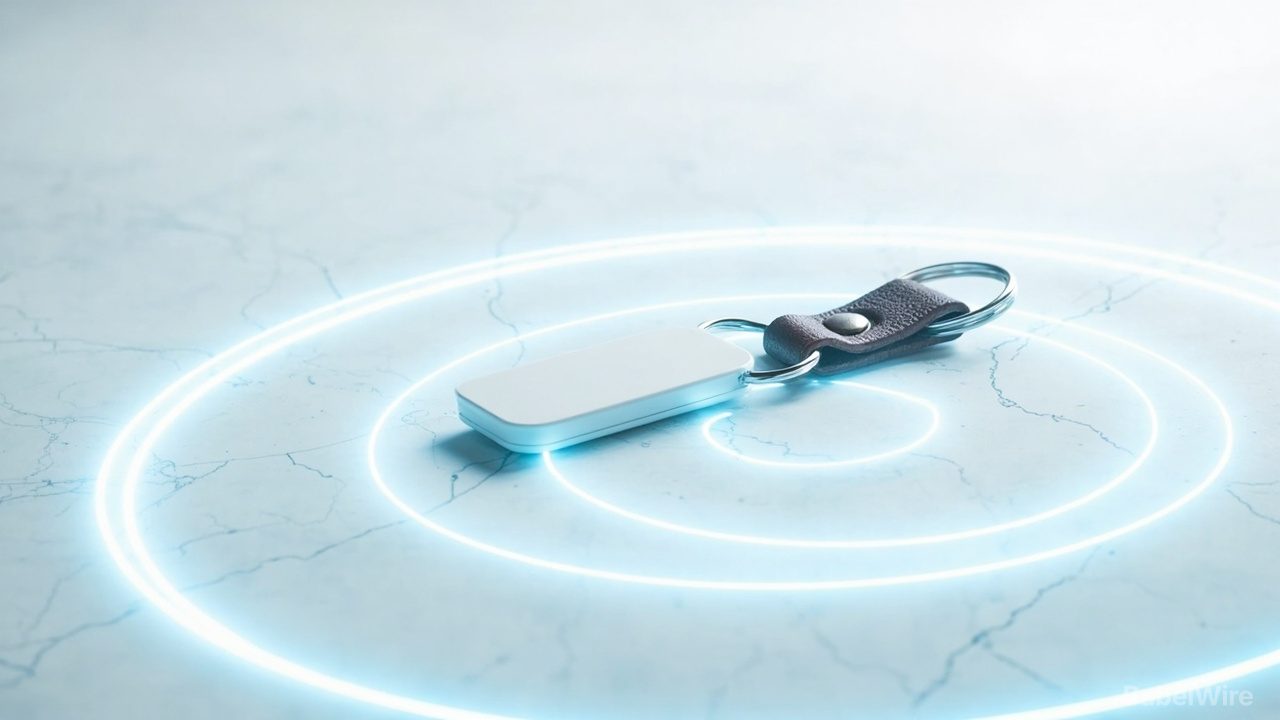
- Size and shape: 0.4 ounces, slightly lighter than an AirTag 2. It is longer but thinner, and has no hole for a keyring — you need a case. - Finding: on a phone with a UWB chip, Find Hub shows direction and exact distance; Bluetooth Channel Sounding gives distance only. - The reverse trick: a button on the tag can make your phone ring, useful when the phone is the thing that is lost. - Power and durability: a replaceable CR2032 that Google says lasts over a year, and an IP67 rating. - Compatibility: Android 9 or later, though precise finding needs UWB or Bluetooth 6.0 hardware.
Why this launch matters more than the gadget
Trackers are a network business. An AirTag is only as good as the crowd of iPhones quietly relaying its position, and Google's equivalent depends on the installed base of Android phones running Find Hub. Google has had the network for years, and third-party tags for it; putting its own cheap hardware on shelves is how it turns that network into something people expect to use.
The practical gap to close is now hardware support: precise locating depends on a UWB chip, which is far from universal on Android phones — unlike Apple's ecosystem, where the feature arrived years ago.
What to watch
- Whether Pixel Tag's sales push accessory makers to build the cases it lacks. - How Google handles the safety question that has dogged trackers everywhere: abuse by stalkers, and the anti-tracking alerts that answer it. - Whether a Pixel Tag works well enough to make Android's network the default recommendation over Samsung's SmartTag line.
Sources
- theverge.comThe Verge — Google's Pixel Tag tracker is now available
- 9to5google.com9to5Google — Google Pixel Tag initial review: The new gold standard
- 9to5google.com9to5Google — Pixel Tag tidbits: Surprise NFC, Find Hub setup, & Bellroy keychain cases
- androidauthority.comAndroid Authority — Google Pixel Tag tested: Find Hub flagged my lost keys
- cnet.comCNET — Google Pixel Tag Hands-On: The AirTag for Android Fans