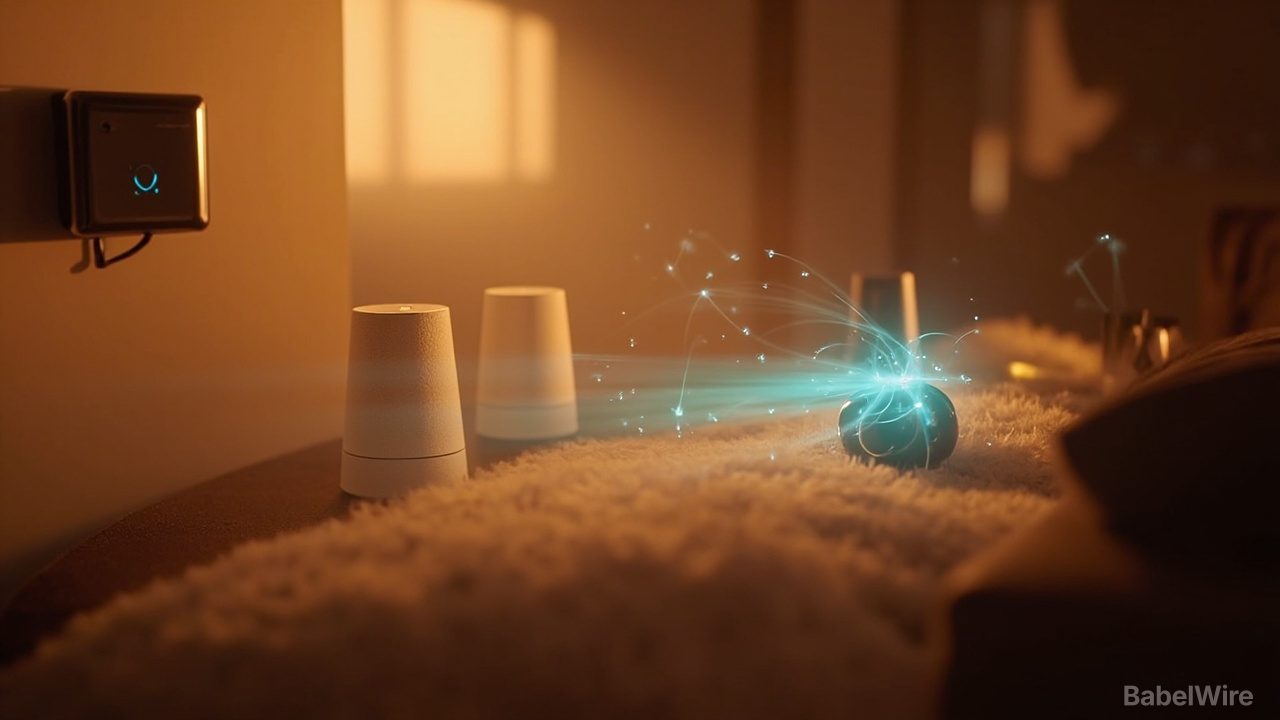
Smart home owners will soon be able to control their devices connected to Google Home via an AI agent. On Tuesday, Google rolled out early access to its Model Context Protocol (MCP) server for its Google Home ecosystem, which will allow any AI agent that supports MCP — like Claude, Hermes, OpenClaw, ChatGPT, and Google Antigravity — to securely work with their smart home devices and access their event history.
This update will allow people to use natural language instructions to do things like review their camera summaries, monitor smart home activity, control their connected devices, and build their own custom smart home dashboards.
To get the connection set up, users will need to create a Google Cloud project and configure it to use Home MCP. They will then provide the MCP configuration details to their agent of choice and ask it to set it up. The agent will then ask them to sign in and grant permissions.
The system will support any device in the Google Home ecosystem, including Google Nest doorbells and thermostats and "Works with Google Home" (or Matter) devices, like light bulbs. Google already supports MCP in other areas of its business, including Google Cloud, developer tools, and Google Workspace.
Access will roll out to subscribers of Google Home Premium Advanced in the U.S., the $20-per-month tier. Google wouldn't comment on if or when the MCP would roll out more broadly to other subscription tiers or markets.
The move is significant because it represents one of the most consumer-facing MCP integrations to date, bringing the protocol — which has primarily been used by developers for tool-use in coding agents — directly into the smart home. It could accelerate adoption of MCP as a universal standard for AI agent interoperability.