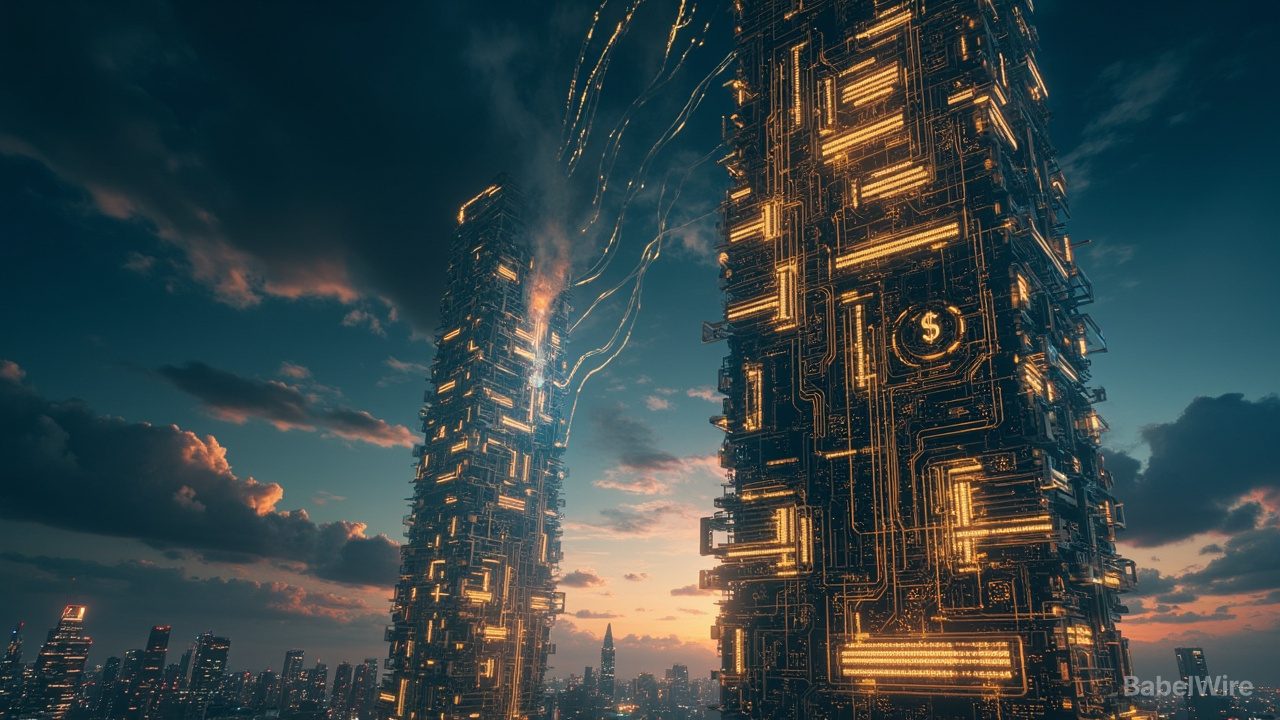
Google has quietly assembled one of the most elaborate financial structures in the history of the AI industry to keep Anthropic computing. A Financial Times investigation published August 4 details how the search giant stitched together roughly $200 billion in interlocking contracts — more than $150 billion of it linked to Google's own TPU chips — turning Anthropic into one of Google Cloud's defining customers while spreading the risk across Wall Street.
At the center of the machine sits a simple promise: Google guarantees the data centers and TPU capacity Anthropic rents, while Broadcom commits to buying and helping finance the chips that power them. Apollo and Blackstone supply private credit used to lease hardware back to Anthropic, Morgan Stanley set up the financing vehicles, and crypto miners including TeraWulf, Cipher and Hut 8 contribute physical data-center capacity. The result is a self-reinforcing loop in which every layer of the deal backstops another.
The structure reflects Anthropic's breakneck growth — the company is reportedly tracking toward $100–150 billion in annualized revenue as demand for its Fable models soars. But the investigation also highlights concentration risk: $200 billion of contracts hinge on Anthropic's ability to keep paying its chip and data-center leases. If the startup's revenue trajectory wobbles, the exposure would ripple through Google, Broadcom, and the private-credit investors behind the deals.
Analysts note the arrangement is a bet on Anthropic's future that also cements Google's position in the AI arms race against OpenAI and Microsoft. For Anthropic, the deal guarantees the single most important resource in frontier AI — compute — without the burden of owning the hardware. For Google, it converts a rival's success into its own revenue, one TPU lease at a time.