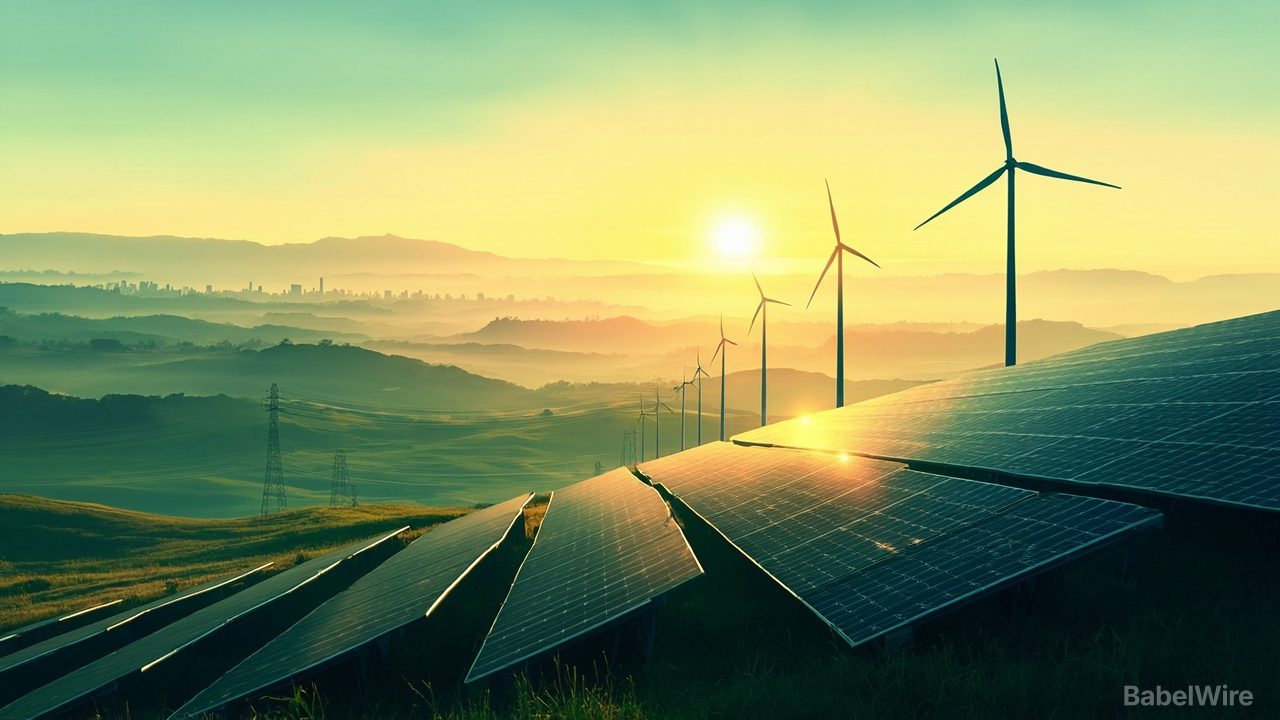
Renewable sources covered 60.7% of Germany's electricity consumption in the first three quarters of 2026, a record for the period, according to calculations by the Centre for Solar Energy and Hydrogen Research Baden-Württemberg (ZSW) and the German Association of Energy and Water Industries (BDEW).
Renewable plants generated 237.5 billion kilowatt-hours between January and September, 8.7% more than in the same period last year, even as gross electricity consumption rose. The renewables share was up four percentage points year on year. The category covers wind, solar, biomass, hydropower and the organic fraction of waste.
The growth came mainly from onshore and offshore wind and from photovoltaics. Because rainfall was low, hydropower output fell, and biomass generation declined slightly.
The milestone still leaves a wide gap to policy. Germany's target is an 80% renewable share by 2030, and the BDEW's chair, Kerstin Andreae, used the release to press the government for a swift agreement on the Renewable Energy Sources Act and for the acceleration package for distribution-grid expansion, arguing that permitting and environmental reviews need to be simplified before construction can speed up.
ZSW's director, Frithjof Staiß, pointed to a demand-side complication: climate change itself. More hot days and tropical nights are driving air-conditioning use, which he said places extra demands on the grid and on load management. Distributed rooftop solar paired with battery storage, he argued, can help meet that evening and overnight load — a reminder that a rising renewable share does not by itself settle the storage and grid question.