The Energy Crisis No One Is Solving Fast Enough
AI data centers face mounting community backlash and local moratoriums, while surging power demands are knocking tech giants off course from their climate ambitions. Could fusion be the solution to both problems — and could two startups from the Seattle suburbs provide the fix?
Helion's Sprint to 2028
Helion Energy has signed an unprecedented agreement to sell fusion energy to Microsoft for a Central Washington data center. Armed with a $1.5 billion war chest, the company is racing to flip the switch on its Orion power plant in Malaga, Washington, by 2028.
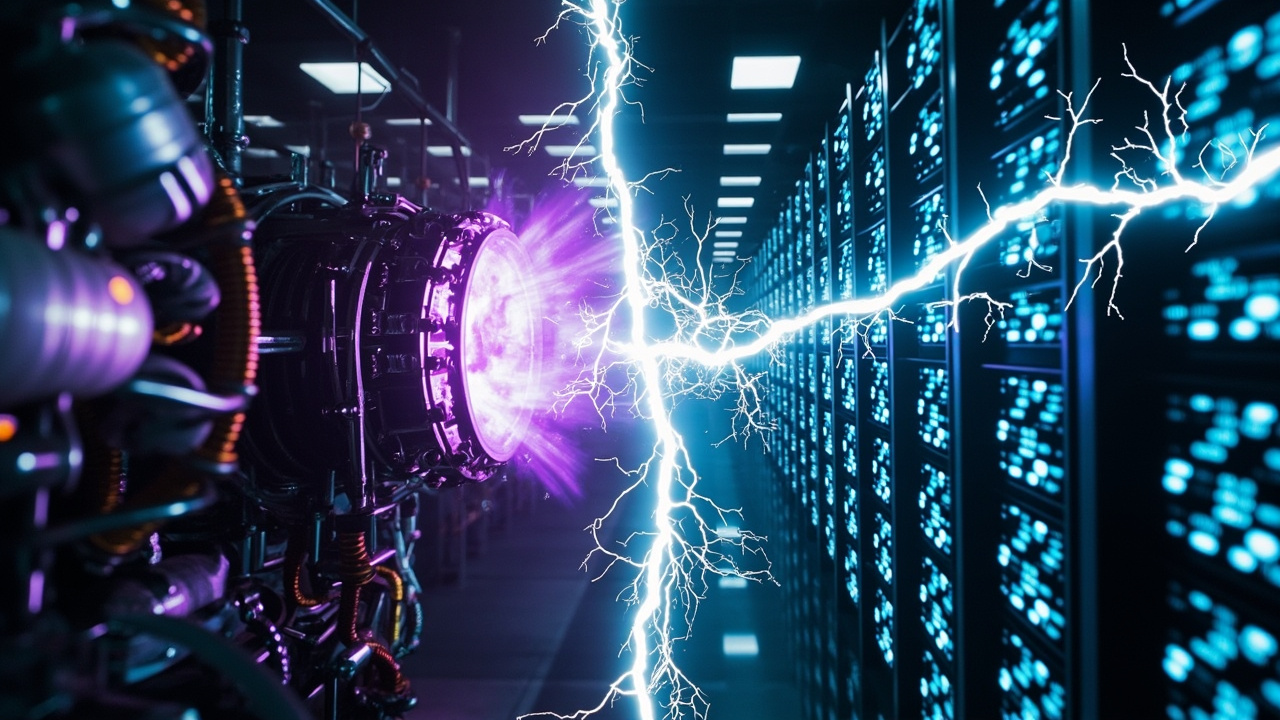
The company's seventh-generation prototype, Polaris, is a 60-foot-long machine that works by launching and squeezing plasma blobs toward each other at 1 million miles per hour. When the ions fuse, the expanding plasma creates electricity directly — like regenerative braking in an electric car.
But the path has been anything but linear. This spring, Helion paused to build 'Tiny Merge' — a fusion device one-eighth the size of Polaris — for faster testing. Critics might see a backtrack; the company calls it strategic iteration.
Zap's Two-Bet Strategy
Four minutes down the road, rival Zap Energy is taking an even more unconventional approach. While pursuing fusion through a physics phenomenon called Z-pinch, Zap recently announced it will also deploy a 10-megawatt fission microreactor based on legacy Toshiba designs.
'Fission gives us a path to deploy. Fusion gives us a path to transform,' said CEO Zabrina Johal. The company has raised $330 million and secured Department of Energy backing.
The Global Landscape
More than 50 companies globally are pursuing fusion power. Among the best-funded is Commonwealth Fusion Systems ($3 billion), which plans a plant in Virginia — home to the world's largest data center hub. China is also investing billions into domestic fusion ventures behind closed doors.
The Clock Is Ticking
While enthusiasm grows, so does skepticism. Some experts doubt cost-competitive fusion can ever be achieved. Laura Berzak Hopkins of Princeton Plasma Physics Laboratory summed it up: 'We've made incredible progress, and we are reaching ever closer, but there still remain these major scientific and technological hurdles.'
With Microsoft's 2028 deadline and AI's insatiable energy appetite, the world will be watching.
Sources
- geekwire.comInside the Race to Power AI Data Centers with Fusion Energy — GeekWire
- cacm.acm.orgAI Datacenters Need Nuclear Fusion — Communications of the ACM
- bloomberg.comThe Race to Rethink Data Centers for AI's Power Surge — Bloomberg
- geekwire.comHelion Gives Behind-the-Scenes Tour of Secretive 60-Foot Fusion Prototype — GeekWire